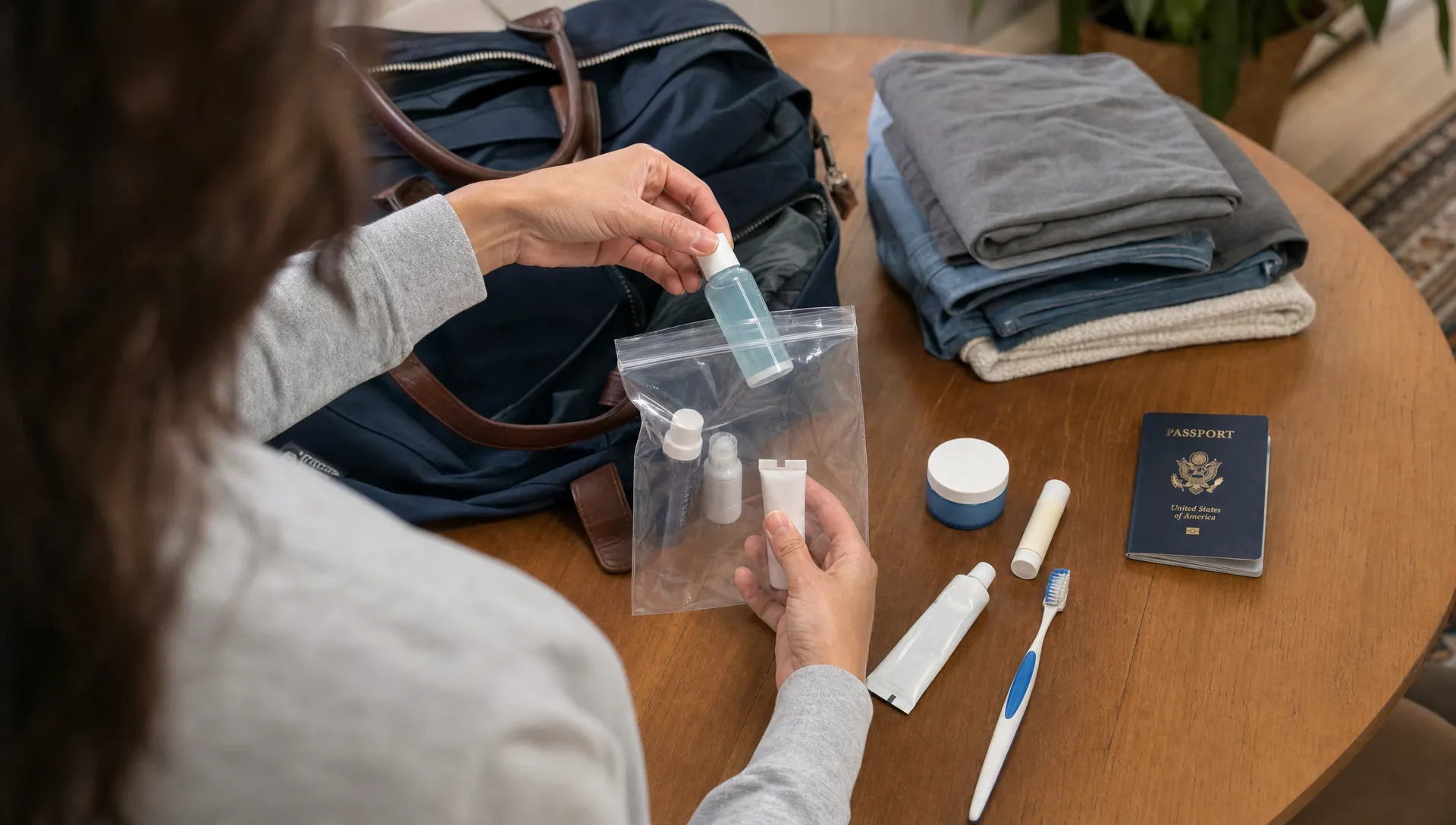
Packing airport hand luggage toiletries for a weekend away should be simple, but the small details are what catch people out at security. A half-empty 150ml cleanser is still treated as a 150ml container, a gel deodorant may count as a liquid and your return airport may apply stricter rules than the one you left from.
For a two-night trip, the goal is not to shrink your entire bathroom into a clear bag. It is to bring the few products you will actually use, in containers that match the strictest airport rule on your route. If you are flying out of one airport and home from another, check both directions before you pack.
Airport hand luggage toiletries: the short-trip rule that matters
For most weekend flyers, the safest baseline is the familiar 100ml or 3.4oz container rule for liquids, gels, creams, pastes and aerosols in cabin baggage. The TSA liquids rule describes this as the 3-1-1 rule in the United States, while GOV.UK hand luggage guidance explains the UK version, including the clear resealable bag requirement.
The exact bag size and screening process can differ by country and airport. Some airports with newer scanners have tested larger allowances, but rules have changed several times in recent years. For a weekend away, it is usually not worth gambling your skincare or sunscreen on a generous rule unless you have confirmed it for your actual airport and date.
A practical rule of thumb is this: if the item can be poured, squeezed, sprayed, smeared or spread, treat it as a liquid unless an official rule says otherwise. Airport hand luggage toiletries become much easier to manage when you pack by texture rather than by product name.
Build your weekend kit around what you will really do
A weekend toiletry kit for a wedding is different from one for a city break or beach stay. Before choosing products, run through your real itinerary: one dinner out, a hotel shower, a morning walk, a workout, a pool day or a formal event. This keeps you from packing “just in case” bottles that crowd the liquids bag.
For one or two nights, many travelers can skip full shampoo and conditioner if the accommodation provides them. If your hair or skin needs specific products, decant a small amount into travel containers that are clearly under the limit. Avoid filling every container to the top, since pressure changes can cause leaks.
If you are packing airport hand luggage toiletries for a short business trip, prioritize items that make you presentable after delays: toothbrush, toothpaste, deodorant, basic cleanser, moisturiser, lip balm and any daily medication. For leisure trips, sunscreen, after-sun lotion or insect repellent may matter more than a full makeup bag.
What counts as a liquid in a weekend wash bag
The products that surprise travelers are often not obvious “liquids.” Toothpaste, mascara, brow gel, hair wax, face cream, lip gloss, roll-on deodorant and shaving gel can all be treated as liquids or gels at security. Aerosols such as dry shampoo, hairspray and spray deodorant usually count too, even when the can feels nearly empty.
This table gives a quick weekend-focused view, but you should still check your airport when rules are unclear.
| Product type | Usually treated as | Weekend packing tip |
|---|---|---|
| Toothpaste | Paste | Bring a mini tube or toothpaste tablets |
| Moisturiser and face cream | Cream | Decant into a small pot for 2 to 3 uses |
| Shampoo and conditioner | Liquid or cream | Use hotel products, solids or 50ml bottles |
| Deodorant spray | Aerosol | Consider a solid stick if you want to save liquid-bag space |
| Mascara and lip gloss | Gel or liquid | Pack only the makeup you will actually wear |
| Hair gel or wax | Gel or paste | Use a tiny travel pot with a secure lid |
| Fragrance | Liquid | Choose a sample vial or travel atomizer under the limit |
If you want a broader breakdown, Liquid Limits has a separate guide to toiletries you can take in hand luggage by product type, which is useful when one item is hard to classify.
The smallest useful toiletry list for two nights
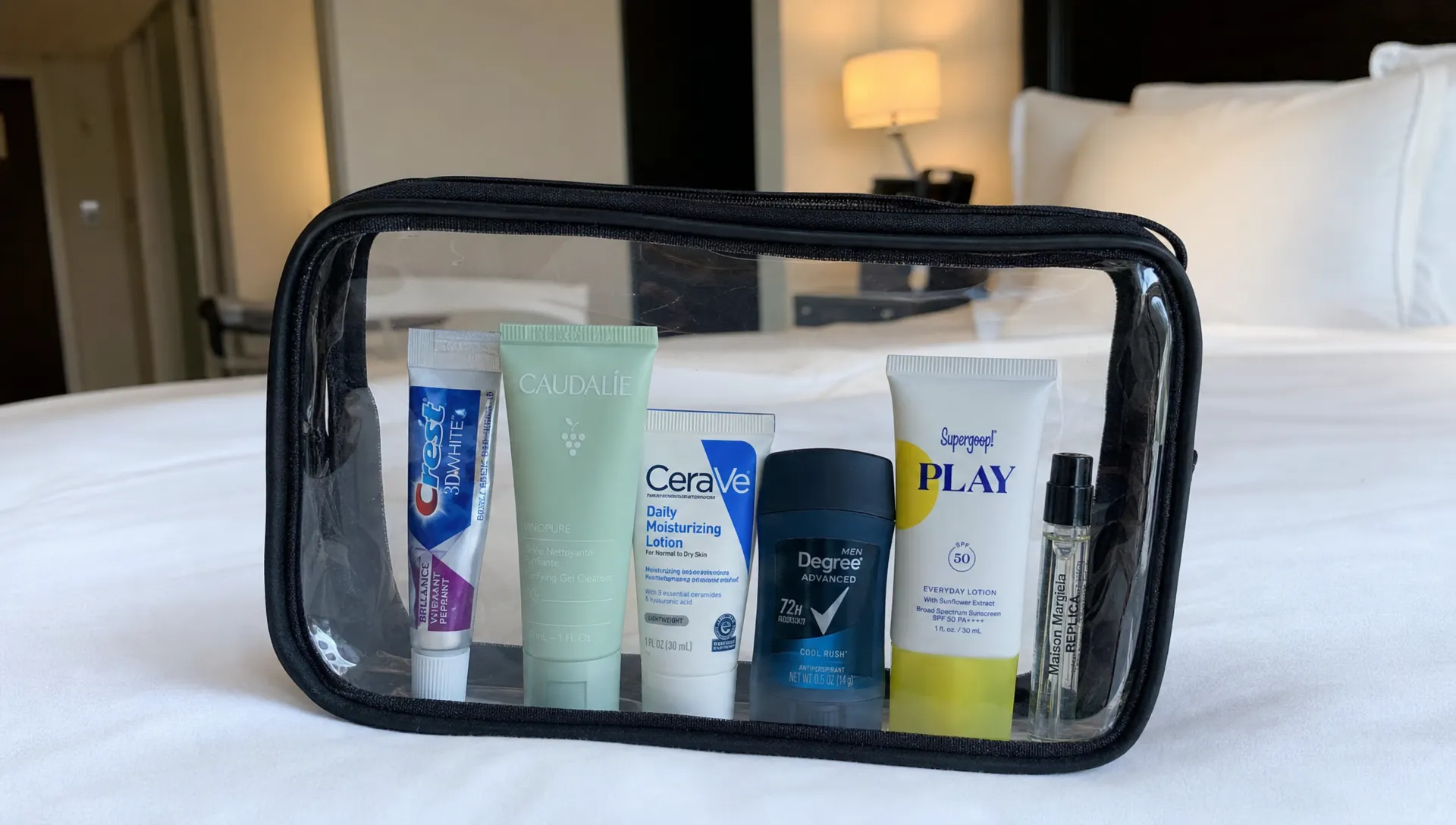
A minimalist weekend kit should cover hygiene, comfort and any non-negotiable personal care. It does not need to cover every possible scenario. If you can buy it easily at your destination and it is not essential during the flight or first night, consider leaving it out.
For many trips, this compact list is enough:
- Toothbrush and travel-size toothpaste
- Deodorant, preferably solid if you need more room in the liquids bag
- Cleanser or face wipes, depending on your routine
- Moisturiser or sunscreen in a container under the airport limit
- Lip balm, especially for dry cabin air
- Razor or electric trimmer, if permitted for your route
- Hair product only if you genuinely use it every day
- Small fragrance sample or none at all
- Daily medication, packed according to your airport’s medical exemption rules
When planning airport hand luggage toiletries, separate true essentials from comfort extras. Toothpaste and deodorant usually earn their place. A full-size body lotion, three hair styling products and a glass perfume bottle rarely do on a two-night trip.
Use solids where they genuinely make sense
Solid toiletries are useful because they often do not need to fit inside your liquids bag. Shampoo bars, conditioner bars, solid deodorant, soap bars, toothpaste tablets and solid cleanser sticks can free up space for the products that must stay liquid, such as sunscreen or prescription creams.
That said, solid swaps are only helpful if you like using them. A shampoo bar you have never tested can be annoying on a rushed morning, and some solid balms may still be questioned if they are soft, spreadable or packaged like a gel. Test new products at home before relying on them during a short trip.
Razors deserve separate attention. Disposable razors and cartridge razors are commonly allowed in cabin baggage in many jurisdictions, while loose razor blades and some safety razor blades are often restricted. For a closer look at edge cases, see Liquid Limits’ guide to airport toiletries rules for aerosols, razors and gels.
Do not forget the return flight
Weekend trips create one common packing trap: you leave home perfectly compliant, then buy toiletries, cosmetics, perfume, local skincare or duty-free items before flying back. The return airport may have different scanner equipment, different staff instructions or a stricter interpretation of liquid rules.
Duty-free liquids are often allowed only when sealed in an approved security tamper-evident bag with proof of purchase, and connecting flights can complicate that. If you are not sure whether you will pass another security checkpoint, avoid buying large liquids until after your final screening.
This is where airport hand luggage toiletries planning should include the way home, not just the outbound flight. If you expect to buy fragrance, sunscreen or skincare during the weekend, leave room in checked baggage or confirm that your return route allows it. Liquid Limits also explains why return-trip liquid guidelines deserve their own check.
A 10-minute packing routine before you zip the bag
You do not need a complicated system. Ten focused minutes can prevent most security delays and last-minute bin losses.
- Put every liquid, gel, cream, paste and aerosol on the bed.
- Remove anything in a container over the strictest limit for your route.
- Decant only the products you use daily, and label containers if they are not obvious.
- Place all restricted toiletries in the clear liquids bag without forcing it shut.
- Move solids, toothbrushes and dry items outside the liquids bag.
- Pack medication separately if it qualifies for an exemption, and keep documentation if required.
- Check your outbound and return airports on the day you pack, since rules can change.
If the clear bag is bulging, do not buy a bigger bag and hope for the best. Take something out, switch to a solid or move non-essential items to checked luggage. The neatest toiletry kit is the one security can understand quickly.
Common mistakes that slow travelers down
The first mistake is assuming container size does not matter if the product is almost empty. Security screening normally looks at the labeled container capacity, not the amount left inside. A 200ml bottle with a tablespoon of shampoo inside can still be rejected.
The second is forgetting that “natural,” “organic” or “medical-looking” packaging does not change the category. A cream is still a cream, and a spray is still an aerosol unless a specific exemption applies. Prescription and medically necessary liquids are treated differently in many places, but you should check the local process before you fly.
The third is packing too much for the length of the trip. Airport hand luggage toiletries should match a weekend rhythm: arrive, freshen up, sleep, get ready, return. Once you pack for a fantasy version of the trip, with spa products, backup bottles and multiple scents, the clear bag fills fast.
Frequently Asked Questions
Can I take full-size toiletries in hand luggage for a weekend trip? Usually not if they are liquids, gels, creams, pastes or aerosols and exceed the airport’s cabin limit. The container size matters, even if the bottle is partly empty.
Does makeup count as toiletries at airport security? Some makeup does. Mascara, liquid foundation, concealer, lip gloss, cream blush and brow gel are commonly treated as liquids or gels, while powder products are usually easier to pack.
Are solid toiletries better for hand luggage? Solid toiletries can save space in your liquids bag, especially solid deodorant, soap bars and shampoo bars. They are best when you have tested them before the trip and know they work for you.
Should I check the rules again before the return flight? Yes. Return airports can apply different liquid rules, and scanner-related policies can change. Check the route you are actually flying, including connections.
What is the safest way to pack airport hand luggage toiletries? Use containers under the strictest limit for your trip, place restricted items in the required clear bag and keep essentials easy to remove at screening.
Before you pack, check your exact airports, items and route with Liquid Limits. It shows the outbound and return liquid rules side by side, includes verified source links and defaults to the stricter 100ml rule when the current rule is unclear.