
If you are packing a carry-on in 2026, the safest assumption is still simple: liquids, aerosols, gels, creams, and pastes usually need to be in containers of 100ml or less and fit inside a clear 1L liquids bag.
The confusing part is that this is no longer the whole story. Some airports have introduced next-generation scanners that can change how liquids are screened. In a few places, passengers may see larger allowances, sometimes described as up to 2L. In other places, even airports with newer scanners have temporarily kept or restored the 100ml rule.
That means airport liquid limits in 2026 depend on more than the country you are flying from. They can depend on the exact airport, terminal, security lane, connection airport, and return flight.
The quick answer for 2026
For most travelers, the practical rule is: pack for the strictest airport on your whole trip. If any airport on your outbound, connection, or return journey applies the 100ml rule, your cabin liquids need to meet that rule at that checkpoint.
| Travel situation | Likely carry-on liquid rule | Best packing choice |
|---|---|---|
| Most standard security checkpoints | Containers up to 100ml, usually in a clear 1L bag | Use travel-size bottles or checked baggage |
| Airports with approved advanced scanners | Larger liquids may be allowed, depending on local rules | Confirm the airport, terminal, and latest notice before packing |
| Connecting through a stricter airport | The stricter transfer checkpoint can apply | Avoid full-size liquids in your cabin bag |
| Round trip from a different return airport | The return airport may have different limits | Check both directions, not just the outbound flight |
| Duty-free liquids over 100ml | Often allowed only if sealed in a security tamper-evident bag with receipt | Keep the bag sealed and check transfer rules |
| Medicines, baby milk, and special dietary liquids | Usually handled as exceptions in reasonable quantities | Pack separately and declare at security |
If you do not have time to verify every detail, pack all cabin liquids in 100ml containers. It is the most widely accepted approach and avoids the most common security surprise.
Why liquid limits still vary in 2026
The 100ml rule was introduced to reduce the risk of liquid explosives being carried into aircraft cabins. For years, it became the standard experience at airports around the world: small containers, one clear bag, and no full-size drinks or toiletries through security.
Newer CT-style cabin baggage scanners can produce more detailed images of bag contents. In theory, this allows some airports to relax older restrictions, including the need to remove liquids from bags and, in some cases, the 100ml container limit.
But rollout has been uneven. Airports upgrade at different speeds. Regulators approve scanners differently. Some checkpoints may have the new machines while others do not. There have also been pauses and temporary restrictions in some regions while authorities review equipment performance. For example, the European Commission announced temporary liquid screening restrictions for certain C3 scanners from September 2024, showing why scanner-based rules can change even after upgrades.
The result is a mixed system. In 2026, airport liquid limits are not just a national rule. They are often airport-specific, route-specific, and time-sensitive. Before packing full-size toiletries, it is worth checking your full journey with a tool that compares the strictest rule across your route, such as the Liquid Limits airport liquid checker.
What counts as a liquid at airport security?
Airport security uses a broad definition. If an item can be poured, sprayed, squeezed, spread, smeared, pumped, or scooped, it may be treated as a liquid, gel, aerosol, cream, or paste.
That definition catches many items travelers do not think of as liquids. Peanut butter, jam, honey, mascara, lip gloss, toothpaste, hair gel, and soft spreads are common examples.
| Category | Usually treated as a liquid, gel, aerosol, cream, or paste | Usually not treated as a liquid |
|---|---|---|
| Toiletries | Shampoo, conditioner, shower gel, lotion, toothpaste, shaving foam | Bar soap, solid shampoo bars, dry wipes |
| Beauty | Liquid foundation, mascara, lip gloss, cream blush, gel eyeliner | Powder makeup, solid lipstick, pencil eyeliner |
| Food | Jam, honey, yogurt, sauces, dips, nut butter, soft cheese spreads | Crackers, dry snacks, solid chocolate |
| Health | Contact lens solution, cough syrup, topical gels, liquid supplements | Tablets, capsules, solid vitamins |
| Aerosols | Deodorant spray, hairspray, sunscreen spray | Non-aerosol solids, wipes |
Makeup is a good example of why category matters. Powder eyeshadow may pass as a solid, while foundation, mascara, and lip gloss normally fall under the liquids rule. If you are traveling with cosmetics internationally, item-specific guidance such as makeup from the UK to the USA can help separate cabin security rules from customs and checked baggage rules.
Food causes similar confusion. A sealed jar of jam may look harmless, but it is usually treated as a paste or gel at security. For route-specific examples, see how jam from the UK to the USA is handled differently in cabin baggage, checked baggage, and destination rules.
How the 100ml carry-on rule works
Under the traditional rule, each liquid container must be 100ml or smaller. The container size matters, not the amount left inside. A 200ml bottle that is half full can still be refused because the container itself is over the limit.
In the United States, the TSA liquids rule is commonly described as 3.4 ounces or 100ml per container in a quart-size bag. In the UK, GOV.UK hand luggage guidance describes containers of no more than 100ml, carried in a single transparent resealable plastic bag with a capacity of no more than 1 liter.
Although wording varies by country, the core idea is similar in many places: small containers, one clear bag, and the bag must close properly. Security officers can ask you to remove the bag from your carry-on, although some airports with newer scanners may allow it to stay inside.
A few details matter in practice:
- The printed container capacity should be 100ml, 3.4 oz, or less.
- The liquids bag should close without bulging.
- Each passenger usually needs their own liquids bag.
- Oversized containers should go in checked baggage unless an exception applies.
- Empty reusable bottles are generally allowed, but they must be empty before security unless the airport specifically allows liquids through.
If you are decanting products into travel bottles, label them clearly enough to avoid delays. Security officers usually care most about the container size and screening result, but clear packaging makes inspections easier.
What about 2L liquid rules and new scanners?
Some airport announcements mention relaxed liquid rules, often linked to advanced cabin baggage scanners. Where these rules apply, passengers may be able to leave liquids in their bags and carry containers larger than 100ml, sometimes up to a stated limit such as 2L.
The key phrase is where these rules apply. A 2L allowance is not a worldwide rule, and it is not guaranteed simply because an airport has modern-looking scanners. The airport must have the right equipment approved, the relevant checkpoint must be operating under the relaxed policy, and your journey must not require re-screening at a stricter airport.
This is especially important for connecting flights. You might depart from an airport that allows larger liquids, then transfer through an airport that applies the 100ml rule. If you need to pass security again, the stricter checkpoint can reject your larger liquids.
| Question to ask before relying on a larger allowance | Why it matters |
|---|---|
| Does my departure airport currently allow liquids over 100ml? | Scanner rules can change and may not apply airport-wide |
| Does the rule apply in my terminal or security lane? | Some airports operate mixed equipment during upgrades |
| Will I clear transfer security during my connection? | Transfer screening can apply a different limit |
| Does my return airport have the same rule? | Round trips often involve different airport policies |
| Are airline, customs, or dangerous goods rules relevant? | Security permission does not override all other travel rules |
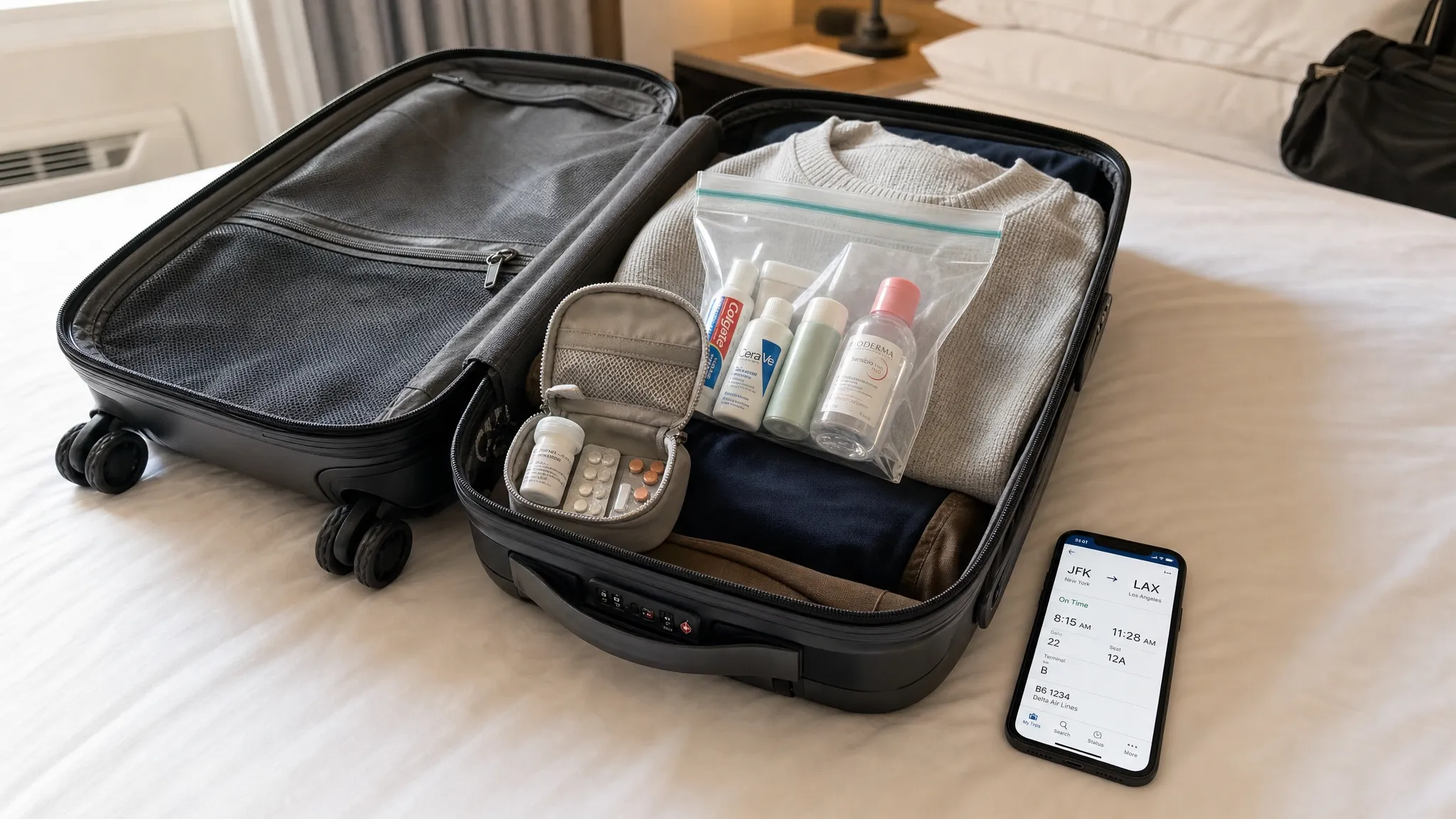
If you want one low-risk packing strategy, do not rely on a relaxed 2L rule unless you have verified it for your exact airport and travel date. Pack full-size liquids in checked baggage, or buy them after arrival.
Exceptions: medicines, baby liquids, and duty-free purchases
The 100ml rule has important exceptions. These are not loopholes, and they still require screening, but they help passengers carry necessary liquids.
Medicines and medical liquids are usually permitted in quantities needed for the trip. This can include liquid medication, gels, sprays, contact lens solution, and cooling items such as ice packs when medically necessary. Pack them separately, tell security staff before screening, and carry labels or supporting documentation when possible.
Baby milk, formula, breast milk, baby food, and sterilized water are also commonly treated as exceptions in reasonable quantities. Rules vary by country and airport, but parents and caregivers should expect extra screening. Keep these items accessible so they can be inspected without unpacking your whole bag.
Duty-free liquids over 100ml can often travel in the cabin if they are packed in a sealed security tamper-evident bag with the receipt visible. The risk comes during transfers. If the bag is opened, the receipt is missing, or the transfer airport does not accept the packaging, security may refuse the item.
Alcohol has extra considerations. Even if a bottle is allowed after security or in checked baggage, airline dangerous goods rules and destination customs allowances can still apply. High-strength alcohol may be restricted or prohibited by airlines.
Carry-on vs checked baggage: where should liquids go?
When deciding whether to pack an item in your cabin bag or checked suitcase, think about three separate rules: airport security, airline baggage rules, and destination customs or biosecurity rules. Passing airport security does not automatically mean an item is legal to import.
| Item | Carry-on approach | Checked baggage approach |
|---|---|---|
| Full-size shampoo or conditioner | Usually not allowed under 100ml rules | Usually the best option if packed leak-proof |
| Travel-size sunscreen | Allowed if 100ml or less and packed with liquids | Also allowed, but protect from leaks |
| Jam, honey, sauce, or spread | Usually must be 100ml or less unless a local exception applies | Often better checked, but customs rules may apply |
| Foundation or mascara | Usually counts as liquid or paste | Fine in checked baggage if protected |
| Prescription liquid medicine | Usually allowed as an exception in reasonable quantities | Keep essential medication in cabin baggage when possible |
| Wine or spirits | Not allowed through standard security unless 100ml or less | Often checked, subject to airline and customs limits |
For anything valuable, essential, or medically necessary, cabin baggage is usually safer than checked baggage. For anything full-size, replaceable, or non-essential, checked baggage is usually easier.
Round trips and connections are where travelers get caught
Many passengers check the rules for their departure airport, then forget about the return. That is where problems happen.
Imagine you depart from an airport using relaxed screening and buy full-size toiletries during your trip. On the way home, your return airport may still enforce 100ml limits. If those toiletries are in your carry-on, they may be confiscated.
Connections create the same issue. If you buy a drink or cosmetic after security at the first airport, it may be fine on the first flight. But if your connection requires you to pass security again, the transfer airport rules apply. Duty-free liquids may survive this process only if they are sealed correctly and accepted by the transfer airport.
A simple packing workflow can prevent most issues:
- Check the liquid rule for your outbound airport, connection airport, destination airport, and return airport.
- Identify anything over 100ml before you leave home.
- Put non-essential full-size liquids in checked baggage.
- Keep medicines, baby liquids, and duty-free receipts easy to access.
- Recheck the rules close to departure because airport policies can change.
This is exactly why route-based checking matters. A single airport lookup is helpful, but the strictest rule across the whole trip is what determines whether your cabin liquids are safe to pack.
2026 carry-on liquids checklist
Use this checklist if you are packing today and want to avoid delays at security.
- Assume the 100ml rule unless your exact airport confirms otherwise.
- Use containers labeled 100ml, 3.4 oz, or less for standard cabin liquids.
- Put liquids, gels, aerosols, creams, and pastes in a clear resealable 1L bag where required.
- Treat makeup, spreads, sauces, and gels as liquids unless verified otherwise.
- Pack full-size toiletries in checked baggage, not your carry-on.
- Keep medical and baby liquids separate and declare them at screening.
- Keep duty-free liquids sealed with the receipt visible.
- Check your return flight and connections, not only your first departure.
The most important habit is to verify before you pack. Airport liquid limits are one of the few travel rules where a small misunderstanding can cost you a favorite product, an expensive bottle, or extra time at security.
Frequently Asked Questions
What are the airport liquid limits for carry-ons in 2026? In most airports, carry-on liquids must be in containers of 100ml or less and fit in a clear resealable 1L liquids bag. Some airports may allow larger liquids with approved scanners, but you should verify the exact airport and route before relying on that.
Can I bring a 2L liquid bottle in my carry-on? Only if the airport you are departing from specifically allows it and your journey does not require security screening at a stricter airport. In many cases, a 2L bottle will still be refused at standard checkpoints.
Does the 100ml rule apply to makeup? Yes, liquid, cream, gel, and paste makeup usually counts. Foundation, mascara, lip gloss, cream blush, and similar products should be 100ml or less for standard cabin screening. Solid or powder makeup is usually treated differently.
Can I take an empty water bottle through airport security? Usually yes. Empty reusable bottles are generally allowed through security and can be filled after screening. A filled bottle is normally not allowed under the 100ml rule unless a local relaxed rule or exception applies.
Are medicines exempt from airport liquid limits? Liquid medicines are commonly allowed in reasonable quantities above 100ml, but they must still be screened. Pack them separately, declare them to security staff, and carry labels or documentation when possible.
Do airport liquid limits apply to checked baggage? The 100ml cabin security rule generally does not apply to checked baggage. However, airline dangerous goods rules, leakage risks, alcohol limits, and destination customs rules can still apply.
Check your route before you pack
Airport liquid limits in 2026 are easier to handle when you stop thinking about one airport at a time. The rule that matters is the strictest rule across your whole trip, including connections and the return flight.
Before you close your suitcase, use Liquid Limits to check airport, item, and route-specific liquid rules with source links and last-checked dates. If the rule is unclear, pack to the stricter 100ml standard and travel without the guesswork.