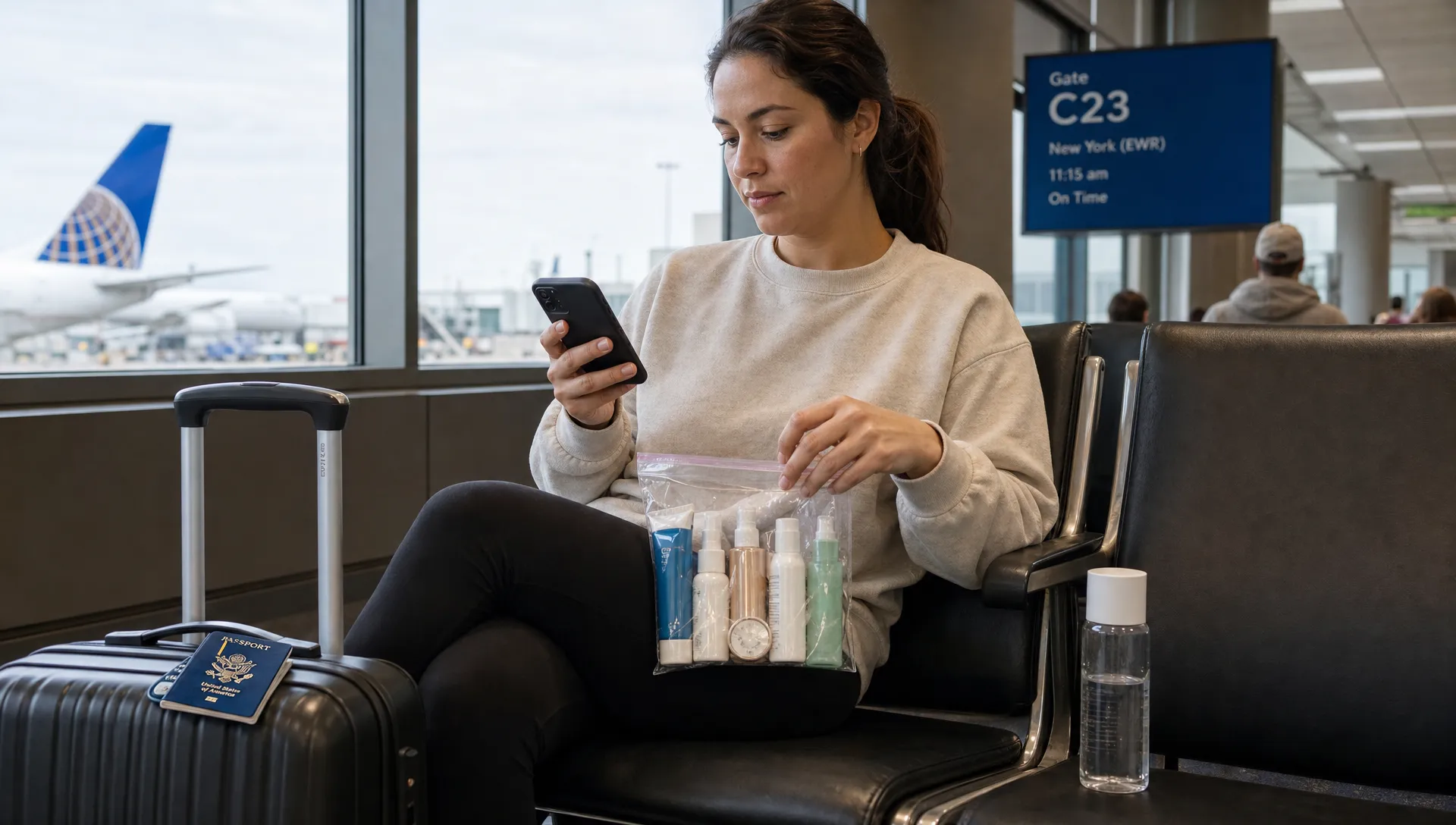
Airport liquid rules used to feel predictable: keep containers small, put them in a clear bag and expect security to treat anything creamy or spreadable as a liquid. That is still the safest baseline in many places. What has changed is the consistency. Some airports are installing newer checkpoint scanners, some have paused relaxed rules and some apply different limits depending on the terminal, lane or connecting airport.
That makes airport liquid policy changes especially confusing for travelers in 2026. A rule you saw in a news article, on an airport sign last year or in a friend's social post may not apply to your next route. The most practical approach is to watch the policy signals that affect your trip, then pack for the strictest checkpoint you will face.
Why liquid policy is changing unevenly
The biggest driver is screening technology. Newer computed tomography security scanners can create more detailed 3D images of bags, which can reduce the need to remove laptops and liquids at some checkpoints. That technology is part of the reason certain airports have tested or allowed larger cabin liquid containers, often described as up to 2 liters where permitted.
But scanner installation does not automatically change passenger rules. Airports need regulatory approval, trained staff, consistent operating procedures and enough lanes using the approved equipment. If one terminal has upgraded lanes and another does not, the airport may keep the older 100 ml rule across all hand luggage to avoid confusion.
The safest assumption is that the 100 ml cabin rule is still active unless your exact airport, terminal and route say otherwise. In the United States, the TSA liquids rule still tells passengers to carry liquids, gels and aerosols in containers of 3.4 ounces or 100 ml or less, with limited exceptions. In the United Kingdom, GOV.UK hand luggage restrictions continue to explain how liquids must be packed and screened. In the European Union, the European Commission has also had to address rules for airports using advanced cabin baggage screening equipment, including a temporary return to 100 ml limits at affected locations from September 2024.
If you want the background before making packing decisions, Liquid Limits has a separate guide on why the airport 100ml rule still matters in 2026.
The airport liquid policy changes travelers should watch
1. Scanner upgrades that do not apply to every checkpoint
Travelers often hear that an airport has installed new scanners and assume the liquid limit has changed everywhere. That is not always true. A policy may vary by terminal, airline area, security lane, domestic versus international screening or by the regulator's current approval status.
This is why airport-level headlines can be misleading. An airport may advertise new security technology, but still ask passengers to follow 100 ml packing rules during a transition period. Another airport may allow larger containers for certain departing passengers, then require 100 ml again when a regulator issues a temporary restriction.
The key question is not whether an airport owns new scanners. The key question is what liquid rule is being enforced for your security checkpoint on your travel date.
2. Temporary reversals after relaxed rules
One of the most important airport liquid policy changes to watch is the possibility of a reversal. Several travelers have been caught out because they packed based on a relaxed rule they used on a previous trip, only to find that the airport had returned to the 100 ml limit.
These reversals can happen for technical, regulatory or operational reasons. A regulator may require additional testing of scanner performance. An airport may decide that mixed equipment creates too much confusion. A government may standardize rules again while it reviews screening requirements.
The practical lesson is simple: do not rely on memory. Even if you flew through the same airport recently with full-size liquids, check again before you pack.
3. Return flights with stricter rules than outbound flights
Round trips create a common trap. Your outbound airport may allow larger liquids, but your return airport may still enforce 100 ml. If you buy full-size toiletries during the trip and plan to bring them home in carry-on baggage, the return security checkpoint may be the one that matters most.
This is especially relevant for travelers who fly out of a major hub but return from a regional airport, resort airport or airport in a different regulatory area. The same problem applies to open-jaw trips, where you fly into one city and home from another.
For more detail on this specific scenario, see these travel liquid guidelines for airports and return trips. The short version is that you should plan around the strictest airport on the whole itinerary, not the most relaxed airport.
4. Transfer checkpoints that apply a different rule
Connecting flights are another place where liquid policy becomes less predictable. Some passengers remain inside a secure transit area and do not go through another liquids check. Others must clear transfer security, immigration, customs or a separate checkpoint before boarding the next flight.
That second screening can change everything. A bottle that passed at your departure airport may not pass at a connecting airport if you are rescreened under a stricter liquid policy. This is particularly risky when itineraries involve separate tickets, overnight connections or switching between international and domestic terminals.
Duty-free liquids can also be affected. Many airports accept duty-free liquids in sealed security tamper-evident bags with proof of purchase, but acceptance can depend on the route, airport and whether the bag remains sealed. Opening the bag before your final checkpoint increases the risk of confiscation.
5. Borderline items getting stricter treatment
Liquid policy is not only about water bottles and shampoo. Security screening usually treats gels, pastes, creams, aerosols and spreadable foods as liquids for cabin baggage purposes. That means items such as sunscreen, hair gel, toothpaste, peanut butter, soft cheese, jam and thick cosmetics can trigger the same container limits.
This category is easy to forget when rules appear to relax. A traveler may focus on whether a water bottle is allowed, then lose an expensive skincare product because it is in a 150 ml container. If an item can be poured, sprayed, squeezed, smeared or spread, assume it may be treated as a liquid unless official guidance says otherwise.
If you often travel with toiletries, food gifts or cosmetics, it is worth reviewing the carry-on liquid limits that still catch travelers out before packing.
6. Exceptions that still need planning
Most major security systems allow exceptions for medically necessary liquids and, in many cases, baby food, breast milk, infant formula and special dietary liquids. These exceptions are not the same as a general permission to carry full-size toiletries. You may need to declare the items, remove them for screening or allow additional inspection.
Travelers should also remember that prescription labels, doctor's notes or product packaging can reduce confusion at the checkpoint. They do not guarantee automatic clearance in every country, but they help security officers understand why the item is being carried.
| Policy change to watch | What it means for travelers | Main risk | Safer packing choice |
|---|---|---|---|
| New CT scanners | Some airports may change how liquids are screened | Assuming every lane has relaxed rules | Check your exact airport and date |
| Temporary reversals | A relaxed rule can return to 100 ml | Packing based on an old trip | Recheck before each flight |
| Return airport differences | The return journey may be stricter than the outbound journey | Buying full-size items abroad | Pack for the strictest airport |
| Transfer screening | A connection may involve a second liquid check | Liquids passing once but failing later | Keep liquids compliant for all checkpoints |
| Borderline products | Creams, gels, pastes and spreads may count as liquids | Misclassifying food or cosmetics | Treat spreadable items as liquids |
| Duty-free handling | Sealed bags may be accepted on some routes | Opening the bag before final screening | Keep receipts and bags sealed |
How to pack when liquid policies are in transition
When rules vary, efficient packing beats optimistic packing. The goal is not to bring the maximum possible amount through the most permissive airport. The goal is to avoid losing items, delaying your security screening or repacking under pressure.
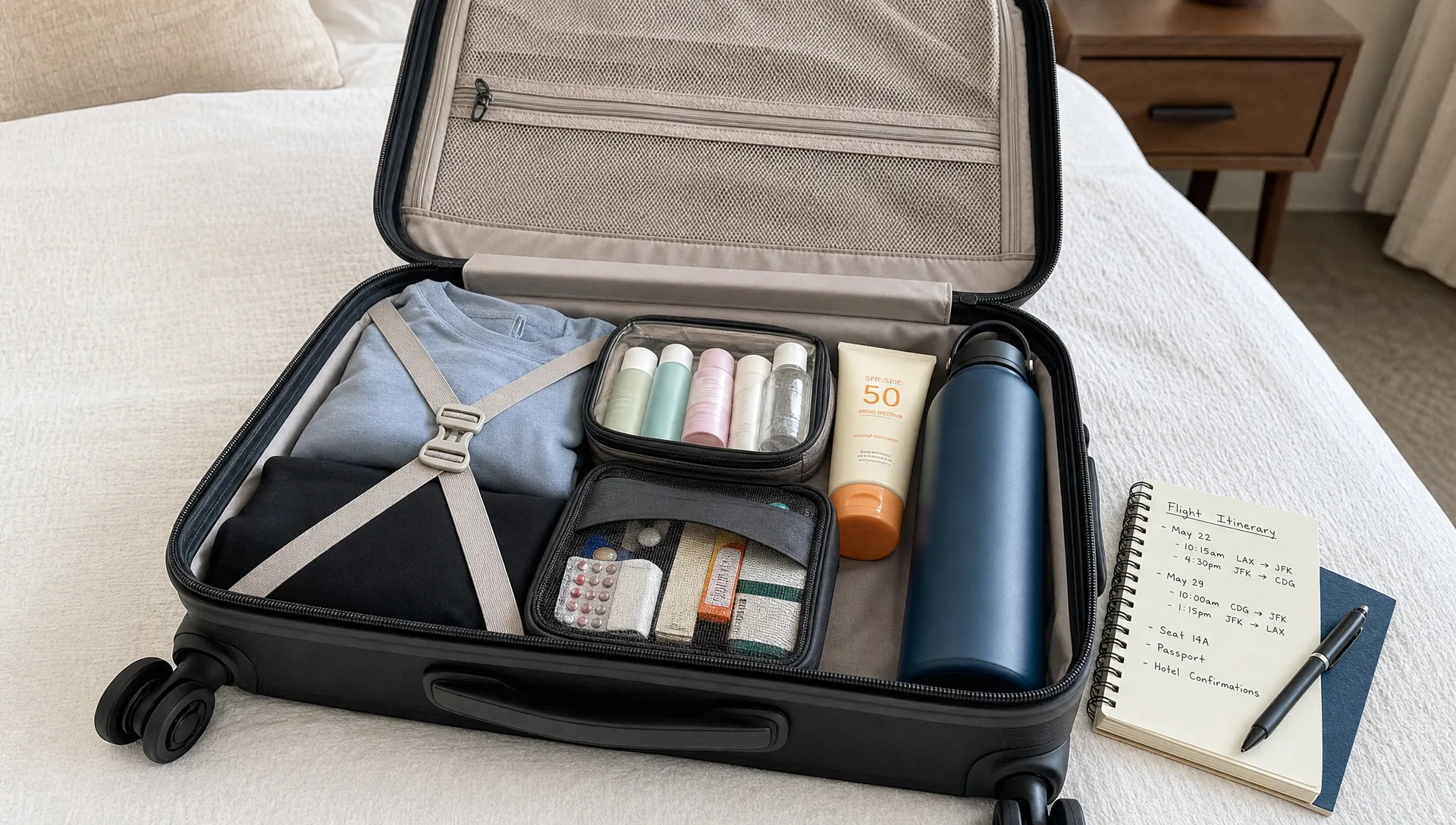
A practical rule is to separate liquids into three groups: items that must be with you in the cabin, items that can safely go in checked baggage and items that should be bought after security or at your destination. Medicines, baby supplies and essential skincare may belong in the cabin. Large toiletries, fragrance bottles and food gifts are often better in checked luggage if you have it.
For carry-on only trips, downsize aggressively. Use containers of 100 ml or less, check that the label or capacity marking is visible and avoid filling an unmarked travel pot with an expensive product. Security officers usually assess the container size, not the amount left inside. A half-empty 200 ml bottle can still fail at a 100 ml checkpoint.
Use this pre-flight check before you close your bag:
- Confirm the rule for your departure airport, return airport and any transfer airports.
- Check whether your route includes a second security screening during a connection.
- Keep cabin liquids in containers that comply with the strictest checkpoint.
- Put non-essential full-size liquids in checked baggage when available.
- Keep medicines, baby supplies and special dietary liquids easy to declare.
- Leave duty-free liquids sealed with the receipt until after your final checkpoint.
This approach may feel conservative, especially if one airport on your route allows more. It also protects you from the most expensive kind of confusion: buying or packing an item that passes one checkpoint but fails the next.
How to verify airport liquid policy before you fly
Official airport and government pages should always come before social media posts, old news articles or memory. Search for current hand baggage security guidance from the airport, regulator or transport security authority, then check the date and whether the page applies to all terminals.
Pay attention to wording. If a page says passengers no longer need to remove liquids from bags, that does not always mean larger liquids are allowed. Removal rules and container-size rules are related, but they are not identical. A checkpoint can allow liquids to stay inside your bag and still limit each container to 100 ml.
Also check airline emails carefully. Airlines may remind passengers of general liquid rules, but the screening authority at the airport makes the final checkpoint decision. If your airline and airport guidance conflict, follow the stricter version unless the airport or regulator gives clear updated instructions.
Liquid Limits is built for this exact problem. Instead of checking one airport at a time, you can use Liquid Limits to compare liquid rules for a whole trip, including the return flight. The tool also supports airport lookups, item-specific checks, route checks, daily updates, verified source links and last-checked dates. When rules are unclear, it defaults to the stricter 100 ml rule, which is usually the safest way to pack.
What this means for common trips
A short domestic trip with no checked bag is usually easiest if you stick to 100 ml containers. Even where an airport has newer scanners, the time saved by packing light is often worth more than the convenience of carrying full-size toiletries.
A long international trip needs more planning. If you are carrying sunscreen, cosmetics, contact lens solution, liquid medicines or specialty food, check every airport that may screen your cabin baggage. If one airport on the itinerary still applies 100 ml, that stricter rule should shape your carry-on packing.
A shopping-heavy return trip needs a different mindset. Full-size perfume, spirits, oils, sauces and skincare purchases may be fine in checked baggage, but they can become a problem in hand luggage. If you plan to buy liquids abroad, decide in advance whether you will check a bag home or rely only on properly sealed duty-free purchases.
A family trip adds another layer because baby food, milk and medicines can be allowed above ordinary limits, but they often require extra screening. Pack these items separately, keep them easy to explain and allow more time at security.
Frequently Asked Questions
Are airport liquid rules changing in 2026? Yes, but not everywhere in the same way. Some airports are upgrading screening technology and may change how liquids are handled, while many checkpoints still enforce the 100 ml rule. Always check the airports on your exact route.
Can I bring liquids over 100 ml if the airport has new scanners? Only if the airport and regulator clearly allow it for your checkpoint. New scanners do not automatically mean larger liquids are permitted, and relaxed rules can be paused or reversed.
Which rule matters more, the departure airport or the return airport? Both matter. For a round trip, pack for the strictest security checkpoint you will use, including the return airport and any transfer airport where you may be rescreened.
Do creams, gels and pastes count under liquid policy? In most airport security systems, yes. Toiletries, cosmetics, gels, aerosols, pastes and spreadable foods are commonly treated as liquids or liquid-like items for carry-on screening.
Are medicines exempt from airport liquid limits? Medically necessary liquids are often allowed in larger amounts, but they may need to be declared and screened separately. Carry supporting documentation when possible and check the rules for your departure and transfer airports.
Check the policy before you pack
Airport liquid policy changes are real, but they are uneven, reversible and route-dependent. Before you pack full-size liquids, check your whole itinerary and assume the stricter rule applies when guidance is unclear.
Use Liquid Limits to compare the liquid rules for your departure, return and connecting airports in one place, with source links and last-checked dates to help you pack with confidence.