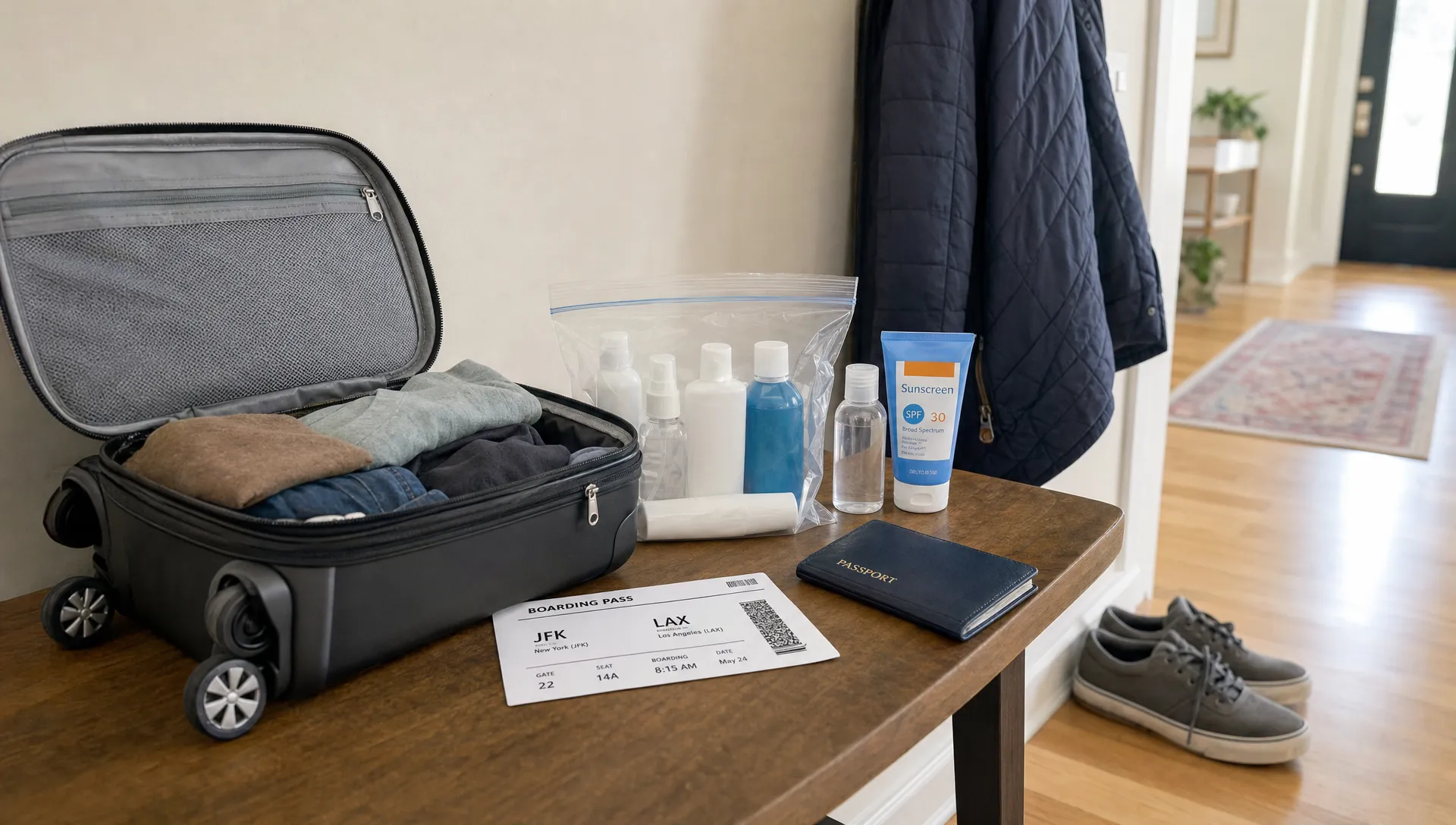
The airport security 100ml rule is simple on paper, but the checkpoint experience can feel less predictable when you are rushing, carrying half-used toiletries or connecting through an unfamiliar airport. In practice, security staff are not measuring how much shampoo is left in your bottle. They are checking whether the container, the bag and the route rules match what that checkpoint allows.
This guide focuses on what actually happens once your cabin bag reaches security: what officers look for, why some liquids trigger a bag search, what your options are if an item is refused and how to reduce delays before you arrive at the tray table.
Airport security 100ml: the checkpoint process in plain English
At most checkpoints, the screening process starts before the X-ray. Signs, staff instructions and tray rules tell you whether liquids must come out of your bag, whether they need to be placed in a clear plastic bag and whether larger liquids are allowed because of newer scanners. If the rule is unclear, assume the stricter limit until you can confirm it.
For most travelers, airport security 100ml enforcement comes down to the container label, not the amount left inside. A 200ml bottle with only a little product remaining is usually still treated as a 200ml container. A 100ml container that is full is normally easier to screen than an oversized container that looks almost empty.
Once your bag enters the X-ray or CT scanner, officers look for dense shapes, unusual layering and items that need separate verification. Liquids, gels, pastes, creams, aerosols and spreadable foods can all appear as items requiring a closer look. Some airports let approved liquids stay inside the bag. Others still require them to be removed and placed separately in a clear bag.
| Checkpoint stage | What staff are usually checking | What can slow you down |
|---|---|---|
| Tray preparation | Liquids bag, electronics and bulky outerwear rules | Liquids buried deep in a packed cabin bag |
| X-ray or CT screening | Shape, density and whether items match the declared rules | Oversized bottles, dense toiletry kits or mixed food items |
| Secondary search | Container size, labeling and whether an exemption applies | Missing labels, unclear medicine status or leaking containers |
| Final decision | Whether the item can fly in the cabin | Local rule differences, transfers and return flight restrictions |
Why the same item can pass one checkpoint and fail another
The frustrating part is that the physical item may not change, but the checkpoint rule can. Some airports use newer screening technology that supports larger quantities under specific local policies. Others still apply the classic 100ml container rule because of national regulation, equipment coverage, staff procedures or transfer screening requirements.
Airport security 100ml rules are also route-sensitive because your outbound airport is not the only checkpoint that matters. A round trip may involve a stricter return airport. A connection may involve a second security screening. A duty-free purchase may be allowed at one stage but questioned later if it is not packed correctly.
The TSA 3-1-1 liquids rule is the familiar U.S. version: containers of 3.4 ounces or 100 milliliters, placed in a one-quart bag, with limited exceptions. The UK government also publishes hand luggage restrictions that explain how liquids, gels, pastes and aerosols are handled. Other countries and airports may differ, which is why checking the specific airport and route matters.
If you are not sure whether an item is treated as a liquid in the first place, Liquid Limits has a separate guide on what counts as 100ml of liquid at security, covering toiletries, makeup, foods and other borderline items.
What happens when a liquid gets flagged
When the scanner flags your bag, it is usually pulled aside for a manual check. You may be asked whether you packed the bag yourself, what the item is or whether you have any medical or baby-related liquids. The officer may open the bag, remove the toiletry kit or inspect the container label.
At this point, airport security 100ml decisions are usually practical and fast. If the item fits the local cabin rule, it goes back into your bag. If it is too large and no exemption applies, you will usually be asked to surrender it, place it in checked baggage if that is still possible or leave the checkpoint to make other arrangements. Airports rarely store rejected liquids for later collection.
A flagged liquid does not always mean you did anything wrong. Dense packing, stacked containers, foil pouches, insulated bottles and mixed cosmetic bags can all create an image that needs a human check. The delay is often caused by uncertainty, not by a forbidden item.
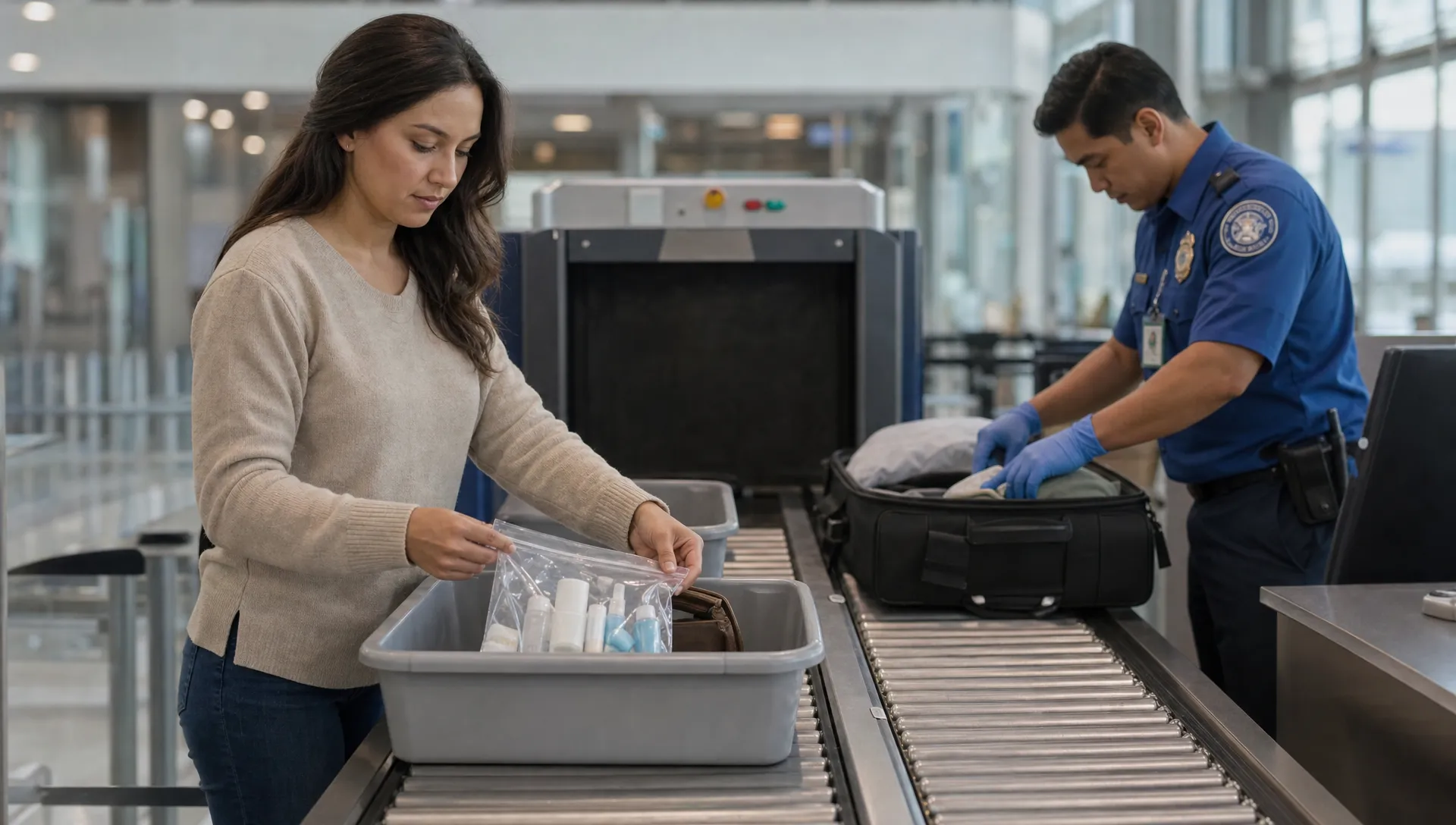
Common checkpoint outcomes for cabin liquids
Most liquid checks end in one of a few predictable outcomes. Knowing them helps you stay calm and avoid repacking your entire bag under pressure.
| If security finds this | Likely checkpoint outcome | Best prevention |
|---|---|---|
| 100ml or smaller toiletries packed correctly | Usually allowed | Keep them visible and easy to remove if required |
| Oversized toiletry container | Often refused in cabin baggage | Decant into travel-size containers before leaving home |
| Unlabeled bottle | May be questioned or refused | Use original labels where possible |
| Medicine over 100ml | May be allowed after additional checks | Keep it separate and bring supporting documentation when needed |
| Baby milk, formula or baby food | Often exempt, subject to screening | Tell staff before your bag enters the scanner |
| Duty-free liquid in sealed bag | May be allowed if properly sealed with proof of purchase | Keep the sealed bag intact until your final destination |
The key detail is that airport security 100ml checks are not a negotiation over how harmless an item feels. Officers apply the checkpoint rule they are working under, and their decision is usually based on container size, item type, exemption category and whether the screening image can be cleared.
Items that create the most confusion at the tray table
Toiletries are the obvious category, but many delays come from items travelers do not mentally file as liquids. Lip gloss, mascara, sunscreen sticks with a soft core, hair gel, toothpaste, shaving foam, peanut butter, jam, hummus and soft cheeses can all raise questions because they are liquid-like, spreadable or pressurized.
The airport security 100ml rule often applies to gels, creams, pastes and aerosols because the checkpoint is concerned with how the substance behaves, not just whether it pours like water. A solid bar of soap is usually treated differently from shower gel. Powder makeup is usually treated differently from liquid foundation. A sealed drink bottle bought before security is usually treated differently from a drink bought after security.
Packing by behavior, rather than by product name, is a useful habit. If it can smear, spray, squeeze, spread or flow, treat it as a liquid until you confirm otherwise. If it is essential, pack it near the top of your bag so staff can inspect it without emptying everything.
For broader packing tactics, the Liquid Limits guide on taking liquids through airport security without delays goes deeper into tray preparation, toiletry organization and timing.
How exemptions are handled at the checkpoint
Medicines, medically necessary liquids, baby milk, formula, baby food and special dietary items are commonly handled outside the standard toiletry limit, but they are not invisible to security. They may need to be declared, separated from regular toiletries and screened by additional methods.
In an airport security 100ml situation, an exemption does not mean “pack any amount anywhere.” It means the checkpoint may allow more than the normal limit when the item fits an accepted purpose and can be screened. Staff may ask what the liquid is, who it is for or whether it is needed during the journey.
Keep medicines in original packaging when possible, especially if the name or dosage could matter. For prescription items, a copy of the prescription or a doctor’s note can reduce confusion, particularly on international trips. For baby items, pack only what is reasonable for the journey and make them easy to remove.
Rules for exemptions vary by country, so check the airport and official authority before flying. If official guidance conflicts with a general travel article, follow the official guidance for your departure point and any transfer airport.
Transfers, return flights and duty-free surprises
The first checkpoint is not always the last. International connections can send you through security again, even if your bag was screened at the departure airport. That second checkpoint may apply a different liquid policy.
Airport security 100ml planning should include the return flight and any connection where you may need to re-clear security. This is where travelers get caught with full-size toiletries bought abroad, duty-free alcohol opened too early or cosmetic products that were fine at one airport but not at the next.
Duty-free liquids are a special case. Many airports allow them through later checkpoints only when they remain sealed in an approved security tamper-evident bag, often with the receipt visible inside. If you open the bag, remove the receipt or transfer the bottle into your normal carry-on, it may be treated like any other oversized liquid.
Before a multi-airport trip, use Liquid Limits to check airport, item and route guidance side by side. The tool is designed for situations where the outbound and return rules may not match, and it defaults to the stricter 100ml rule when a rule is unclear.
How to pack so the checkpoint goes faster
Good packing will not override a local rule, but it can prevent avoidable searches. The aim is to make every liquid easy to identify, easy to remove and easy for the officer to clear.
Use this simple checkpoint packing approach:
- Pack regular toiletries in containers of 100ml or smaller when the stricter rule may apply.
- Keep the container label visible, especially for cosmetics, medicine and specialty products.
- Separate exemptions from ordinary toiletries so staff can inspect them quickly.
- Avoid burying liquids under electronics, chargers, food and dense clothing.
- Keep duty-free liquids sealed in their security bag until you reach your final destination.
- Check your return airport and transfer airport, not just the airport where your trip begins.
If you are flying through airports with different scanner policies, pack for the strictest checkpoint you expect to encounter. That usually means keeping standard toiletries at 100ml or less, even if one airport on your route advertises more relaxed screening.
Frequently Asked Questions
Does airport security measure the liquid inside the bottle? Usually no. In most 100ml-rule checkpoints, staff look at the container capacity printed on the bottle. A 200ml bottle that is nearly empty can still be refused because the container is larger than the permitted size.
Can I take multiple 100ml bottles through security? Often yes, but they usually need to fit within the permitted liquids bag or local cabin baggage rule. The exact bag size and presentation requirement can vary by country and airport.
What happens if my liquid is too large? You may have to surrender it, return to check-in if time and airline rules allow, place it in checked baggage or leave the checkpoint. Once you are at screening, options are usually limited.
Are medicines limited to 100ml? Many airports allow medically necessary liquids above the standard limit, but they can require separate screening and supporting information. Pack them separately and check the rules for your departure and transfer airports.
Do new scanners mean the 100ml rule is gone? Not everywhere. Some airports have changed procedures where approved scanners and rules allow it, but many checkpoints still use the 100ml limit. For a mixed route, assume the stricter rule unless you have verified each airport.
Check before you pack
The easiest checkpoint is the one you prepare for before leaving home. Check your departure airport, connection, return airport and specific items before you pack, especially if you are carrying toiletries, medicine, baby items or duty-free liquids.
Use Liquid Limits to compare the rules for your trip, see verified source links and spot stricter airports before your bag reaches the scanner.