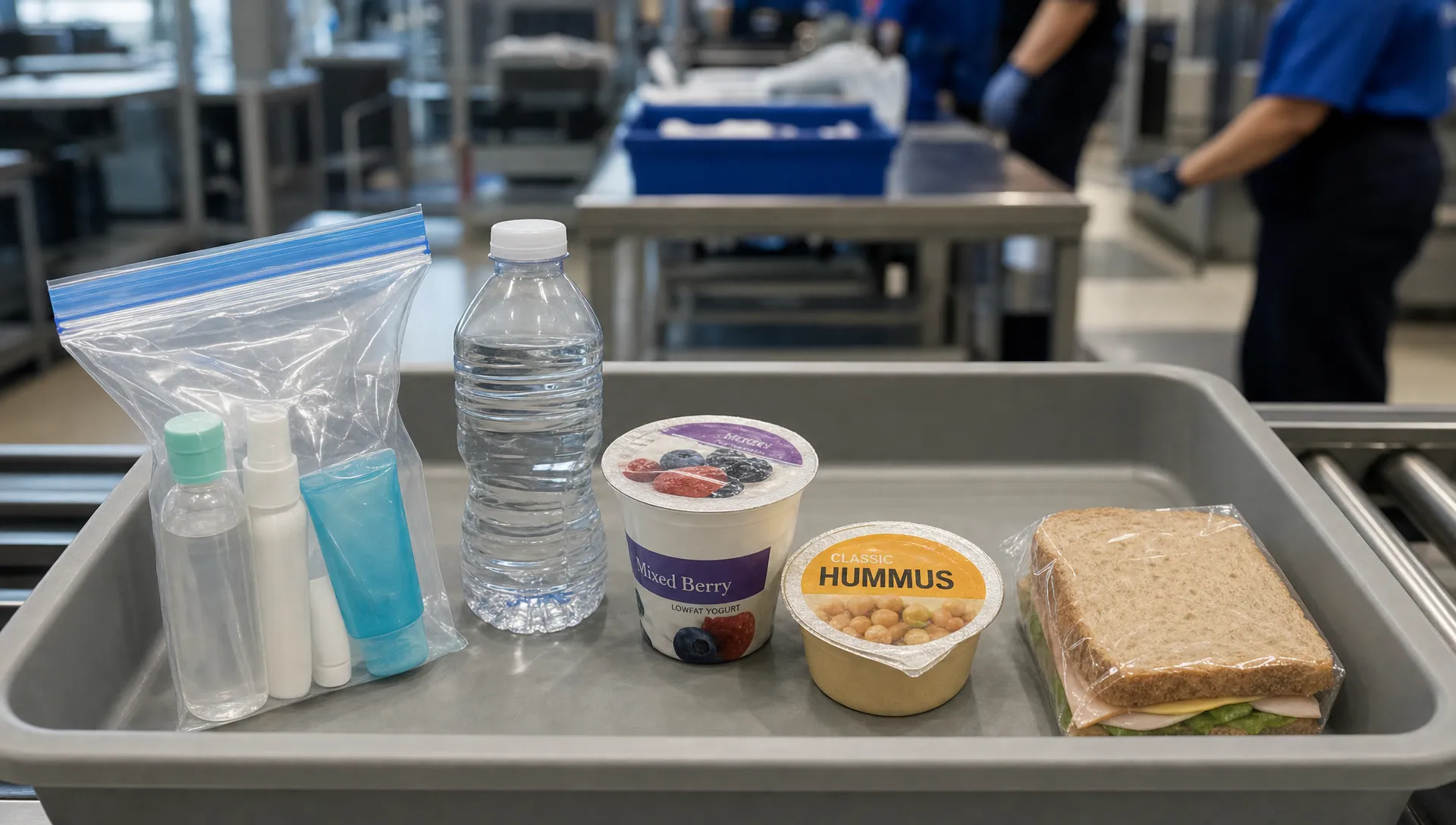
Food and drinks cause more airport security problems than many travelers expect. The airport security liquids rules do not stop at shampoo and toothpaste. They also apply to water bottles, coffee, soup, sauces, yogurt, peanut butter, jam, hummus, soft cheese and other spreadable or pourable foods. The safest approach is to pack as if the strictest checkpoint on your route will apply, especially when you have a connection or a return flight from a different airport.
That does not mean you have to avoid snacks or arrive hungry. It means you should separate solid foods from liquid-like foods, know which items need small containers and check your airports before you pack. If your itinerary includes more than one airport, a route check on Liquid Limits can help you compare the rules for your outbound and return flights before you leave home.
How airport security liquids rules apply to food and drinks
Most airport liquid policies are built around the same basic idea: liquids, aerosols, gels, creams and pastes in cabin baggage must fit within the airport's permitted container size. In many places, that means containers of 100ml or 3.4 oz or less, packed in a clear bag when required. The TSA liquids rule in the United States is commonly known as the 3-1-1 rule, while the UK government describes similar limits in its hand luggage restrictions.
The practical takeaway is simple: airport security liquids rules are about how an item behaves at screening, not just how it is labeled. A jar of honey may sit on a grocery shelf next to dry cereal, but security can treat honey like a liquid or gel because it pours and spreads. The same logic applies to dips, dressings, sauces and creamy desserts.
Rules also vary by airport, scanner type and route. Some airports have newer screening equipment or different published procedures, but travelers should not assume a relaxed rule applies everywhere. If the policy is unclear, Liquid Limits defaults to the stricter 100ml rule, which is usually the safer way to pack.
What counts as a liquid food or drink at security?
The easiest test is texture. If the item can be poured, squeezed, sprayed, spread, smeared or stirred like a gel, it may be treated as a liquid for cabin screening. If it holds its shape as a solid food, it is more likely to be allowed in normal cabin quantities, subject to local customs and agricultural rules at your destination.
For food, airport security liquids rules usually draw the line at soft and wet items rather than at whether something is edible. A sandwich is normally a solid food. A tub of salsa, a jar of almond butter or a bottle of salad dressing is not.
| Item type | Usually treated as | Carry-on packing approach |
|---|---|---|
| Water, coffee, juice, soda | Drinkable liquid | Empty, finish before security or keep within the allowed container size |
| Jam, honey, peanut butter, hummus | Gel, paste or spread | Use containers within the liquid limit or pack in checked baggage |
| Soup, gravy, sauce, curry | Liquid or semi-liquid food | Keep within the liquid limit unless exempt |
| Yogurt, pudding, custard | Gel or creamy food | Use small containers that meet the airport rule |
| Bread, crackers, cookies, sandwiches | Solid food | Usually allowed through screening, but check destination restrictions |
| Frozen drinks or gel packs | Depends on condition | Must meet local rules if melted or partly melted |
For a wider view of toiletries, medicines and other borderline items, see this guide to airport liquid requirements. Food follows many of the same screening principles.
Drinks: water bottles, coffee, alcohol and smoothies
Drinks are the easiest category to understand because they are obviously liquid. A full water bottle, takeaway coffee, protein shake, smoothie or carton of juice is likely to be stopped if it exceeds the airport's cabin liquid limit. Empty reusable bottles are usually fine, and most airports have refill stations after security.
Alcohol has the same security issue at the checkpoint, plus airline and customs rules after that. A miniature bottle that fits the liquid rules may pass screening, but drinking your own alcohol onboard is usually restricted by airline policy. Larger bottles bought before security usually belong in checked baggage unless your airport specifically allows them through.
After security, you can normally buy drinks in the departure area and take them onto the plane, subject to airline rules and any extra screening before boarding. The complication comes with connections. A drink bought after security at one airport may still face another security checkpoint later.
Spreadable foods: the most common surprise
The most confiscated food surprises tend to be items travelers think of as snacks rather than liquids: peanut butter, Nutella-style spreads, hummus, cream cheese, salsa, jam, honey, chutney, pâté, dips and sauces. They are edible, sealed and often harmless, but their texture makes them liquid-like at screening.
This is where airport security liquids rules catch travelers off guard. A 250ml jar of peanut butter can be refused even if it is unopened, while a peanut butter sandwich may be allowed because the spread is already part of a solid prepared food. Security officers still have discretion, so keep anything messy, dense or spreadable easy to inspect.
A practical packing rule is to avoid full-size jars in cabin baggage. Use travel-size containers that meet the strictest liquid limit on your route or place unopened larger containers in checked luggage. If you are bringing food as a gift, check whether it is solid, spreadable or packed in liquid.
Solid foods are simpler, but not rule-free
Most dry or firm foods are easier to take through security. Bread, cereal bars, pastries, chips, crackers, cookies, dry pasta, candy, sandwiches and many firm fruits can often go in carry-on baggage. They should still be packed neatly so screening officers can identify them without unpacking your whole bag.
International travel adds another layer. Even if a food passes airport security, it may be restricted by customs or agriculture rules when you land. Fresh fruit, meat, dairy products, seeds and plant material can be limited or banned depending on the country. Security screening and border entry are separate processes, so passing one does not guarantee passing the other.
If you are packing food for a long flight, choose low-mess, solid items that are easy to separate from electronics and liquids. This keeps your bag faster to screen and reduces the chance that an officer needs to inspect every container.
Frozen foods, ice packs and gel packs
Frozen items sit in a gray area because their status can change during travel. In the United States, TSA guidance for frozen liquid items generally allows them if they are completely frozen when presented for screening. If they are partially melted, slushy or have liquid at the bottom of the container, they must meet the normal liquids rule.
The same logic is useful even outside the US: if it can melt, leak or become pourable by the time you reach security, pack it cautiously. Airport security liquids rules can apply based on the condition of the item at the checkpoint, not the condition it was in when you left home.
Gel packs and ice packs used for food are also sensitive items. If they are needed for a medical reason, different exemption rules may apply. If they are only keeping ordinary snacks cold, check the airport's rules and consider using frozen solid food instead of loose ice or gel when possible.
Baby food, formula, breast milk and medical nutrition
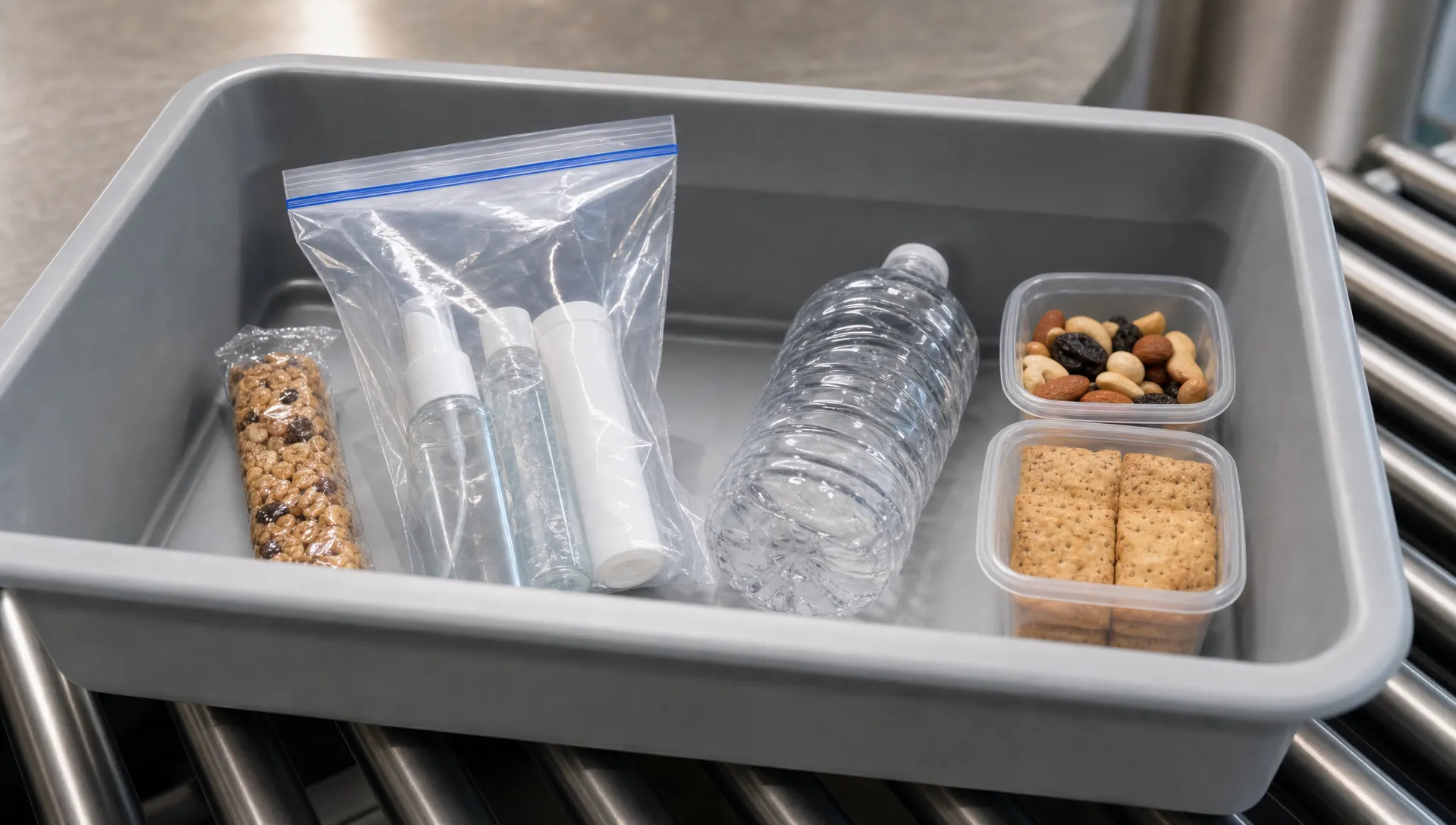
Many airports make exceptions for baby food, infant formula, breast milk and medically necessary liquid nutrition. These items may be allowed in quantities greater than the standard cabin liquid limit, but they usually need to be declared at screening and may be inspected separately.
Do not hide exempt items inside your regular liquids bag. Place them somewhere easy to remove, tell the officer what they are and keep labels or prescriptions available when relevant. Powdered formula is usually easier to pack than liquid formula, but parents often need both convenience and certainty, especially on long travel days.
Medical nutrition can include liquid meal replacements, feeding tube supplies or special dietary products needed during the trip. The key is necessity. If the item is essential for health, check the exact airport rule before you fly and arrive with extra time for screening.
Before security, after security and during connections
A drink bought before security is not the same as a drink bought after security. Before the checkpoint, your cabin baggage must meet the screening rule. After the checkpoint, airport shops usually sell drinks and wet foods that you can carry to the gate, although airlines and destination rules can still matter.
Duty-free alcohol and other liquids add another layer. Many international airports use sealed tamper-evident bags for duty-free liquids, often with the receipt visible inside. These bags can help during connections, but they are not a universal guarantee. If your route includes another security checkpoint, the next airport's policy controls what happens there.
Airport security liquids rules also matter on return trips. A sauce, oil, jam or bottle of local drink that was fine in checked baggage on the way out may become a problem if you try to bring it home in carry-on baggage. For multi-airport trips, compare outbound and return rules before buying liquid gifts.
How to pack food and drinks without delays
Good packing is mostly about reducing ambiguity. Security officers have limited time to decide whether an item is solid, liquid, exempt or suspicious. Clear containers, original labels and easy access can make the difference between a quick check and a bag search.
Use this simple approach before leaving for the airport:
- Empty reusable bottles before security and refill them airside.
- Put sauces, dips, spreads and yogurts in containers that meet the strictest liquid limit on your route.
- Keep baby food, formula, breast milk and medical liquids separate from ordinary snacks.
- Pack large jars, bottles and wet gifts in checked baggage when possible.
- Avoid wrapping food gifts before screening because officers may need to inspect them.
- Check destination rules for fresh produce, meat, dairy and plant products.
If you want to reduce surprises further, review which items are often questioned in this guide to what gets flagged at screening. Food and drink problems often come from texture, packaging or a connection that adds another checkpoint.
Planning for round trips and strictest-rule packing
The rule you meet on your departure day may not be the rule you meet coming home. Airports in the same country can also publish different procedures, especially during technology upgrades or temporary changes. That is why strictest-rule packing works well for food and drinks.
On multi-airport itineraries, airport security liquids rules should be checked for every checkpoint where you may need to clear security again. This includes the first departure airport, transfer airports, the return airport and any airport where you leave the secure area during a layover.
Liquid Limits is built for this exact problem. You can check airport rules, item-specific guidance and route liquid checks, with last-checked dates and source links where available. If you are planning a round trip, this return trip liquid guidelines article explains why the way home can be the part travelers forget.
Quick examples: pack it or rethink it?
A sealed bottle of water in your carry-on before security should usually be emptied, finished or packed in checked baggage. An empty bottle is the better choice.
A sandwich with cheese and a small amount of sauce is usually easier than a separate tub of sauce. If the sauce is separate, it may need to follow the liquid limit.
A large jar of honey bought as a gift is better in checked baggage. If you only have carry-on baggage, buy it after security if your route has no further checkpoint or choose a small container within the allowed limit.
A yogurt cup for breakfast is a liquid-like food. If it exceeds the airport's container limit, eat it before security or buy one airside.
A bag of chips, crackers or cookies is normally straightforward at screening, but keep it accessible if your bag is packed tightly.
Frequently Asked Questions
Can I take food through airport security? Yes, many solid foods can go through airport security in carry-on baggage. Wet, creamy, spreadable or pourable foods may need to follow the airport's liquid limit.
Does peanut butter count as a liquid at airport security? Peanut butter is commonly treated as a paste or spread, so it may be subject to the same limit as liquids, gels and creams in cabin baggage.
Can I bring a water bottle through security? You can usually bring an empty reusable water bottle through security. A full bottle is likely to be refused unless it meets an applicable exemption or local rule.
Are baby food and formula exempt from liquid limits? Many airports allow baby food, formula and breast milk in quantities greater than the standard liquid limit. You should declare them at screening and keep them separate for inspection.
Can I take drinks bought after security onto the plane? Usually yes, but connections can create problems if you must pass through another security checkpoint. Airline rules and destination restrictions may also apply.
Do airport security liquids rules apply to checked baggage? The cabin liquid limit mainly applies at passenger screening for carry-on bags. Checked baggage has different restrictions, especially for alcohol, aerosols and items that can leak or break.
Check food and drink rules before you pack
Food and drinks are easy to overlook because they feel less risky than toiletries. In practice, a jar of sauce or a breakfast yogurt can cause the same delay as an oversized bottle of shampoo.
Before your next flight, use Liquid Limits to check airport rules, item-specific guidance and route restrictions for both directions of your trip. When a rule is unclear, packing to the stricter limit is the safer choice and usually the fastest way through screening.