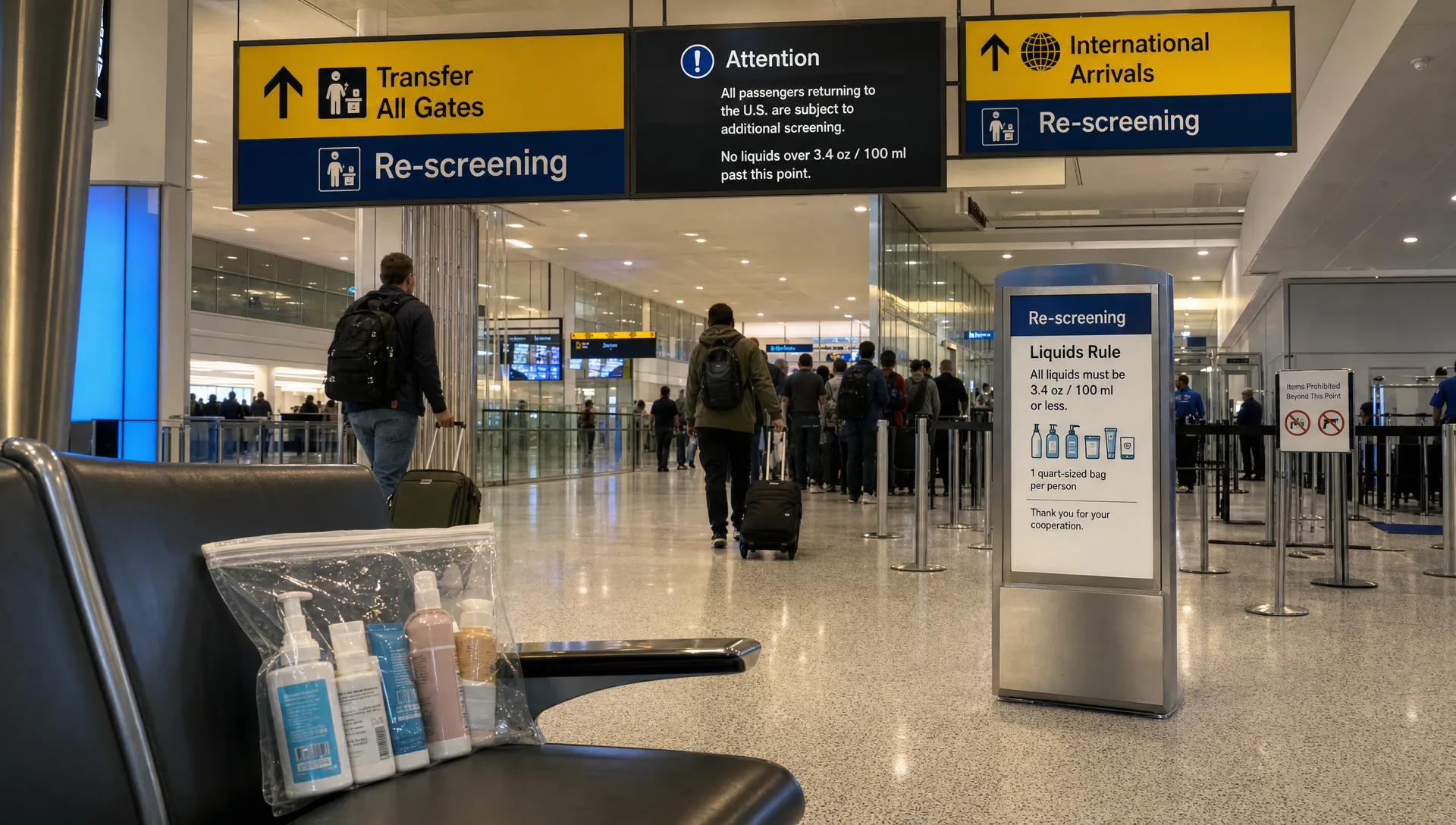
Packing toiletries is simple until your itinerary gets longer, your connection changes countries or your return airport applies a stricter checkpoint rule than the one you saw on the way out. The safest way to think about carry on luggage liquid rules is not as a single airport policy, but as a packing constraint for your whole trip.
For a one-night work trip, the goal is usually to fit everything into a small clear bag and avoid checked luggage. For a two-week vacation, the smarter move may be to carry only what you need for the flight and first day, then buy larger items after arrival or place them in checked baggage.
Trip length matters because liquids are the first category where convenience and compliance collide. Shampoo, sunscreen, toothpaste, perfume, contact lens solution, skin care, gels and aerosols can all fall under liquid restrictions at airport security. The right plan depends on how long you are away, which airports you pass through and whether your return journey has different rules.
How carry on luggage liquid rules change your packing plan
At many airports, the familiar baseline is still containers of 100 ml or 3.4 oz or less, placed in a clear, resealable liquids bag. In the United States, the Transportation Security Administration explains this as the 3-1-1 liquids rule: travel-size containers, one quart-size bag, one bag per passenger. In the United Kingdom and many other places, the common cabin limit is also 100 ml per container, though bag size and screening instructions can vary by airport.
Some airports use newer scanners that may allow larger containers at certain checkpoints. That does not mean you can assume a larger bottle will be accepted everywhere. Scanner rollouts are uneven, rules can change and a connecting or return airport may still enforce the 100 ml limit.
When you use carry on luggage liquid rules as a planning tool rather than a last-minute screening hurdle, the main decision is whether each product belongs in your cabin bag at all. A product you need during the journey is different from a product you only need once you reach the hotel.
What counts as a liquid for packing purposes
Security screening usually treats more than water-like liquids as restricted. Creams, gels, pastes, lotions, sprays, roll-ons and aerosols can all count. Toothpaste, mascara, lip gloss, shaving gel, sunscreen and peanut butter are common surprises.
If you are unsure whether an item counts, assume it does until you verify it. You can also compare examples in a dedicated guide to what is allowed as liquids in carry-on luggage, especially for borderline items such as cosmetics, food spreads and medical products.
Short trips: pack small, simple and visible
For short trips, carry on luggage liquid rules are easiest to follow when you pack around actual use, not around the size of the bottle you own at home. A weekend does not require a full shampoo bottle, a full face wash and a full-size fragrance.
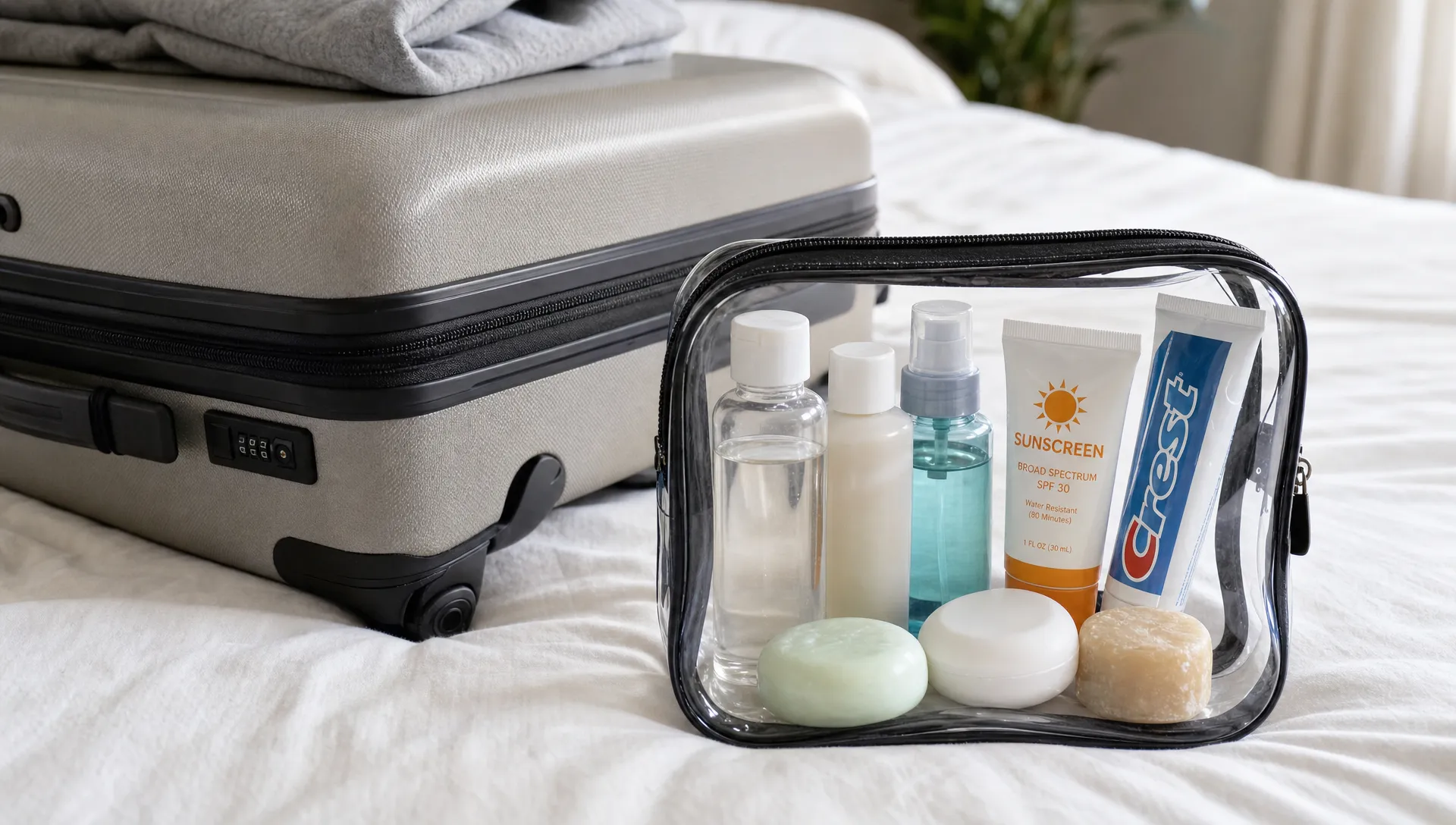
A good short-trip strategy is to build a small repeatable kit. Use 100 ml or smaller containers, label anything you decant and keep the bag easy to remove if the airport still requires separate screening. Even at airports where you can leave liquids inside your bag, visible organization reduces delays if an officer asks to inspect an item.
Short trips also reward solid alternatives. A shampoo bar, stick deodorant, solid cleanser or toothpaste tablets can free space in your liquids bag. Not every solid product is automatically exempt from inspection, but true solids generally avoid the same container-size problem as gels and creams.
| Short trip need | Better cabin choice | Why it helps |
|---|---|---|
| Hair care | Small refillable bottle or shampoo bar | Cuts volume without skipping essentials |
| Skin care | Sample sachets or mini pots | Matches the number of nights away |
| Fragrance | Atomizer under 100 ml | Avoids carrying a full glass bottle |
| Tooth care | Travel toothpaste or tablets | Keeps the liquids bag from filling too fast |
| Shaving | Electric razor or small gel | Reduces aerosol and gel volume |
The common mistake on a short trip is packing “just in case” liquids. If you are away for two nights, the backup conditioner, second cologne and oversized sunscreen usually create more risk than value.
Long trips: carry less through security and replenish later
For long trips, carry on luggage liquid rules can feel impractical because your real needs exceed what fits in a small bag. The solution is not to cram more into cabin baggage. It is to split your liquids into journey essentials, checked-bag items and destination purchases.
Cabin liquids should cover the flight, possible delays and the first day after arrival. That may include medication, contact lens solution, hand cream, lip balm, a small toothpaste and basic skin care. Larger toiletries can go in checked baggage if you are checking a suitcase, though aerosols, alcohol and other regulated goods can still have separate safety limits.
If you are traveling for more than a week with carry-on only, plan to buy routine consumables after security or after arrival. Sunscreen, shampoo, body wash and shaving foam are often easier to replace locally than to defend at security in oversized containers.
A long-trip packing split often looks like this:
| Item type | Best place for a long trip | Practical note |
|---|---|---|
| Prescription medicine | Carry-on | Keep it accessible and in original packaging when possible |
| Contact lens solution | Carry-on if needed in transit, otherwise checked or bought later | Medical exemptions may apply, but screening can take longer |
| Full-size shampoo | Checked bag or buy after arrival | Usually not worth cabin bag space |
| Sunscreen | Small cabin amount plus destination purchase | Useful if arriving before hotel check-in |
| Perfume or cologne | Small atomizer | Protects the bottle and saves liquid allowance |
| Aerosol products | Checked bag only if permitted, or replace with non-aerosol | Aerosols can have extra restrictions |
For longer itineraries, comfort comes from redundancy in the right place. Keep irreplaceable liquids with you, such as prescribed medication. Move replaceable liquids out of the cabin bag whenever possible.
Round trips and connections need extra attention
The biggest liquid-rule surprise often happens on the way home. You may depart from an airport with newer screening equipment, buy full-size toiletries during the trip, then return through an airport that still applies the 100 ml cabin limit. The same issue can happen during a connection if you must clear security again.
The safest way to apply carry on luggage liquid rules across a full itinerary is to follow the strictest checkpoint on your route, not the most relaxed one. This is especially relevant for open-jaw trips, international connections, separate tickets and vacations where you buy cosmetics, wine, sauces or skin care before returning.
Duty-free liquids deserve separate planning. Many airports allow duty-free liquids over 100 ml if they are packed in a sealed security tamper-evident bag with proof of purchase. Even then, acceptance can depend on where you transfer and whether the bag remains sealed. If you will pass through another security checkpoint, check the transfer airport before you rely on duty-free packaging.
Liquid Limits is built for this exact problem. You can use the trip liquid checker to compare airports on your route, including the return flight, with last-checked dates and source links. For a deeper look at itinerary planning, the guide to rules for liquids on flights and return trips explains why the return leg can be the strictest part of the journey.
A practical packing method for any trip length
Treat carry on luggage liquid rules as a sorting exercise before you start filling bottles. Put every liquid, gel, cream, paste and aerosol into one of three groups: must travel in the cabin, can travel checked or can be bought later.
Cabin items should be small, compliant and easy to inspect. Checked items should be sealed against leaks, ideally inside a zip bag or toiletry case. Destination purchases should be realistic, meaning you can easily find them near your hotel, airport or first stop.
A simple pre-flight check can prevent most problems:
- Confirm the rule at your departure airport, transfer airport and return airport.
- Keep each cabin liquid container within the strictest limit on your route.
- Do not assume a half-full large bottle counts as compliant, because container size usually matters.
- Pack medical liquids separately and allow extra screening time.
- Leave space for items you may buy before flying home.
This method works for both minimalist travelers and heavy packers because it focuses on decisions, not deprivation. You are not giving up your routine. You are choosing which part of the journey each item belongs in.
Common mistakes that cause liquid problems at security
The most common mistake is measuring the amount inside a container instead of the container capacity. A 200 ml bottle that is half full may still be refused at a 100 ml checkpoint because the printed container size exceeds the limit.
Another mistake is forgetting that creams and pastes count. Travelers often remember shampoo and perfume but overlook toothpaste, hair gel, liquid makeup, sunscreen sticks with creamy cores or food items with spreadable textures.
A third mistake is assuming outbound approval guarantees return approval. If you bought a full-size product during your trip and do not have checked luggage for the return, you may have to discard it before security. Checking the strictest airport in advance is much cheaper than losing a new bottle at the checkpoint.
Frequently Asked Questions
Do liquid rules change for short flights? Usually no. Airport security rules are based on the checkpoint, not the flight duration. A 45-minute domestic flight can have the same liquid limit as a long international flight if both depart from airports using the same screening policy.
Can I bring a full-size bottle if it is almost empty? At checkpoints using the 100 ml limit, the container capacity usually matters. A larger bottle that contains only a small amount can still be refused.
Are medicines included in the liquids bag? Liquid medicines are commonly treated as an exemption, but you may need to declare them and allow extra screening. Keep prescriptions or supporting documentation with you when practical.
What should I do with liquids bought during a long trip? If they are over the cabin limit, pack them in checked baggage, ship them if appropriate or use them before you fly. Do not assume they can travel in your carry-on on the return journey.
Are airport scanner rules the same everywhere? No. Some airports and checkpoints allow more flexibility because of newer screening equipment, but others still apply the standard 100 ml rule. Your route matters more than any single airport announcement.
Check your route before you pack
A short trip is easiest when your liquids are small and visible. A long trip is easiest when you carry only transit essentials and plan where the rest will go. In both cases, the smartest step is to check the strictest rule before you pack.
Before your next flight, use Liquid Limits to look up airport, item and route guidance with daily updates, source links and return-trip checks. If a rule is unclear, plan for the stricter 100 ml limit so your bag is ready for the checkpoint that matters most.