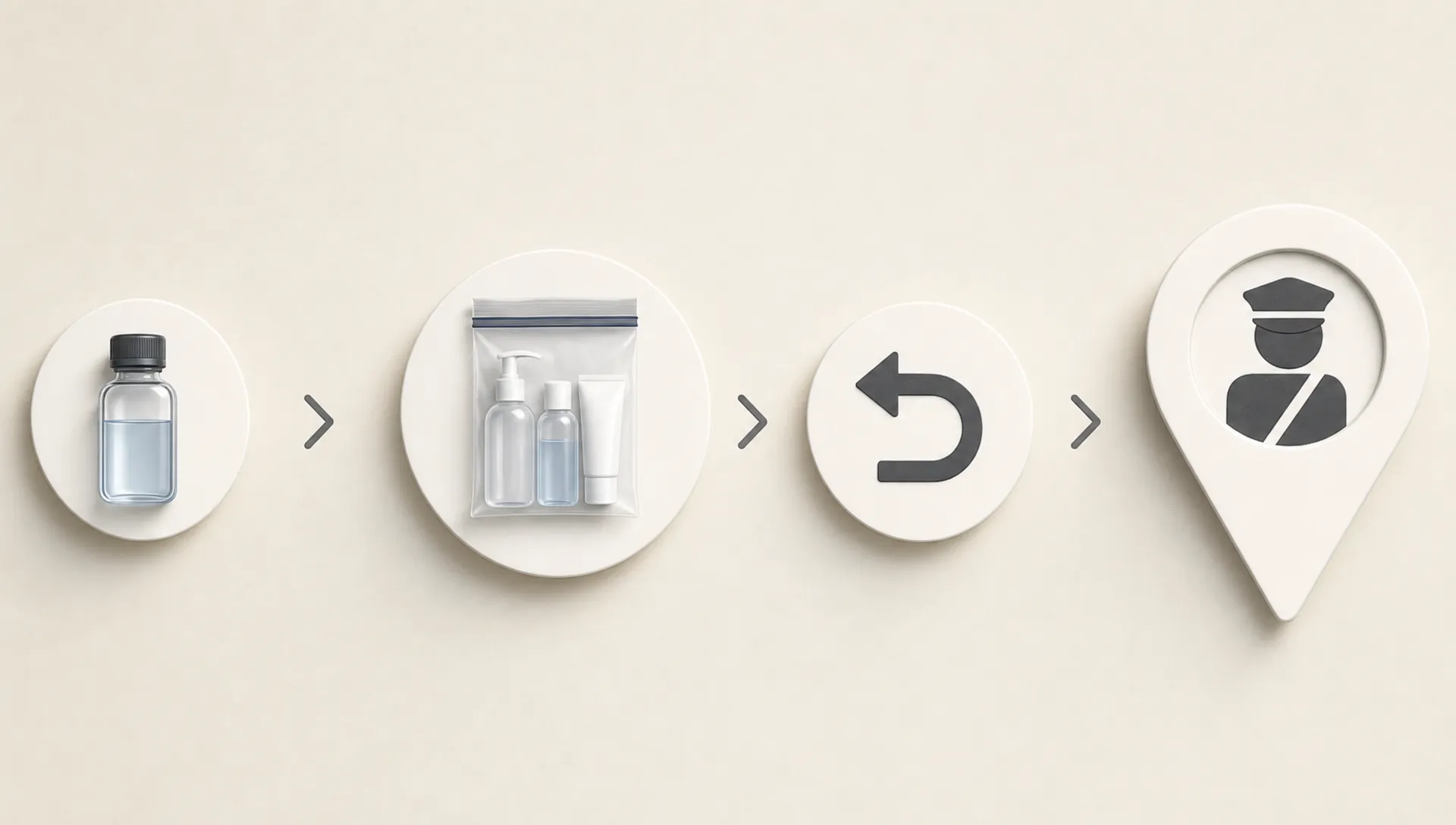
Hand luggage airport rules are easier to manage when you treat them as trip rules, not one universal packing rule. The bottle that passed through one airport last month may be rejected on a connection this week. A bag that fits one airline may be too large for another. A power bank that is fine in your cabin bag may become a problem if that bag is gate checked.
For a smoother trip, the goal is not to memorize every airport policy in the world. It is to know which rules can affect your route, check the ones that change most often and pack your hand luggage so security staff can screen it quickly.
Why hand luggage airport rules vary
Airport rules come from several layers at once. Security authorities decide what can pass through screening. Airports apply local procedures based on their equipment, staffing and national rules. Airlines set cabin bag size and weight limits. Customs and agriculture authorities may restrict food, plants, animal products and some medicines when you enter a country.
That is why a simple question like whether you can carry a 150ml toiletry bottle can have different answers depending on the airport, the direction of travel and whether you have a connection. Some airports use newer scanners that may allow different liquid procedures, while many still apply the familiar 100ml container rule. Even where a larger allowance exists, it may not apply to every terminal, every route or your return airport.
A practical rule helps: when airports on the same trip apply different rules, pack to the strictest rule unless you have verified otherwise. This is especially important on round trips, where the return airport may not match your departure airport.
The hand luggage rules worth checking before every flight
Most travelers focus on liquids, but smooth packing depends on more than one rule category. Use the table below as a quick pre-flight filter before you zip your cabin bag.
| Rule area | What to check | Common mistake |
|---|---|---|
| Liquids, gels and aerosols | Container size, clear bag rules, exceptions and airport scanner policy | Packing a half-empty full-size bottle and assuming the remaining liquid volume matters |
| Toiletries and cosmetics | Creams, pastes, mascara, gels, sprays and balms | Treating thick products as solids when security treats them as liquids |
| Medicines and medical items | Quantity, documentation, screening procedure and destination rules | Burying essential medicine at the bottom of the bag |
| Electronics | Whether laptops, tablets or large devices must be removed for screening | Packing devices where they cannot be reached quickly |
| Batteries and power banks | Airline limits, lithium battery rules and what to remove if a bag is gate checked | Leaving a power bank in a bag that is sent to the hold |
| Food and powders | Spreads, sauces, powders and destination import rules | Forgetting that a food may pass security but still be restricted by customs |
| Sharp or tool-like items | Blade length, scissors, razors, multitools and local limits | Assuming an item allowed by one airport is accepted everywhere |
| Bag size and weight | Airline cabin allowance for your fare, including personal items | Checking airport security rules but missing the airline gate rule |
If you want a broader breakdown of the non-liquid categories, this guide to airport rules that affect what you can pack covers the other rule layers in more detail.
Liquids are still the rule most likely to slow you down
Liquids remain the biggest source of hand luggage surprises because the definition is wider than many travelers expect. Water, shampoo and perfume are obvious. Toothpaste, sunscreen, mascara, foundation, hair gel, peanut butter, jam and many creams can also count as liquids, gels or pastes for security screening.
In the United States, the TSA liquids rule limits carry-on liquids, aerosols, gels, creams and pastes to containers of 3.4 ounces (100ml) or less, packed in one quart-sized bag. The UK government guidance on hand luggage restrictions also explains the common 100ml container limit and clear plastic bag rules used at many airports.
The key detail is container size. A 200ml bottle with only a small amount left can still be rejected because the container is larger than the permitted limit. If you want the simplest packing plan, use travel-size containers of 100ml or less and keep them together in a clear resealable bag near the top of your hand luggage.
For liquid-specific examples, the Liquid Limits guide to hand luggage liquid limits every flyer should check explains the common problem items and exceptions in plain English.
Route checks matter more than country assumptions
A common mistake is checking only the departure airport. That works for simple domestic trips with no connection, but it can fail on international itineraries. Your liquid rules may be affected by your outbound airport, transfer airport, destination airport and return airport.
Imagine you fly from an airport that permits larger liquid containers due to newer screening equipment, then return from an airport that still applies the 100ml rule. If you buy full-size toiletries during the trip and pack them in hand luggage for the return, they may not pass. The same problem can happen on a connection if you are rescreened before your next flight.
Duty-free liquids can also be tricky. In many cases, liquids over 100ml bought after security must remain sealed in a tamper-evident bag with the receipt visible. That still does not guarantee smooth passage at every connecting airport, especially if you leave the secure area or are screened again under different rules.
This is where a route-based check is more reliable than memory. With Liquid Limits, you can check airport liquid rules for your trip, including the return flight, and compare the relevant limits side by side with source links and last-checked dates.
Pack for screening, not just for space
A perfectly optimized cabin bag can still be frustrating if security staff need you to unpack half of it. The best hand luggage layout puts likely screening items where you can reach them in seconds.
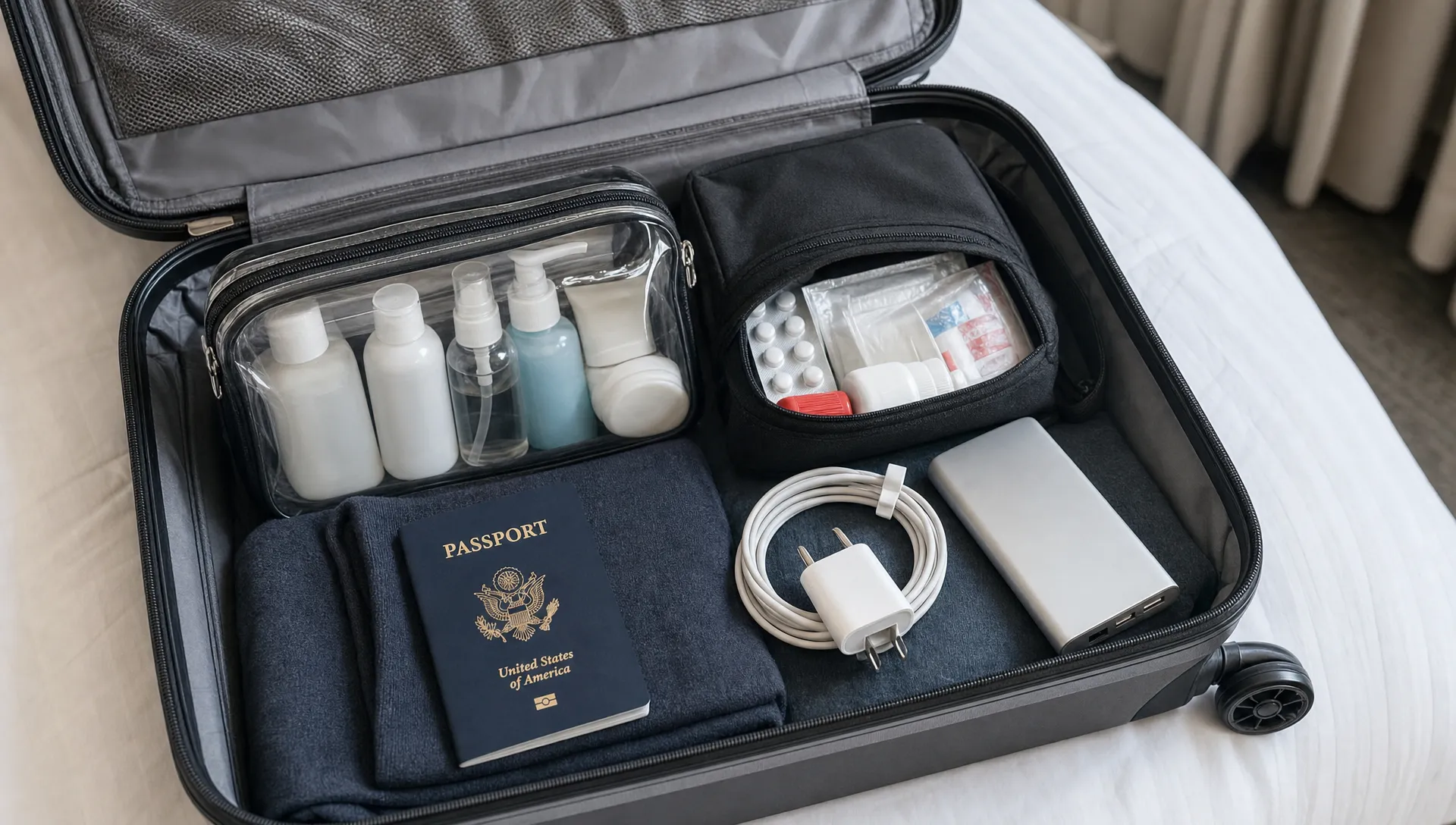
Place your liquids bag near the top, not under clothes. Keep laptops, tablets and cameras accessible until you know whether the airport wants them removed. Put medicines in a separate pouch with documentation if you have it. Keep your power bank, spare batteries, passport, wallet and keys with you if your cabin bag is taken at the gate.
Lithium batteries deserve special attention because they are governed by safety rules, not just packing convenience. The FAA PackSafe guidance says spare lithium batteries and power banks must be carried in carry-on baggage, not checked baggage. Airlines may also set watt-hour limits, so check your carrier before flying with large camera batteries, drone batteries or high-capacity power banks.
A smoother pre-flight packing workflow
You do not need a complicated system. A short timeline catches most issues before they become airport problems.
| When to check | What to do | Why it helps |
|---|---|---|
| 3 to 7 days before travel | Check liquid rules for departure, connection, destination and return airports | Gives you time to buy travel-size containers or move items to checked luggage |
| 48 hours before travel | Confirm your airline cabin bag size, weight and personal item allowance | Prevents last-minute repacking at the gate |
| The night before travel | Separate liquids, medicines, batteries, electronics and documents | Makes screening faster and reduces the chance of losing essentials |
| Before leaving for the airport | Recheck items you added late, such as water bottles, snacks and toiletries | Catches the things most often tossed into a bag without thinking |
| At the airport | Follow signs and staff instructions even if you checked ahead | Screening procedures can vary by lane, equipment and local direction |
The last-minute check matters because many problems are created after careful packing. A full water bottle goes into a side pocket. A large sunscreen gets added after a beach day. A souvenir sauce, spread or cream gets treated as food rather than a liquid. Those small additions are often what trigger a bag search.
How to handle medicines, baby items and special needs
Many airport security systems allow exceptions for medically necessary liquids and baby-related items, but the procedure is not identical everywhere. Do not assume the exception works automatically. Pack these items where they can be inspected separately and bring supporting documentation when possible, especially for prescription medicine, medical nutrition or liquid medical equipment.
For medicine, keep original labels if you can. If a liquid medicine is over 100ml, check the rule for each airport on your trip before travel and be ready to declare it at screening. For baby food, formula and breast milk, check airport guidance in advance and allow extra time for inspection.
The same approach applies to mobility aids, medical devices and cooling packs. Security staff may need to test or inspect them, and a little preparation can prevent stress in the line.
Food, powders and souvenirs need a second check
Food is confusing because it can be affected by both security and border rules. A sealed jar of honey may feel like a snack, but it is also a liquid or gel. Yogurt, dips, sauces, soup, nut butter and soft cheese can be treated the same way. Dry snacks are usually easier from a security perspective, but destination rules may still restrict meat, dairy, fruit, seeds or fresh produce.
Powders can also trigger extra screening in some places, especially in larger containers. Protein powder, spices, cosmetics and powdered drink mixes are not automatically banned, but they may slow the screening process if staff need to inspect them. If you are carrying a large quantity, consider whether it belongs in checked luggage instead.
Souvenirs deserve the same caution. Perfume, olive oil, alcohol, sauces, cosmetics, snow globes and craft items with gels or liquids can all create problems in hand luggage. If you plan to shop during the trip, leave room in checked luggage or confirm that your return airport allows the item in the cabin.
Common hand luggage mistakes that cause delays
Most airport delays are not caused by unusual items. They come from ordinary items packed in the wrong size, wrong place or wrong bag.
- Packing liquids in containers larger than 100ml because the bottle is nearly empty
- Forgetting that pastes, creams, gels and sprays can count as liquids
- Assuming a rule from the outbound airport also applies on the return trip
- Leaving a power bank in a cabin bag that gets gate checked
- Buying duty-free liquids before a connecting flight without checking rescreening rules
- Packing essential medicine so deeply that it cannot be inspected quickly
- Checking only airport security rules and ignoring the airline cabin bag allowance
If you avoid those mistakes, your airport experience usually becomes much easier even when the rules themselves are strict.
When the rule is unclear, choose the stricter option
Unclear rules are common because airport procedures can change faster than travelers expect. Scanner rollouts, temporary restrictions, local security alerts and airline procedures can all affect what happens at screening.
When you cannot verify a liquid rule confidently, the safest packing choice is the 100ml rule. That is also how Liquid Limits handles uncertainty: when rules are unclear, it defaults to the stricter 100ml guidance so travelers are less likely to be caught out at security.
This conservative approach may feel inconvenient if one airport advertises a larger allowance, but it is useful for mixed routes. A 100ml-compliant toiletries bag is more likely to survive departure, transfer and return screening without repacking.
Frequently Asked Questions
What are the most important hand luggage airport rules to check? Check liquid limits, airline cabin bag size and weight, lithium battery rules, medicines, sharp items, food restrictions and any connection or return airport rules. Liquids are often the fastest-changing category, but airline and battery rules can be just as disruptive.
Are airport liquid rules the same everywhere? No. Many airports still use the 100ml container rule, while some may use different procedures because of newer screening equipment. Always check the airports on your actual route, including connections and the return flight.
Can I take medicine over 100ml in hand luggage? Many security authorities allow medically necessary liquids in larger quantities, but you may need to declare them and provide documentation. Keep medicine accessible, preferably in original packaging, and check the rule for each airport before travel.
Can power banks go in checked luggage if my hand luggage is gate checked? Power banks and spare lithium batteries generally need to stay in the cabin, not in checked luggage. If your cabin bag is taken at the gate, remove power banks, spare batteries, medicine, documents and valuables before handing it over.
Do duty-free liquids count at connecting airports? They can. Duty-free liquids over 100ml are often allowed only if sealed in an approved tamper-evident bag with the receipt, but connecting airports may rescreen you. Check your full route before buying liquids you cannot place in checked luggage.
Check your liquid rules before you pack
A smoother trip starts with the rules that apply to your actual itinerary. Before you leave home, use Liquid Limits to check airport liquid rules by airport, item or route, including the return flight. You will see the strictest relevant guidance, source links and last-checked dates so you can pack with fewer surprises at security.