The short answer: at most airports, you can bring liquids in carry-on only if each container is 100ml or 3.4oz or smaller and all those containers fit inside one clear, resealable liquids bag. In practice, that usually means about 1 liter or 1 quart total, but the real limit is not a neat bottle-by-bottle formula.
If you searched for the liquid amount allowed in carry on bags because you want a single number, here is the catch: airport security rules usually limit container size, not just the amount of liquid inside. A 150ml bottle with only 50ml left can still be refused. A 100ml bottle filled to the top is usually fine if it fits in your liquids bag.
The second catch is that some airports now use newer scanning equipment and may allow larger liquids, sometimes up to 2 liters. But this is not universal, and it may not apply on your return flight, at your connection airport, or even at every terminal in the same airport.
The standard carry-on liquid rule, in plain English
For most travelers, the safest rule is simple: pack every liquid, gel, cream, paste, and aerosol in containers of 100ml or less, then place them in one transparent resealable bag for screening.
In the United States, the TSA describes this as the 3-1-1 liquids rule: 3.4oz containers, one quart-sized bag, one bag per passenger. In many other countries, including the UK and much of Europe, the common standard is similar: 100ml containers in a clear bag of about 1 liter.
The exact wording can differ by country, airport, and screening authority, but the standard airport logic is usually the same:
| Rule element | What it usually means | Common mistake |
|---|---|---|
| Container limit | Each container must be 100ml or 3.4oz or smaller | Bringing a larger bottle that is half empty |
| Bag limit | Containers must fit in one clear resealable bag | Packing loose toiletries throughout the cabin bag |
| Per passenger | Each traveler usually gets their own liquids bag | Putting one person’s extra liquids in another bag without separating them |
| Screening | Liquids may need to be presented separately | Leaving the bag buried at the bottom of the carry-on |
So, how much can you really bring? Under the standard rule, you can bring as many small containers as fit comfortably in the allowed liquids bag. That might be seven, eight, or ten small items depending on their shape, but it is not a guaranteed 10 x 100ml allowance.
The number on the bottle matters more than what is inside
One of the most frustrating parts of carry-on liquid rules is that security officers typically look at the container capacity printed on the packaging. They are not measuring how much shampoo, lotion, or perfume remains inside.
That means:
- A 100ml travel shampoo bottle is usually acceptable.
- A 90ml perfume bottle is usually acceptable.
- A 150ml sunscreen tube with only a small amount left can still be rejected.
- A 200ml drink bottle is not allowed through standard screening, even if nearly empty.
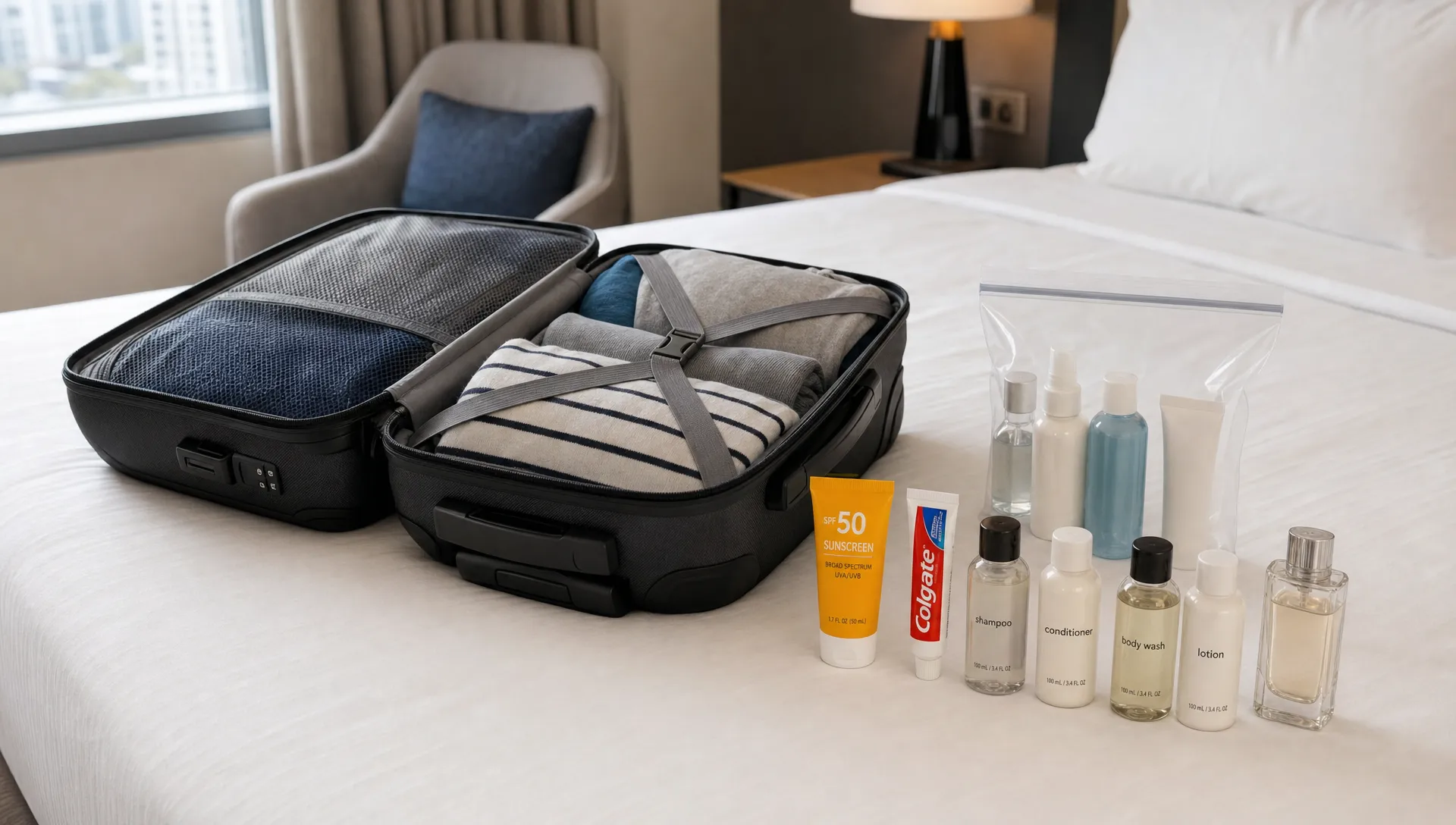
This is why decanting matters. If you want to bring face wash, conditioner, foundation, sunscreen, or hair gel in your cabin bag, transfer it into travel-size containers that clearly show 100ml or less. Unmarked containers may be allowed in some places, but labeled containers reduce the chance of a dispute at screening.
What counts as a liquid in carry-on?
Airport liquid rules cover more than water, drinks, and perfume. Security authorities usually apply the rule to anything that can be poured, spread, sprayed, squeezed, smeared, or has a gel-like consistency.
For a broader breakdown of toiletries, food, and cosmetics, Liquid Limits has a separate guide on which liquids you can bring on a plane. As a quick reference, these are the categories that most often surprise travelers:
| Item type | Usually treated as a liquid? | Carry-on packing note |
|---|---|---|
| Shampoo, conditioner, shower gel | Yes | Use 100ml or smaller containers under standard rules |
| Toothpaste | Yes | Travel-size tubes are safest |
| Mascara, liquid eyeliner, lip gloss | Yes | Put them in your liquids bag |
| Creams, lotions, sunscreen | Yes | The container size matters |
| Deodorant spray or roll-on | Yes | Aerosols and roll-ons usually count |
| Solid deodorant | Usually no | Rules can vary, but solids are less likely to be restricted |
| Peanut butter, jam, yogurt, dips | Usually yes | Spreadable foods are commonly restricted |
| Empty reusable bottle | No, if empty | Fill it after security |
The safest mental test is this: if the item is not clearly solid, assume it belongs in your liquids bag until you confirm otherwise.
Why some travelers hear “2 liters” instead of “100ml”
Some airports have introduced newer CT scanners that can screen liquids more effectively without the older 100ml setup. Where those rules are active, passengers may be allowed to keep liquids in their bags and bring larger containers, often with a stated upper limit such as 2 liters.
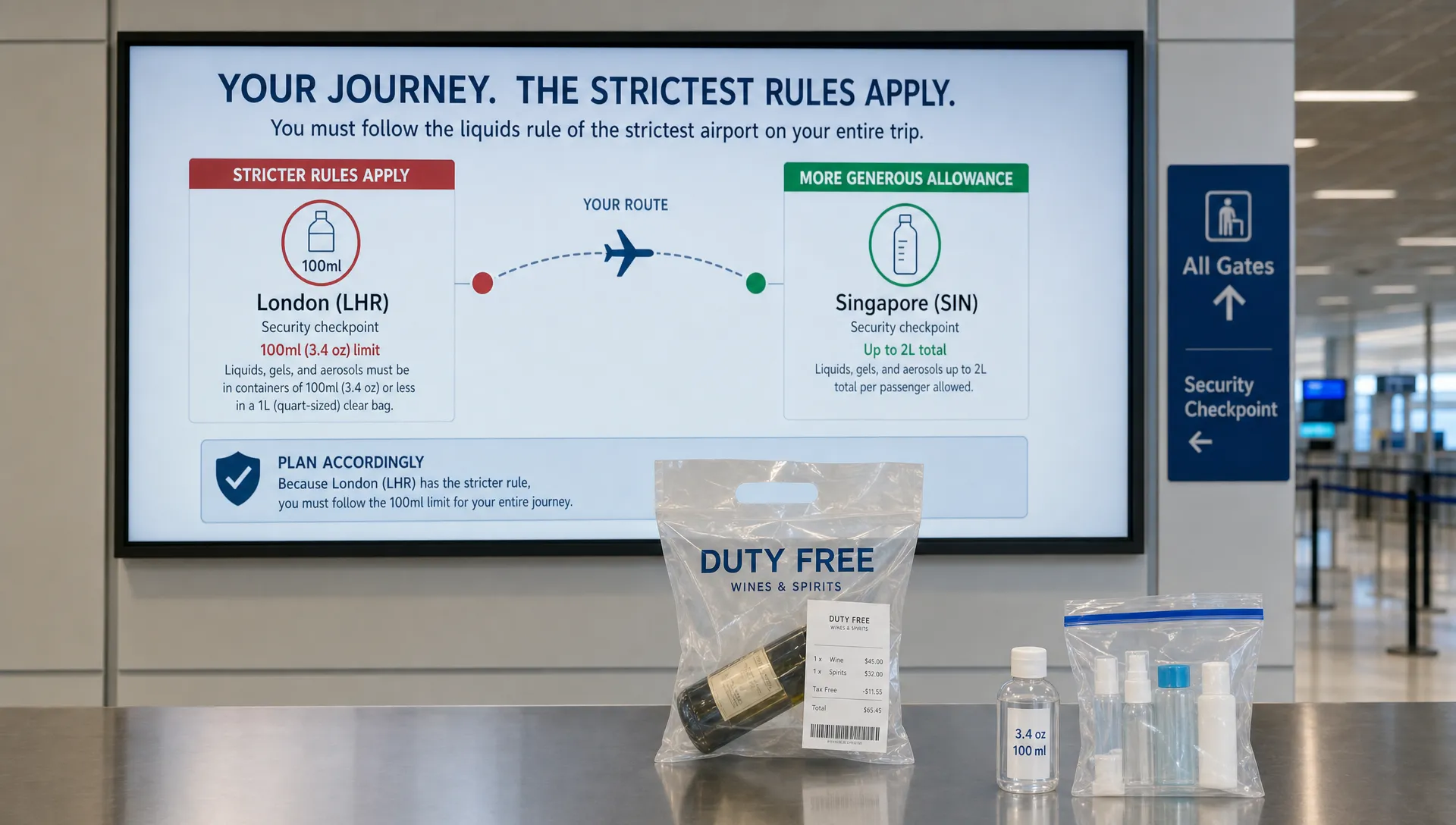
But this is where travelers get caught out. A route is only as flexible as its strictest screening point. You might depart from an airport with relaxed rules, then connect through a different airport that still enforces 100ml. Or your outbound airport may allow larger liquids, while your return airport does not.
That is why it is risky to pack based on a general news article, a social media post, or what happened on your last trip. Airport liquid limits can change by country, terminal, security lane, scanner availability, and date. If you are traveling soon, check the specific airport rules rather than assuming the most generous version applies. Liquid Limits tracks airport liquid limits for carry-ons in 2026 with that route-by-route uncertainty in mind.
The real carry-on limit depends on your whole trip
When travelers ask how much liquid they can bring, they often think only about the first airport. But the practical answer depends on every point where your cabin bag may be screened.
You should think about:
- Your departure airport
- Any connection airport where you must clear security again
- Your destination rules if you buy duty-free liquids in transit
- Your return airport
- The airline’s cabin baggage policies for aerosols or hazardous items
For example, imagine you fly from an airport that allows 2L liquids because it has newer scanners. You buy a large bottle of skincare or a drink after packing confidently. On the return, your departure airport still applies the 100ml rule. Unless the item qualifies for an exemption or can go in checked baggage, it may not make it through security.
The same issue can happen with connections. If you pass through security again during a layover, liquids that were legal at your first airport may be screened under a stricter rule at the second.
What about medicines, baby supplies, and special dietary liquids?
Most airport security systems include exemptions for essential liquids. These can include medicines, baby milk, baby food, formula, expressed breast milk, and liquids needed for medical or special dietary reasons.
However, exemptions do not mean “pack anything without question.” Larger essential liquids may need separate screening, and some authorities may ask for supporting documentation. The UK government hand luggage rules, for example, distinguish between ordinary liquids and essential medical or baby-related items.
If you are carrying exempt liquids, pack them so they are easy to remove and declare. Keep prescriptions, medical letters, or labels with you when relevant. Do not bury essential liquids under clothes or electronics, because that can slow down screening.
Duty-free liquids are allowed only if the security chain works
Duty-free liquids can be larger than 100ml, but they come with conditions. In many airports, large duty-free liquids must be sealed in a tamper-evident security bag with proof of purchase. You should keep the receipt inside the sealed bag and avoid opening it until after your final security screening.
The problem is connections. If you buy a large bottle of alcohol, perfume, or cosmetics before a layover and then need to pass through security again, the next airport’s rules decide what happens. Some airports accept properly sealed duty-free bags. Others may apply stricter checks, especially if the bag has been opened, damaged, or lacks a clear receipt.
If the item is expensive or important, check your connection rules before buying. If you cannot confirm the rules, consider buying after your final security checkpoint or packing the item in checked baggage when allowed.
Practical packing strategy: assume 100ml unless confirmed otherwise
The most reliable way to avoid losing items is to pack for the strictest common rule unless you have confirmed a more generous rule for every airport where you will be screened.
A sensible carry-on liquids strategy looks like this:
- Use containers labeled 100ml or smaller.
- Choose solids where possible, such as solid shampoo, balm, stick deodorant, or bar soap.
- Put all ordinary liquids in one clear resealable bag before you reach security.
- Keep medicines and baby supplies separate and easy to declare.
- Pack full-size liquids in checked baggage if your fare includes it and the item is safe to check.
- Check both outbound and return airports before relying on a 2L rule.
This approach may feel conservative, but it protects you from the most common problem: one airport saying yes and another airport saying no.
Quick answer by travel situation
| Travel situation | How much liquid should you plan for? | Best approach |
|---|---|---|
| Standard airport security | 100ml or 3.4oz per container, all fitting in one clear bag | Pack travel-size containers only |
| Airport confirmed to allow larger liquids | Possibly larger containers, often up to the local stated limit | Verify the exact airport, terminal, and date |
| Round trip with different airports | Follow the stricter airport rule | Check outbound and return separately |
| Connecting flight with another security check | Follow the strictest connection rule | Avoid large liquids unless duty-free rules clearly protect them |
| Medicines or baby supplies | Often allowed above 100ml if essential | Pack separately and be ready for screening |
| Duty-free liquids | Often allowed if sealed correctly | Keep receipt and tamper-evident bag intact |
Frequently Asked Questions
Can I bring ten 100ml bottles in carry-on? Sometimes, but not always. The standard rule is that all containers must fit inside your permitted clear resealable liquids bag. Ten slim 100ml bottles may fit, while ten bulky containers may not.
Is the carry-on liquid limit based on bottle size or liquid left inside? It is usually based on the container’s labeled capacity. A 150ml bottle can be refused even if it contains less than 100ml of liquid.
Can I bring a 2L bottle through airport security? Only at airports where larger-liquid rules are active and applicable to your screening point. Many airports still enforce 100ml, so do not rely on a 2L allowance unless you have checked your exact route.
Do makeup products count as liquids? Many do. Mascara, liquid foundation, primer, concealer, lip gloss, cream products, and liquid eyeliner are commonly treated as liquids, gels, or pastes.
Can I bring an empty water bottle in my carry-on? Yes, empty bottles are generally allowed through security. You can usually refill them after the checkpoint.
Are liquids in checked baggage limited to 100ml? The airport cabin liquid rule does not apply in the same way to checked baggage. However, airline, customs, and hazardous-material rules may still restrict certain items, especially aerosols, alcohol, chemicals, and flammable products.
Check the rule before you pack
If you want the simplest safe answer, pack 100ml containers in one clear bag. If you want the real answer for your trip, including whether your airports use 100ml or 2L rules, check the route before you leave.
With Liquid Limits, you can look up airport, item, and route-specific liquid rules, including return flights. The tool shows the stricter rule when needed, includes source links and last-checked dates, and defaults to the safer 100ml guidance when a rule is unclear.