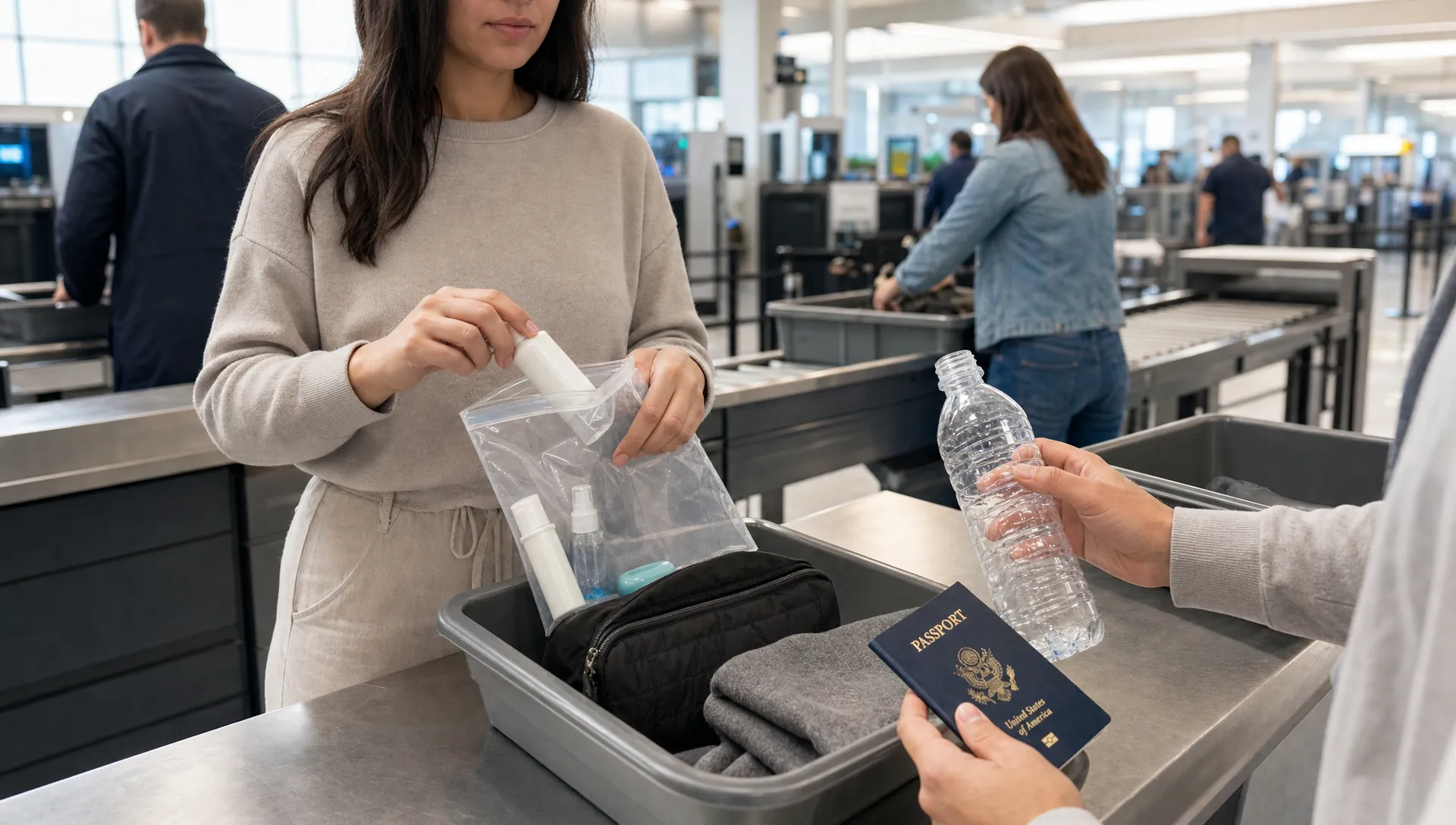
If you are searching for hand luggage how much liquid before you pack, the safest short answer is this: assume each liquid container must be 100ml or smaller and fit inside one clear, resealable plastic bag unless your exact airport says otherwise. Some airports now use newer scanners and may allow larger containers, but the rule can change by airport, terminal, route and return flight.
That last point matters. Liquid rules are enforced at airport security, not by the logo on your boarding pass. A bottle accepted on your outbound flight can still be stopped on the way home if the return airport applies a stricter limit.
Hand luggage how much liquid: the short answer
For most international trips, pack your cabin liquids as if the 100ml rule applies. In the United States, the TSA liquids rule allows liquids, aerosols, gels, creams and pastes in travel-sized containers of 3.4 oz or 100ml, placed in a quart-sized bag. In the UK, GOV.UK hand luggage guidance also explains the 100ml container limit and clear plastic bag requirement.
A practical, low-risk packing setup looks like this:
| Item type | Safer hand luggage approach | Why it matters |
|---|---|---|
| Shampoo, conditioner, shower gel | 100ml travel bottles | Larger bottles can be refused even if nearly empty |
| Toothpaste, creams, gels | 100ml or smaller containers | These count as liquids at security |
| Perfume and cosmetics | Small containers in the liquids bag | Sprays, mascara and lip gloss are commonly checked |
| Water and drinks | Empty bottle through security, refill after | Drinks over the limit are usually not allowed through |
| Medicine and baby items | Carry what you need, with evidence if requested | These often have exceptions, but screening still applies |
The practical answer to hand luggage how much liquid is not just a number. You need to check container size, total bag space, airport rules and whether any part of your journey has a stricter screening point.
The 100ml rule is about container size, not how full it is
One of the most common mistakes is packing a 200ml bottle with only a small amount left inside. Airport security usually looks at the capacity printed on the container, not the amount of liquid remaining. A half-empty 200ml shampoo bottle can still be treated as a 200ml container.
If you want to avoid arguments at the tray, decant liquids into clearly labeled 100ml bottles before you leave home. This is especially useful for sunscreen, face wash and hair products that are sold in larger packaging.
For a deeper explanation of this exact issue, Liquid Limits has a separate guide on why half-empty bottles can still be stopped at security.
What counts as a liquid in hand luggage?
Airport liquid rules cover more than drinks. Security officers usually treat anything spreadable, pourable, sprayable, squeezable or gel-like as a liquid or liquid-like item. That means many products travelers think of as solids still need to go in the liquids bag.
Common examples include toothpaste, mascara, lip gloss, foundation, shaving foam, deodorant sprays, hair gel, hand sanitizer, sunscreen, moisturizer, perfume, contact lens solution, jam, honey and some soft foods.
Solid alternatives can help when space is tight. Solid shampoo bars, bar soap, stick deodorant, powder makeup and toothpaste tablets are often easier to pack because they do not usually count toward your liquids allowance. They still need to be safe for travel and acceptable to the airport, but they reduce the pressure on your clear bag.
When deciding hand luggage how much liquid to bring, start by separating true liquids from solid substitutes. Many travelers can cut their liquids bag in half without giving up the products they actually need.
Can you take more than 100ml at some airports?
Yes, but only if the airport security rules for that specific checkpoint allow it. Some airports have introduced newer CT scanners that can screen liquids differently. Where these systems are fully approved and in use, passengers may see rules allowing larger containers, sometimes up to 2 liters.
The problem is inconsistency. One airport may allow larger liquids, another airport on the same trip may not. Rules can also differ between terminals or change after operational updates. If you connect through another airport, you may go through security again and face a different rule.
This is why a route-based check is safer than relying on a single airport rule. You can use the Liquid Limits trip liquid checker to compare your outbound and return airports, with source links and last-checked dates where available.
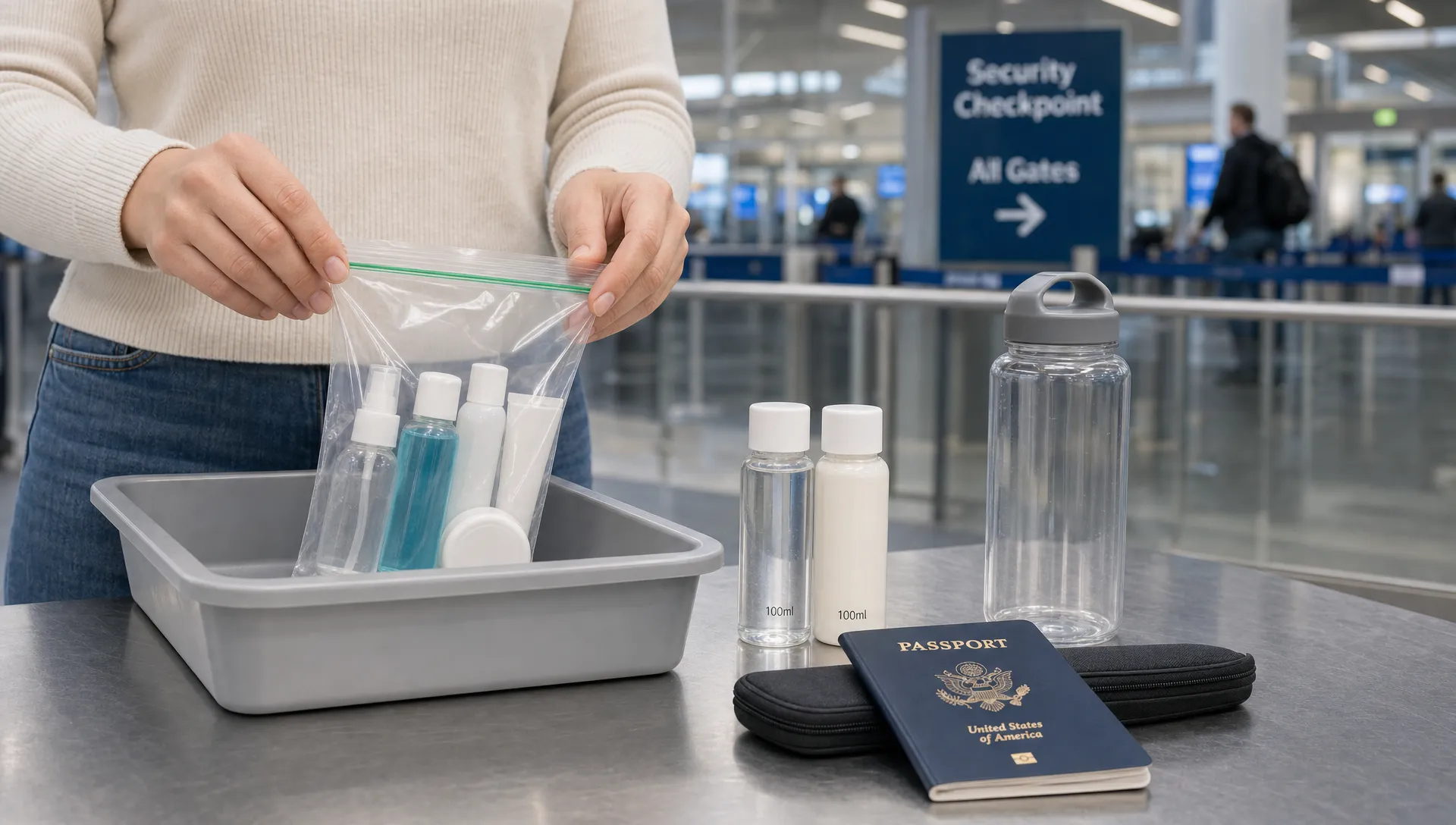
How return flights and connections change the answer
A simple round trip can involve more than one liquid rule. Imagine you fly from an airport that permits larger containers because of newer scanners. You buy a 250ml lotion at your destination and pack it in your cabin bag for the return. If the return airport still uses the 100ml rule, that lotion may be refused.
Connections create another risk. Duty-free liquids are usually placed in a sealed tamper-evident bag with a receipt, but that does not guarantee smooth passage everywhere. If you pass through another security checkpoint, officers may inspect the seal, receipt and local rules.
The safest approach is to pack for the strictest airport on the whole itinerary. That includes the return airport, transfer airport and any airport where you may need to re-clear security after immigration or baggage collection.
Exceptions for medicine, baby food and special needs
Most airport liquid rules include exceptions for essential medicines, baby milk, baby food and special dietary items needed during the journey. These items may be allowed in quantities over 100ml, but you should expect additional screening.
Keep prescription labels, medical letters or supporting documents where relevant. You do not always need paperwork for every medicine, but it can make screening easier if an officer asks why you need a larger quantity. For baby items, carry only what is reasonable for the journey, including expected delays.
For any route question, hand luggage how much liquid becomes simpler when you separate ordinary toiletries from essential liquids. Pack routine products under the standard rule and keep exempt items accessible so they can be screened separately.
A simple way to pack liquids without stress
Start with the strictest common rule: 100ml containers in one clear resealable bag. Put every liquid-like item on a table before packing, then remove anything you can replace with a solid version, buy after security or place in checked luggage.
Use this quick checklist before you close your cabin bag:
- Check every container label, not just how full the bottle looks
- Put toothpaste, mascara, creams, gels and sprays in the liquids bag
- Carry an empty water bottle and refill it after security where available
- Keep medicines and baby items easy to remove for separate screening
- Check both the outbound and return airports before you travel
If you are bringing checked luggage, place larger toiletries there when allowed. Remember that some aerosols, flammable liquids and chemical products have separate dangerous goods restrictions, so a checked bag is not a free pass for every liquid.
What to do if the rules are unclear
When an airport website is vague, outdated or silent about larger liquid allowances, assume the 100ml rule. That is the most conservative choice and the one most likely to get you through security without losing items.
This is also how Liquid Limits handles uncertainty. If a rule cannot be verified clearly, the tool defaults to the stricter 100ml guidance instead of telling travelers to risk a larger container. That may feel cautious, but it protects you from last-minute disposal at the checkpoint.
If you want a broader rule-by-rule primer, this guide to how much liquid is allowed in hand luggage covers the standard cabin baggage limits in more detail.
Quick reference: what should go where?
Use this table when deciding whether to pack an item in hand luggage, checked luggage or leave it until after security.
| Item | Hand luggage option | Better alternative |
|---|---|---|
| Full-size shampoo | Usually not if over 100ml | Decant to 100ml or pack checked |
| Toothpaste | Yes, if 100ml or smaller | Travel-size tube or tablets |
| Sunscreen | Yes, if 100ml or smaller | Buy after security or pack checked |
| Water bottle | Empty bottle allowed | Refill after security |
| Prescription liquid medicine | Often allowed if needed | Keep documents and screen separately |
| Duty-free perfume | Usually sealed with receipt | Keep sealed until final destination |
If you remember one rule, make it this: hand luggage how much liquid depends on the strictest security checkpoint in your journey, not the most generous one.
Frequently Asked Questions
Can I take a 150ml bottle if it only has 50ml left? Usually no. Security normally checks the container capacity, so a 150ml bottle can be refused even if it is almost empty.
Does makeup count as liquid in hand luggage? Some makeup does. Mascara, liquid foundation, lip gloss, cream blush and similar products usually count as liquids or gels, while powder products are generally easier to pack.
Can I bring an empty water bottle through airport security? Yes, an empty bottle is usually allowed. Fill it after security where water stations or shops are available.
Are liquid rules the same for every airline? No. Liquid limits are set and enforced by airport security authorities. Airline cabin bag size and weight rules are separate.
How do I check hand luggage how much liquid for my exact trip? Check every airport where you will pass through security, including the return airport and connections. If any airport applies the 100ml rule, pack for that rule.
Check before you pack
Liquid rules are easy to get wrong because they are not always the same in both directions. Before you leave, enter your route in Liquid Limits to see the strictest cabin liquid rule for your trip, with airport guidance shown side by side where available.