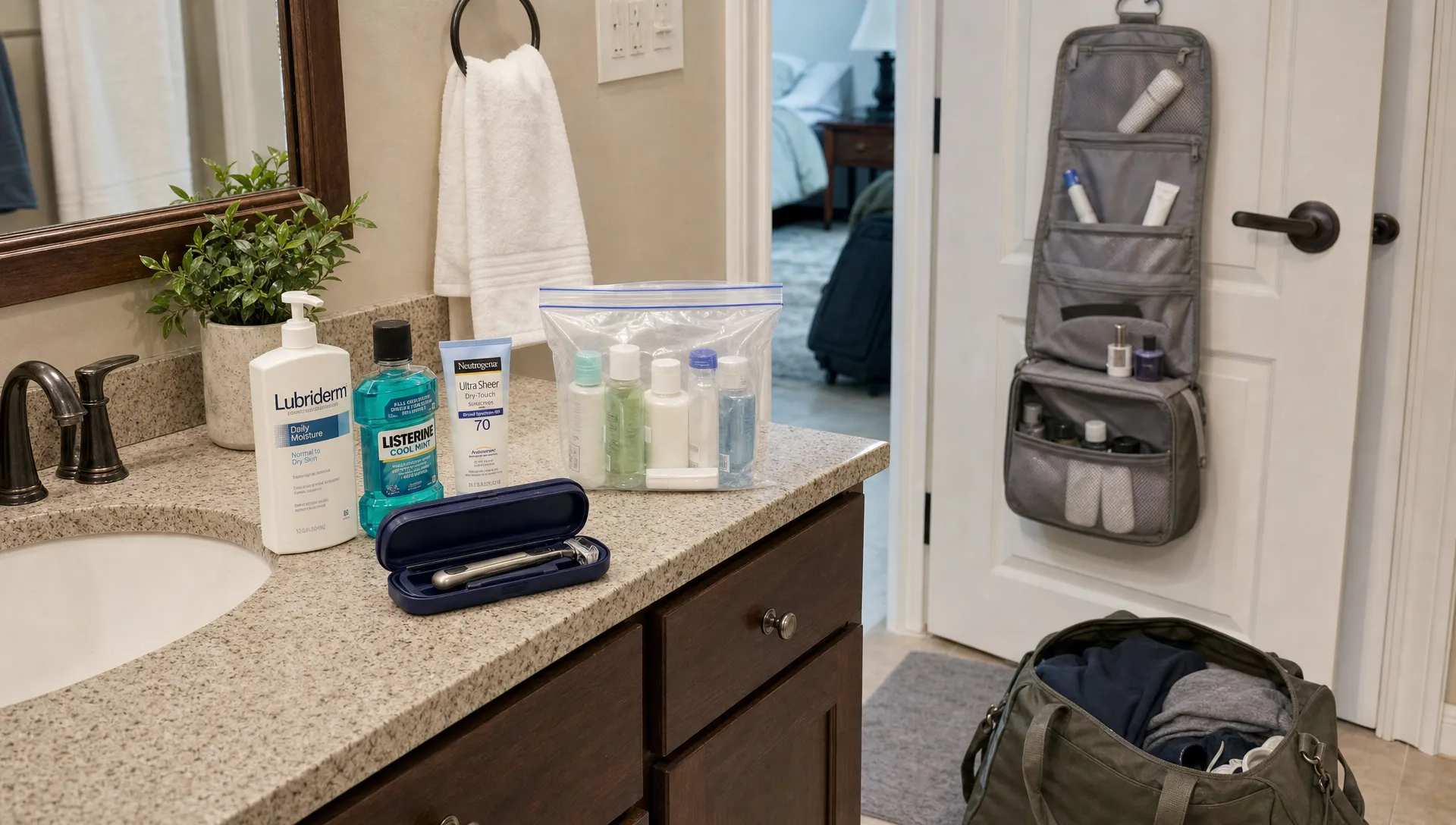
Packing liquids is easy until one bottle has to pass airport security, survive a checked bag and make it back through a different airport on the return. Understanding luggage liquid rules helps you decide what belongs in your carry-on, what can go in checked baggage and what should stay at home. The main split is simple: cabin bags are screened for security, checked bags are also governed by airline safety rules, hazardous materials limits and customs restrictions.
Use this guide as a practical packing reference, not as a substitute for checking your exact airport and route. Airports may use different scanners, countries may publish different exceptions and airlines can add their own limits for dangerous goods.
Luggage liquid rules: carry-ons vs checked bags at a glance
The quickest way to avoid trouble is to separate “security screening limits” from “transport safety limits.” Carry-on liquids are restricted because passengers take them into the cabin. Checked-bag liquids usually have more room, but certain products are still limited because they can leak, ignite, spray under pressure or count as hazardous goods.
| Bag type | Typical liquid rule | What it means for packing | Common problem items |
|---|---|---|---|
| Carry-on or personal item | Containers are often limited to 100 ml / 3.4 oz and must fit in a clear resealable bag | Travel-size toiletries are safest unless an exception applies | Shampoo, sunscreen, perfume, gel deodorant, toothpaste |
| Checked bag | Full-size non-hazardous liquids are often allowed, subject to airline, safety and customs limits | Pack leak-proof and watch alcohol, aerosols and flammables | Wine, spirits, hairspray, aerosol deodorant, solvents |
| Duty-free shopping | May be allowed in sealed tamper-evident packaging, depending on route and connection | Keep receipts and do not open the security bag before final screening | Perfume, liquor, cosmetics |
| Medical and baby supplies | Often exempt from standard cabin liquid limits in reasonable quantities | Declare or separate them for screening when required | Liquid medicine, formula, breast milk, baby food |
The safest way to apply luggage liquid rules is to plan for the strictest security checkpoint on your trip, not the most generous one. If your outbound airport allows larger containers but your return airport does not, the return screening can still force you to discard items.
Carry-on liquids: the 100 ml rule still matters
At many airports, carry-on liquids must be in containers of 100 ml / 3.4 oz or less. The containers usually need to fit in a transparent resealable plastic bag, often around one liter or one quart in size. The US Transportation Security Administration explains this as the 3-1-1 liquids rule, while other countries use similar 100 ml language.
For carry-ons, luggage liquid rules usually apply to the container size, not the amount left inside. A 200 ml shampoo bottle that is half empty may still be rejected because the bottle itself exceeds the limit. If you need a product in the cabin, decant it into a properly sized travel bottle and label it clearly enough that you know what it is.
What counts as a liquid in hand luggage
Airport screeners often treat more items as liquids than travelers expect. Gels, creams, pastes, sprays, foams and spreads can fall under the same restriction. Peanut butter, honey, mascara, lip gloss, toothpaste, hair gel and thick sunscreen are common examples.
Frozen liquids can be a special case. In the US, TSA generally allows frozen liquid items through screening if they are frozen solid when presented. If they are slushy, melted or have liquid at the bottom, they may be treated like liquids. Other airports may handle this differently, so do not rely on frozen items unless you have checked the rule for that airport.
New scanners do not guarantee larger cabin liquids
Some airports have introduced computed tomography scanners that can inspect bags in more detail. In certain places, this has led to trials or local changes for cabin liquids. That does not mean every checkpoint at that airport uses the same rule or that your connecting airport will accept the same bottle.
If you are packing cabin-only, the safest default is still the 100 ml format unless your exact airport confirms otherwise. For a deeper cabin-only breakdown, Liquid Limits also has a guide to carry-on luggage liquid rules for short and long trips.
Checked bags: bigger bottles are allowed, but not everything is unlimited
Checked-bag luggage liquid rules are more generous for ordinary toiletries. Full-size shampoo, conditioner, body wash, sunscreen, lotion and mouthwash can usually go in checked luggage, as long as the product itself is not prohibited and the bag stays within airline weight limits.
That freedom has limits. Airlines and regulators still restrict products that are flammable, corrosive, pressurized or otherwise hazardous. A bottle of moisturizer is very different from lighter fluid, industrial solvent or high-proof alcohol. If a product has a flammable symbol, corrosive warning or strong chemical hazard label, check before packing it.
Toiletries and aerosols in checked baggage
For US travel, the FAA PackSafe guidance lists specific limits for medicinal and toiletry articles, including aerosols. The combined total is generally limited to 2 kg or 2 L per person, with each container limited to 0.5 kg or 500 ml. Aerosol release buttons or caps also need protection to prevent accidental discharge.
That limit commonly affects hairspray, dry shampoo, aerosol deodorant, shaving cream and certain medicinal sprays. Non-aerosol toiletries are less likely to trigger those specific aerosol concerns, but they can still leak under pressure changes, so pack them as if they will be handled roughly.
Alcohol in checked and carry-on bags
Alcohol is where luggage liquid rules can surprise people because strength matters. In US FAA and TSA guidance, alcoholic beverages with 24% alcohol by volume or less are not subject to hazardous materials limits in checked bags. Alcohol above 24% and up to 70% is limited to 5 liters per passenger in unopened retail packaging. Alcohol above 70% is not allowed in either carry-on or checked bags.
Carry-on alcohol must still fit the standard liquid limit unless it qualifies as duty-free liquid in approved sealed packaging. Even then, connections can complicate things. A bottle bought after security at one airport may need to pass another security screening later.
Medical liquids, baby supplies and other common exceptions
Medical liquids, baby formula, breast milk and baby food often receive more flexible treatment in cabin baggage. In the US, TSA allows medically necessary liquids above 3.4 oz in reasonable quantities, but travelers must present them for screening. Other countries may use different wording, yet many publish similar exceptions for essential medical and infant items.
Do not put every essential liquid in checked baggage just because checked bags allow larger bottles. If you need medication, contact lens solution, liquid nutrition or baby supplies during the flight or shortly after landing, keep a reasonable amount in your carry-on and pack backup supplies in checked luggage when possible.
A prescription label, doctor’s note or original packaging can help if a screener has questions, especially on international trips. It is also wise to check whether the medicine itself is legal at your destination, since airport liquid permission is not the same as medication import permission.
How route and return airports change the rule you should follow
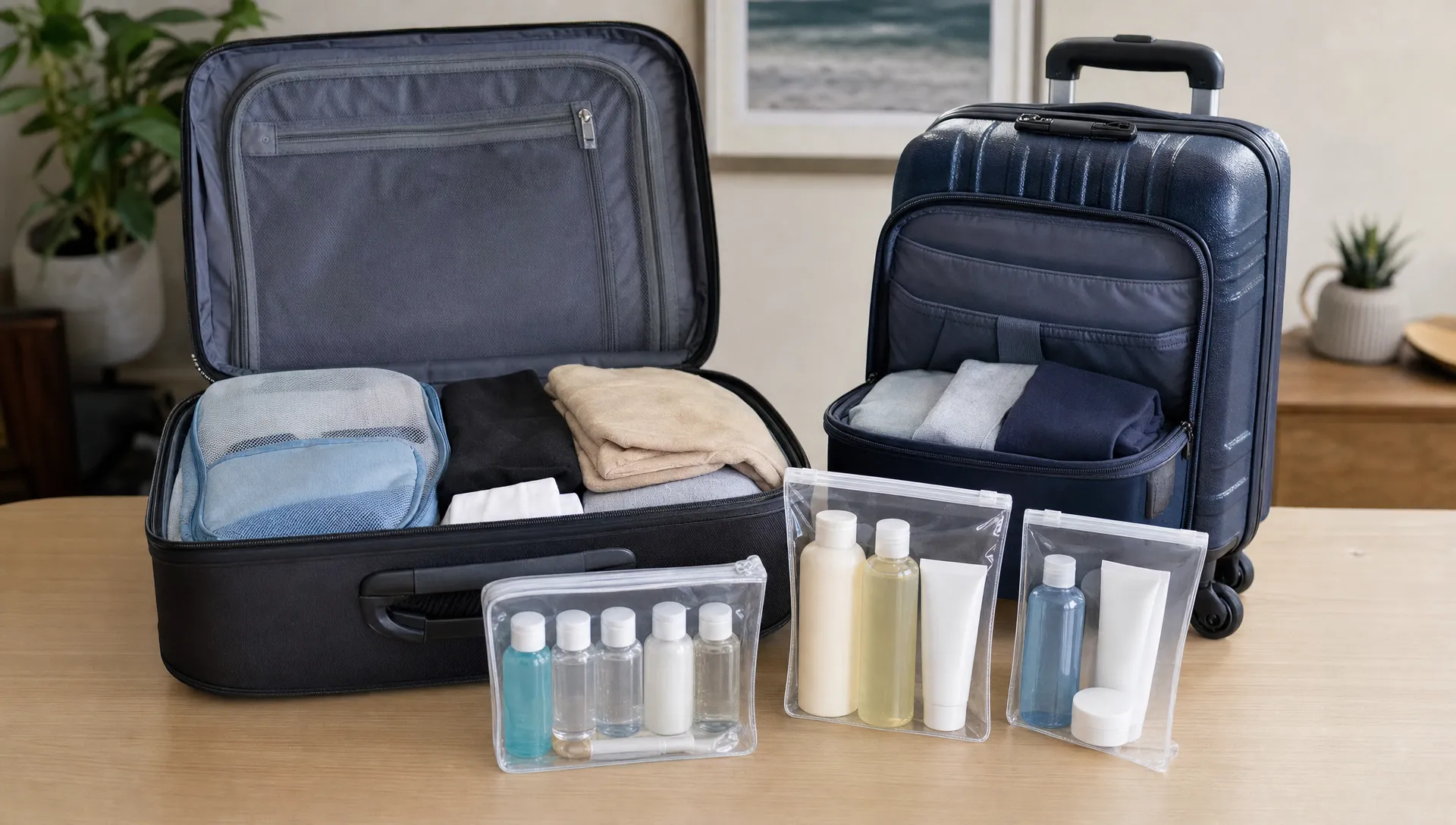
Liquid rules are not only about the airport where your trip begins. Your connection, destination and return airport can all matter. A generous outbound rule does not help if your return checkpoint enforces a stricter 100 ml limit, and duty-free liquids can become a problem if you must clear security again during a connection.
On a round trip, luggage liquid rules should be checked in both directions before you pack. That is especially useful for toiletries you plan to buy abroad, alcohol you intend to bring home or cosmetics you want in your cabin bag on the return flight.
Liquid Limits is built for this exact problem: you can check airport rules, item-specific restrictions and routes, including return trips where the stricter rule may be different. The site shows guidance with source links and last-checked dates, and it defaults to the stricter 100 ml rule when a rule is unclear. If your itinerary has multiple airports, the guide to rules for liquids on flights and return trips explains why checking both directions matters.
Packing liquid items without leaks, delays or confiscations
Good luggage liquid rules planning is part compliance and part damage control. A bottle that is allowed can still ruin your clothes if it opens in transit, and a legal duty-free purchase can still slow you down if the receipt or sealed bag is missing.
For checked baggage, tighten caps, squeeze out excess air from soft bottles and place liquids in sealed plastic bags. Put heavier bottles near the center of the suitcase, surrounded by soft clothing. Avoid packing liquids next to electronics, paper documents or anything that cannot be washed.
For carry-ons, keep the liquids bag easy to remove unless your airport says liquids can stay in the bag. Use solid alternatives where they make sense, such as shampoo bars, solid deodorant and stick sunscreen. They reduce spill risk and often avoid the liquid allowance issue altogether, though unusual items can still be inspected.
| Item | Carry-on approach | Checked-bag approach |
|---|---|---|
| Shampoo or conditioner | Use 100 ml / 3.4 oz containers unless a local exception applies | Full-size bottles are usually fine if sealed against leaks |
| Perfume or cologne | Small bottles only, unless duty-free rules apply | Usually allowed, but flammable fragrance should be packed carefully |
| Aerosol deodorant | Must fit cabin liquid limits | Watch aerosol quantity limits and protect the spray cap |
| Sunscreen | Cream, gel and spray versions usually count as liquids | Full-size is usually fine, with aerosol caution for sprays |
| Wine or spirits | Usually not allowed over 100 ml unless duty-free conditions apply | Check alcohol percentage, retail packaging and customs allowances |
| Toothpaste | Counts as a paste and usually needs to fit the liquids bag | Full-size tubes are usually fine |
Mistakes that cause the most problems
The most common mistake is applying one rule to the whole trip. Travelers see a relaxed rule at one airport, pack for that rule, then face a stricter checkpoint on the way home. Another frequent issue is assuming checked baggage has no liquid limits at all, which can lead to problems with aerosols, high-proof alcohol or hazardous products.
Duty-free shopping also creates confusion. If you buy perfume or alcohol after security, keep it sealed in the tamper-evident bag with the receipt visible. If you open it before a connection or your route requires another screening where the item does not qualify, it may be treated like any other oversized liquid.
Finally, remember that airport security permission is not customs permission. Food, alcohol, plant-based products, medicines and high-value goods can face import limits or declaration requirements after landing. Check destination rules if you are bringing more than ordinary personal toiletries.
Frequently Asked Questions
Do luggage liquid rules apply to checked bags? Yes, but differently. The 100 ml / 3.4 oz rule is mainly a carry-on security rule. Checked bags can usually contain larger non-hazardous liquids, but aerosols, alcohol, chemicals and airline dangerous goods rules may still limit what you can pack.
Can I put full-size shampoo in checked luggage? Usually yes. Full-size shampoo, conditioner and body wash are generally allowed in checked baggage, but you should seal them in a plastic bag to prevent leaks.
Can I bring a 2 L bottle in my carry-on? At many airports, no. Some airports or lanes may allow larger liquids under specific rules, but a 2 L bottle is not a safe carry-on assumption for most trips. Checked baggage is usually the better option for large non-hazardous liquids.
Are duty-free liquids allowed through connecting flights? Sometimes. They may need to be in a sealed tamper-evident bag with proof of purchase, and the rules can depend on the airport, country and connection process. Check your full route before buying large duty-free liquids.
Should medicine go in checked or carry-on baggage? Keep essential medicine in your carry-on in reasonable quantities, especially if you may need it during travel or if your checked bag is delayed. Bring labels or supporting documentation when traveling internationally.
Check before you pack
Before you zip the bag, check the rule for your actual airport, item and route. Liquid Limits compares airport liquid rules side by side, includes return trips and shows source-backed guidance with last-checked dates so you can pack for the strictest checkpoint you will face.