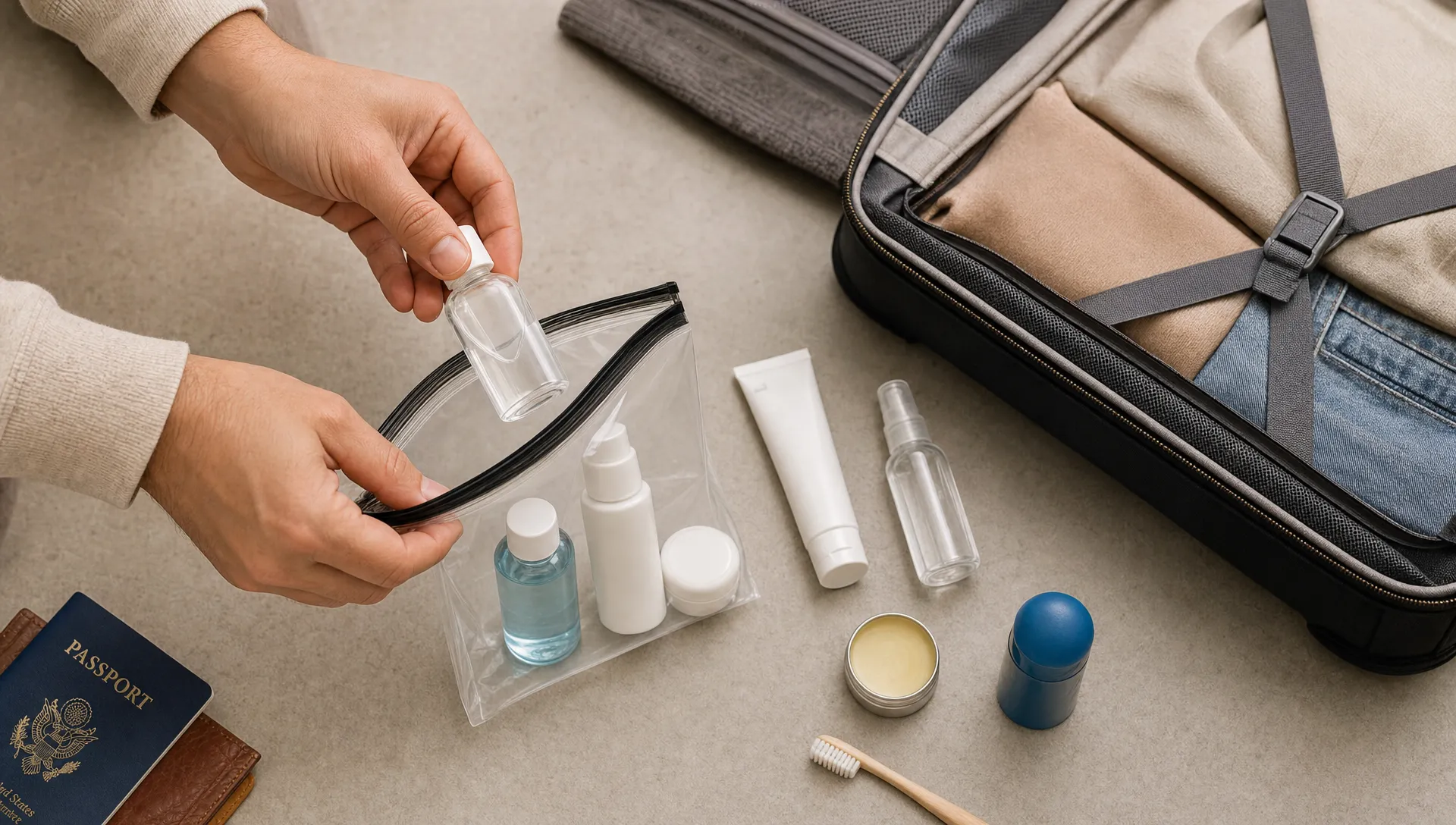
The rules for flying with toiletries look simple until a half-used shampoo, a spray deodorant or a return airport with different screening equipment causes trouble. Most travelers remember the 100ml limit, but the surprises are usually in the details: container size, product texture, transfer security, aerosol caps and whether the rule applies on the way home too.
If you only pack for the airport you leave from, you can still lose items later in the trip. Toiletry rules are enforced at each security checkpoint, not just at your first departure gate. That includes return flights, connections where you clear security again and some domestic to international transfers.
The first surprise: airport rules are not identical everywhere
Many countries follow the familiar 100ml, or 3.4oz, cabin liquid limit for toiletries, but airports do not all operate the same way. Some terminals use newer scanners and may publish larger liquid allowances, while other checkpoints still apply the traditional small-container rule. A single trip can include both.
The rules for flying with toiletries also depend on how clear the airport guidance is. If an airport, airline or security authority gives unclear information, packing to the stricter 100ml rule is the safest choice. It prevents a relaxed outbound experience from turning into a confiscation problem on the return.
For a broader explanation of how liquids are treated in cabin baggage, Liquid Limits has a separate guide to key liquid restrictions when flying.
Rules for flying with toiletries that surprise travelers at security
The biggest misconception is that airport security cares only about how much product is left inside the bottle. In many places, the container capacity is what matters. A 200ml bottle with only a splash of face wash remaining can still be rejected because the bottle itself is larger than the allowed size.
The TSA 3-1-1 liquids rule is a well-known example: liquids, aerosols, gels, creams and pastes in carry-on bags must generally be in containers of 3.4oz or 100ml or less, with the containers fitting in one quart-sized bag. Other countries use similar principles, although bag size, scanner rules and exemptions can differ.
Creamy, spreadable and squeezable toiletries count as liquids
Travelers often think liquid means something that pours. Security rules are broader than that. Toothpaste, hair gel, mascara, sunscreen, lip gloss, shaving foam, lotion, perfume, roll-on deodorant and thick balm-style products can all be treated as liquids, gels, creams or pastes.
The rules for flying with toiletries can feel inconsistent because two products with the same purpose may be treated differently. A solid stick deodorant is often less troublesome than a roll-on or aerosol. A bar of soap is simpler than body wash. Shampoo bars, toothpaste tablets and solid perfume can reduce the number of restricted items in your liquids bag.
Toiletry items that seem harmless but get flagged
Airport staff are trained to look at product form, packaging and screening results. That means some ordinary bathroom items attract more attention than travelers expect, especially when packed loosely or without labels.
| Toiletry item | Why it surprises travelers | Safer packing move |
|---|---|---|
| Toothpaste | It is a paste, not a solid | Use a 100ml or smaller tube in your liquids bag |
| Sunscreen | Large bottles are common for beach trips | Pack travel-size sunscreen or put full-size bottles in checked baggage |
| Mascara and lip gloss | Makeup can count as liquid or gel | Place them with other small liquids |
| Roll-on deodorant | It feels like a solid toiletry but contains liquid | Treat it like a liquid unless local rules say otherwise |
| Shaving foam | It is both an aerosol and a foam | Use a small container with a protected cap |
| Contact lens solution | It is medically useful but still a liquid | Keep it accessible and check exemption rules before flying |
If you want a deeper look at products that are commonly inspected, see this guide to toiletries at airport security.
The return flight can be stricter than the outbound flight
A relaxed experience on departure does not guarantee the same experience later. You may leave from an airport that permits larger liquid containers, then return through one that still enforces 100ml. You may also buy a full-size product during the trip and forget that it must pass through cabin screening before the flight home.
This is where the rules for flying with toiletries surprise frequent travelers as much as first-timers. The strictest checkpoint on your whole itinerary is the one that should guide your packing, especially if you travel with carry-on only.
Duty-free liquids add another layer. Many airports allow duty-free liquids in sealed security tamper-evident bags, but acceptance can depend on the route, connection airport and whether the bag remains sealed with proof of purchase. Do not assume a sealed duty-free bag will pass every transfer security check.
Aerosols and razors have their own extra traps
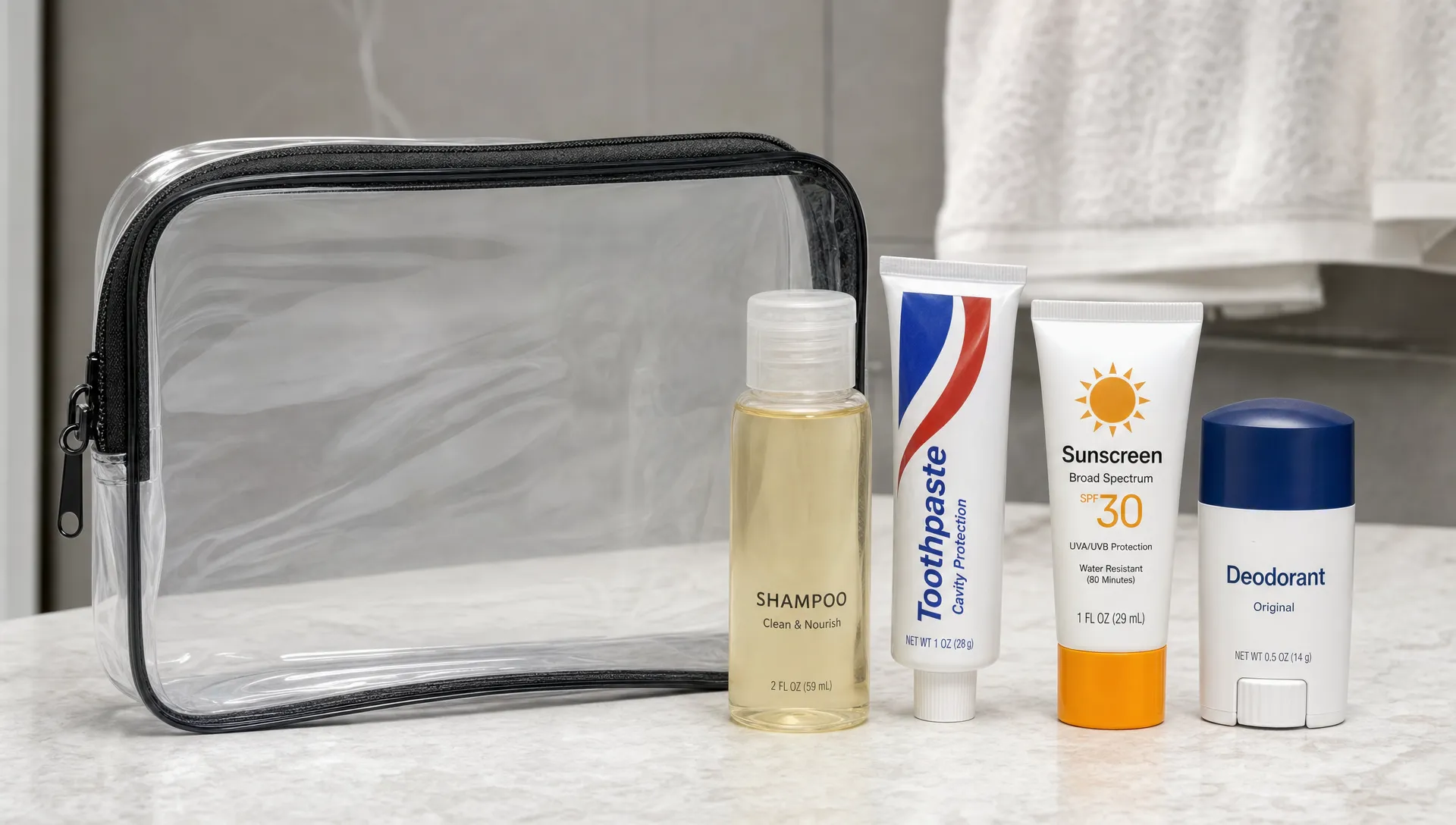
Aerosol toiletries are easy to overlook because they feel like ordinary personal care items. Spray deodorant, dry shampoo, shaving foam, hair spray and body spray can be allowed, but they usually need to meet the same cabin liquid limit if carried through security. Caps matter too because the release button should be protected from accidental discharge.
The rules for flying with toiletries are stricter for aerosols than many packing checklists suggest. In checked baggage, the U.S. FAA PackSafe guidance for toiletry articles says toiletry and medicinal aerosols are limited to a total of 2kg or 2L per person, with each container no more than 0.5kg or 500ml, and release devices must be protected. Other aviation authorities may apply similar safety principles, but you should check the rules for your route.
Razors are a different category. Disposable razors and cartridge razors are commonly allowed in cabin bags in many places, while loose blades and safety razor blades can be restricted. Electric razors usually avoid liquid rules but may still be screened like electronics or dense items.
For a focused breakdown of these edge cases, Liquid Limits also covers aerosols, razors and gels in airport toiletry rules.
Exceptions exist, but they are not a free pass
Medical liquids, medically necessary creams, contact lens solution, baby formula and some special dietary items may be exempt from the standard small-container limit. Exempt does not mean invisible. You may need to separate them from your regular toiletries, declare them at screening or allow extra inspection.
The rules for flying with toiletries become more forgiving when an item is genuinely necessary, but security officers still need to verify it. Keep labels intact, avoid decanting medical products into unmarked bottles and carry prescriptions or supporting information when practical. If a product is essential during the flight, keep it in your cabin bag rather than checked baggage.
The UK government hand luggage rules for liquids also distinguish between standard liquids and essential medical or dietary liquids, with screening staff able to ask for proof in some cases. Rules vary by country, so check the relevant authority before relying on an exception.
A smarter way to pack toiletries for any route
The safest packing strategy is not just to memorize one airport rule. Build your toiletry kit around the strictest checkpoint you are likely to face, then make exceptions only when you have verified them for the exact airport and item.
Use this quick routine before you zip your bag:
- Choose solid versions where they work, such as shampoo bars, soap bars, deodorant sticks and toothpaste tablets.
- Keep liquid, gel, cream, paste and aerosol toiletries in containers of 100ml or less when rules are uncertain.
- Check the return airport, not only the departure airport.
- Leave labels on products that may look unusual or medically necessary.
- Pack full-size toiletries in checked baggage only after checking aerosol and hazardous goods limits.
- Keep essential liquids accessible so you can remove them quickly at screening.
For multi-airport trips, the rules for flying with toiletries should be checked by route rather than by habit. A weekend trip with only one direct flight is simple. A round trip with a connection, a duty-free purchase and a different return airport needs more careful planning.
What to do if an airport advertises a 2L allowance
Some airports with advanced screening equipment may allow larger cabin liquids at certain checkpoints. That does not mean every airport on your itinerary will do the same, and it may not apply to every terminal, lane or transfer point. Airline staff can also give general advice that does not account for the security rules at your return airport.
If you see a larger allowance, verify the exact airport, date, terminal and direction of travel. Then check every later security checkpoint. If any part of the trip still follows 100ml rules, pack your toiletries to 100ml unless you are happy to check a bag or risk giving up the item.
This is why travelers often use Liquid Limits before packing. It compares airport, item and route guidance, includes return flights and defaults to the stricter 100ml rule when rules are unclear.
Frequently Asked Questions
Can I bring full-size shampoo in my carry-on? Usually not if the checkpoint applies the 100ml rule. The container must generally be 100ml or smaller, even if it is partly empty. If an airport permits larger liquids, make sure every later checkpoint on your route does too.
Does makeup count as toiletries for airport liquid rules? Many makeup products are treated like toiletries when they are liquid, gel, cream or paste. Mascara, liquid foundation, lip gloss and cream blush should usually go with your liquids.
Can I take deodorant on a plane? Yes in many cases, but the type matters. Solid stick deodorant is usually easier to pack, while roll-on deodorant and spray deodorant may be treated as liquids or aerosols and must meet the applicable size rules.
Are toiletries different in checked baggage? Checked baggage usually allows larger liquid toiletries, but aerosols and hazardous products still have safety limits. Caps should be protected and highly flammable or corrosive products may be banned.
Do the rules change for international flights? They can. The rules for flying with toiletries may differ by country, airport technology and transfer procedures, so international trips should be checked airport by airport.
Check the strictest rule before you pack
Packing toiletries should not require guessing which airport rule will be enforced at the worst possible moment. Before you travel, check your exact route, including the return flight, and treat unclear guidance as a reason to pack smaller.
Use Liquid Limits to check airport liquid rules by trip, airport, item or route. It shows verified source links and last-checked dates, so you can pack for the strictest rule before your toiletry bag reaches security.