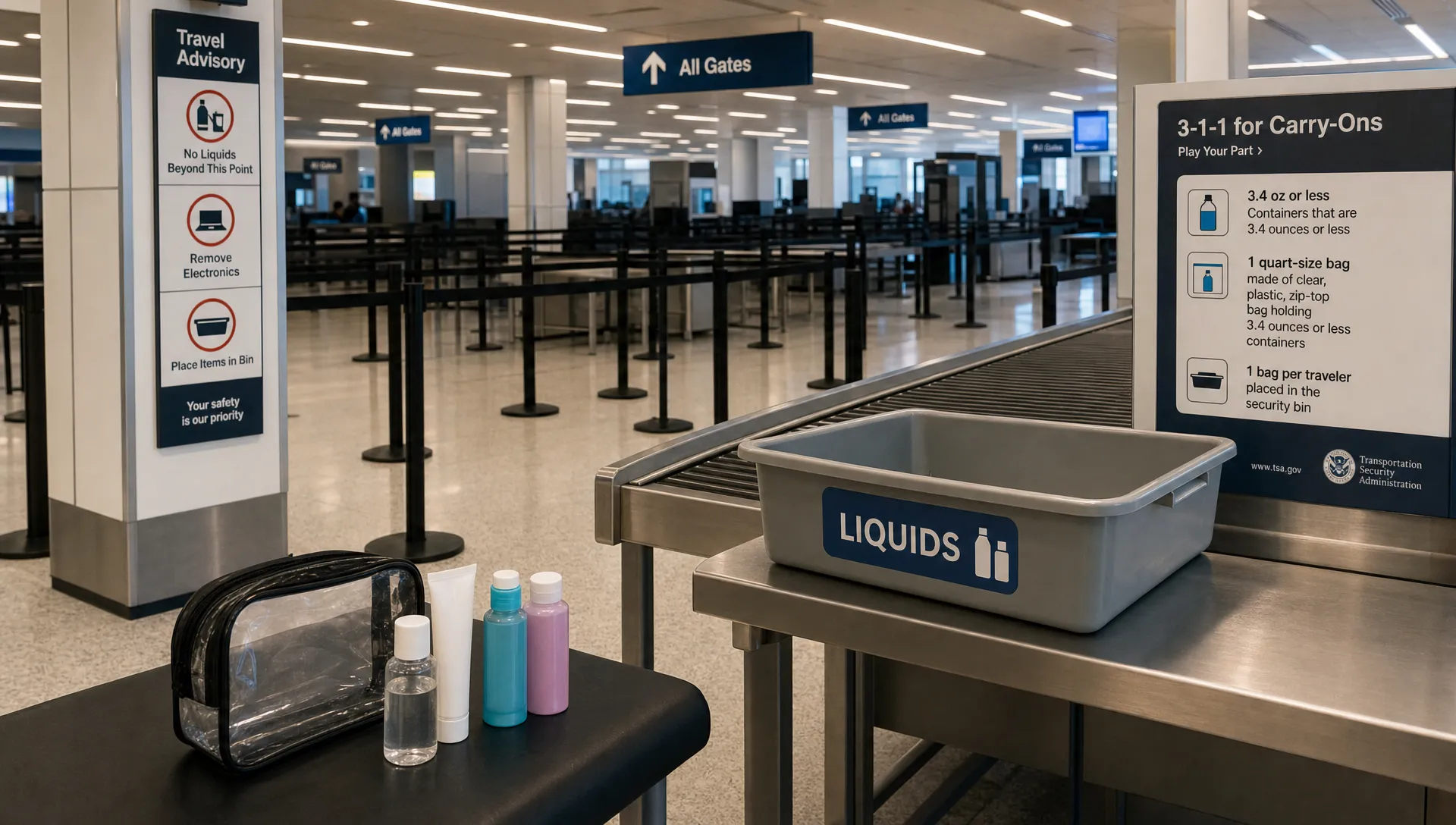
Airport security does not care whether a product is called a cream, gel, balm, foam or spray. If it can be squeezed, spread, poured, smeared, sprayed or dispensed as a paste, it will usually be treated under security liquid rules.
That is why toiletries cause so many last-minute problems at screening. A moisturizer feels solid enough in the jar. Hair wax may not pour. Shaving foam looks like air once it leaves the can. But at many checkpoints, all of them fall into the same practical category: liquids, aerosols and gels.
The safe approach is simple: check the airport rule for every security checkpoint on your trip, then pack creams, gels and sprays for the strictest one. If one airport on your route still enforces the 100ml rule, that rule is the one that matters for your cabin bag.
The basic rule: creams, gels and sprays usually count
The US Transportation Security Administration's liquids rule specifically includes liquids, aerosols, gels, creams and pastes. In the UK, GOV.UK hand luggage guidance also lists cosmetics and toiletries such as creams, lotions, oils, sprays, gels and pastes as liquids.
That wording matters. Security liquid rules are not limited to obvious drinks or watery products. They usually cover the whole group of items often called LAGs, meaning liquids, aerosols and gels. For travelers, the key question is not “Does this look liquid?” It is “Would security treat this as liquid-like?”
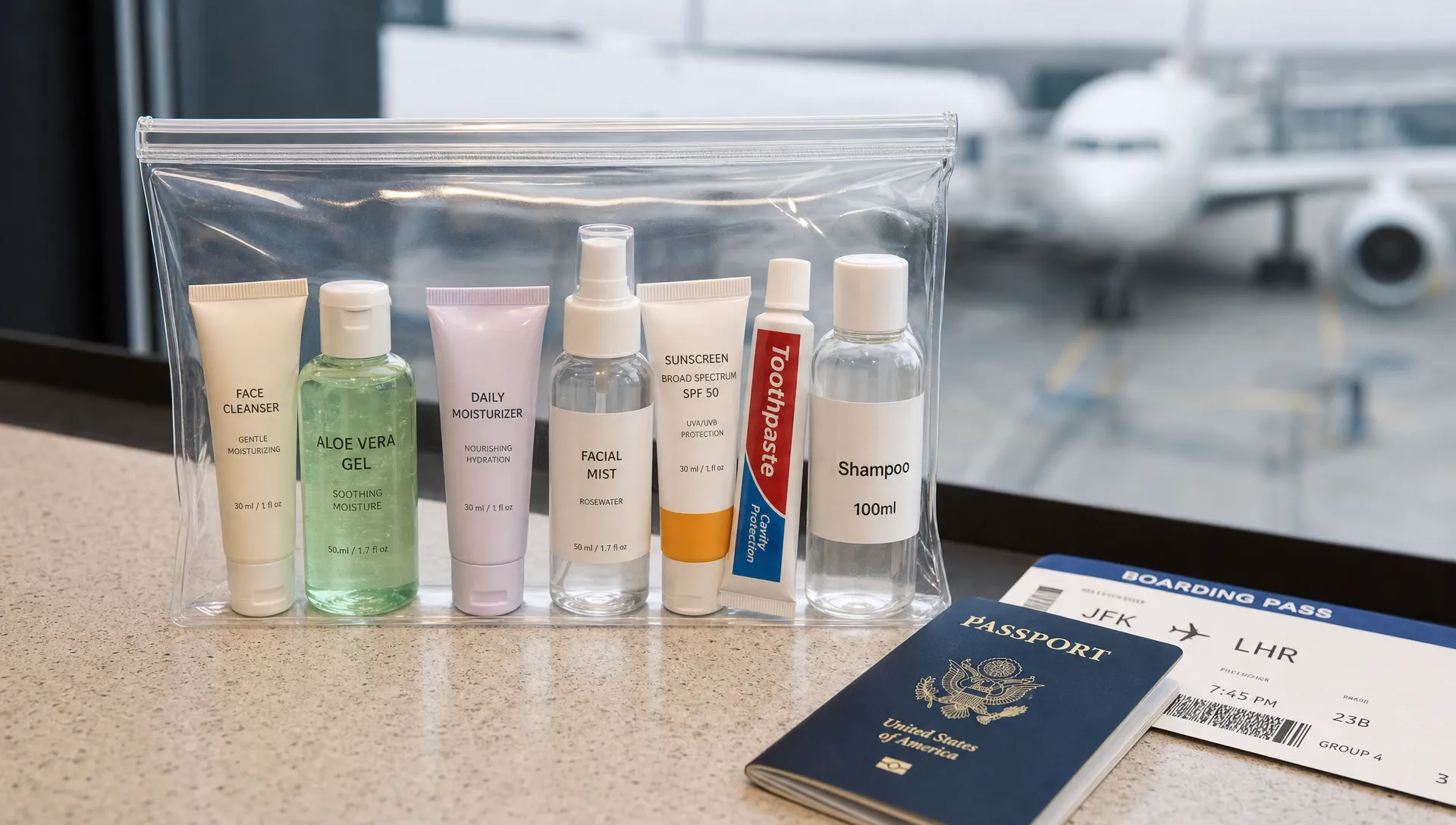
At a standard 100ml checkpoint, each cabin container must usually be 100ml or 3.4 oz or smaller, and those containers must fit into the required transparent liquids bag. The bag size and presentation rules vary by country and airport, but the container limit is still the most common issue.
Some airports use newer scanners and may allow larger containers in certain lanes or terminals. That does not make full-size toiletries safe for every trip. Rules can differ between airports, terminals, outbound flights, connections and return flights. If the status is unclear, packing to the 100ml rule remains the lowest-risk choice. For more background on why the limit still appears even where scanner upgrades exist, see this guide to when the 100ml liquid rule still applies.
Quick guide: how common creams, gels and sprays are treated
Use this table as a practical starting point. It is not a substitute for checking your exact airport, but it shows why many toiletry products belong in your liquids bag.
| Item type | Usually treated as | Common examples | Main cabin bag issue |
|---|---|---|---|
| Creams | Liquid-like toiletry | Face cream, hand cream, sunscreen, ointment, cream makeup | Container must meet the airport limit |
| Gels | Gel or paste | Hair gel, aloe gel, gel deodorant, toothpaste, brow gel | Thick texture does not make it exempt |
| Sprays | Aerosol or liquid spray | Hairspray, deodorant spray, dry shampoo, shaving foam, body mist | Must meet liquid rules and aerosol safety rules |
| Pump products | Liquid spray or lotion | Setting spray, perfume, toner, leave-in conditioner | The bottle size still matters |
| Pots and tubs | Cream, paste or balm depending on texture | Styling paste, cleansing balm, lip treatment, salve | If spreadable, pack it as a liquid |
Creams: thick does not mean exempt
Creams are one of the easiest categories to underestimate. A dense hand cream, sunscreen stick in a soft formula or medicated ointment may feel too thick to count as a liquid, but security rules usually treat creams as part of the liquid family.
This includes everyday products such as moisturizer, night cream, eye cream, after-sun lotion, body butter, foundation, concealer in a cream pot, BB cream and cream blush. Sunscreen is especially common because travelers often buy or pack it in large tubes. If you are flying through a 100ml checkpoint, a 200ml sunscreen tube is likely to be a problem in cabin baggage even if it is half empty.
The safest way to pack a cream for carry-on is to use a clearly labeled travel-size container that does not exceed the airport limit. If you decant a product into an unmarked pot, security may still allow it, but a marked container can reduce confusion. For expensive skincare or prescription products, keep the original label when possible.
Solid products are different. A true solid stick, such as a solid deodorant stick or solid balm that does not smear like a cream, is often treated more leniently than a gel or paste. Still, borderline products can be judged differently by officers, especially if they have a soft texture.
Gels: if it squeezes or spreads, assume it counts
Gels are usually straightforward under security liquid rules because most official guidance names them directly. Hair gel, shower gel, aloe vera gel, gel face masks, toothpaste, gel deodorant and gel-based makeup should all be packed as liquids for a 100ml checkpoint.
The confusion comes from items that are not marketed as gel but behave like one. Styling paste, pomade, clay hair product, cleansing balm, petroleum jelly, mascara, lip gloss and brow gel are all candidates for the liquids bag. If a product can be squeezed from a tube, scooped from a pot or spread with a finger, do not rely on a technical argument at the scanner.
For a deeper breakdown of container size and why the amount left inside usually does not save an oversized tube, this explainer on what counts as 100ml of liquid at security is worth checking before you pack.
The practical test is not perfect, but it helps: if the item would leak, smear or change shape under pressure, treat it as a liquid-like item. A powder eyeshadow does not belong in the same category as cream eyeshadow. A bar of soap is different from shower gel. A solid toothpaste tablet is different from toothpaste in a tube.
Sprays: check both liquid rules and aerosol rules
Sprays have two layers of regulation. First, they are usually included in security liquid rules because the container holds a liquid, foam or aerosol product. Second, some sprays are controlled by dangerous goods rules because aerosol cans are pressurized and may be flammable.
For a typical traveler, the most common acceptable sprays are toiletries such as deodorant spray, hairspray, shaving foam, body spray, dry shampoo, perfume and facial mist. At a 100ml checkpoint, a cabin aerosol or spray bottle normally needs to be 100ml or smaller and fit with your other liquids.
A larger aerosol may be allowed in checked baggage if it meets airline and safety rules, but it is not automatically allowed in your cabin bag. The FAA's PackSafe guidance on aerosols explains that, for US travel, medicinal and toiletry aerosols are limited by total quantity per passenger and by container size, and release valves must be protected by a cap or other suitable means. That rule is separate from the airport security liquid limit.
Avoid packing industrial sprays, spray paint, lubricants, cleaning aerosols, insect sprays, pepper spray or bear spray unless you have confirmed they are permitted for your airline and destination. These are not ordinary toiletries, and many are restricted or prohibited.
Pump sprays also count. A plastic setting spray bottle or perfume atomizer is not an aerosol can, but it still contains liquid. At a 100ml checkpoint, the same container-size logic applies.
The container size trap
The most expensive security mistake is assuming the rule is based on how much product remains. At most 100ml checkpoints, the printed container capacity is what matters. A nearly empty 150ml tube is still a 150ml tube.
This catches travelers with sunscreen, hair products and luxury skincare. You may look at a half-used product and think there is less than 100ml inside. The officer sees an oversized container. If the checkpoint is enforcing the 100ml rule, the item may have to be surrendered, moved to checked baggage if that is still possible or left behind.
Travel jars can help, but use them carefully. Fill them before you leave home, close them tightly and avoid unlabeled oversized pots. Small screw-top jars are useful for creams and gels, but thin liquids may leak if the seal is poor. Aerosols generally should not be decanted because pressurized products are not designed to be transferred safely.
Your route matters, especially on the way home
Many travelers check the rules for their departure airport and stop there. That is risky. Security liquid rules apply each time you go through screening, not just when you begin the trip.
A simple round trip can involve different rules on the outbound and return legs. Your home airport may allow a larger cabin liquid allowance in some areas, while your return airport may still enforce the classic 100ml rule. If you buy a full-size sunscreen, perfume, shaving foam or hair product during the trip, it may not be allowed through return security in your cabin bag.
Connections add another layer. If you stay airside and do not clear security again, your liquids may not be rechecked in the same way. If you change terminals, enter a new security area or pass through border control before a connection, you may face a new checkpoint with different rules.
Duty-free liquids have their own sealed-bag procedures, but they are not a universal solution for creams, gels and sprays bought in town or opened during your trip. If you want a broader route-planning approach, this guide to travel liquid guidelines for airports and return trips explains why the strictest checkpoint should drive your packing plan.
A packing plan that works for creams, gels and sprays
The easiest system is to sort by security treatment before you think about your toiletry routine. Lay everything out and ask whether each item is solid, liquid-like, aerosol or medically necessary.
Use this packing approach for most trips:
- Put creams, gels, pastes, aerosols and pump sprays together before packing.
- Choose 100ml or smaller containers if any airport on your route may enforce the standard rule.
- Keep containers visible and easy to remove if your airport still requires a separate liquids bag.
- Pack full-size creams, gels and sprays in checked baggage when you need more than travel size.
- Make sure aerosol caps are secure so they cannot discharge accidentally.
- Keep medicines and essential medical creams separate so you can present them if asked.
- Check the return airport before buying full-size toiletries during your trip.
This does not mean you need to travel with less than you need. It means you need to decide what belongs in the cabin, what belongs in checked baggage and what is better purchased after arrival.
For short trips, travel-size containers usually solve the problem. For beach trips, long stays or family travel, checked baggage may be more practical for sunscreen, after-sun lotion, shaving foam and hair products. If you are flying cabin-only, you may need to buy larger toiletries after the final security checkpoint or at your destination.
Medical creams and other exceptions
Medical needs are treated differently from ordinary toiletries, but they are not invisible to screening. Prescription creams, gels, sprays, liquid medicines and medically necessary products may be allowed in quantities above the usual limit at many airports, but they often need to be declared or screened separately.
If you carry a medical cream or spray, keep it in original packaging when possible. A prescription label, doctor's note or supporting document can help, especially when the container is larger than 100ml or the product is not easy to identify. Do not bury it at the bottom of your bag if you know you may need to explain it.
Rules for baby food, breast milk and special dietary liquids may also differ from ordinary toiletries. Since this article focuses on creams, gels and sprays, the main point is that exemptions exist for genuine needs, not convenience. A medicated eczema cream may be treated differently from a cosmetic body cream.
What to do if an item is flagged
If security flags a cream, gel or spray, the officer is usually checking one of three things: the container is too large, the item is not clearly allowed or the product needs extra screening. Staying calm helps more than debating the exact texture of the item.
If you are early enough in the airport process, you may be able to return to check-in and place the item in checked baggage. If you are already at the checkpoint and cannot go back, your choices may be limited. Some airports have disposal bins. A few may offer mailing options, but you should not count on that.
For valuable products, prevention is the only reliable strategy. Decant before leaving home, pack the original in checked baggage or verify that your airport and route allow the container size you plan to carry.
Frequently Asked Questions
Do creams count as liquids at airport security? Yes, creams are usually treated as liquid-like items. Moisturizer, sunscreen, hand cream, ointment, cream makeup and similar products should be packed according to the airport's liquid rules.
Does gel deodorant count as a liquid? Gel deodorant usually counts as a gel and should go in your liquids bag at a 100ml checkpoint. A true solid stick deodorant is often treated differently, but soft or gel formulas are the safer ones to classify as liquids.
Can I bring aerosol hairspray in my carry-on? Often yes, if it is a toiletry aerosol, the container meets the airport's liquid limit and the cap or valve is protected. Larger aerosols may belong in checked baggage and must still follow airline safety rules.
Is a half-empty 150ml cream allowed through a 100ml checkpoint? Usually no. The rule is normally based on container capacity, not the amount left inside. A half-empty 150ml tube is still an oversized container under the 100ml rule.
Do new airport scanners mean I can bring full-size creams and sprays? Not always. Some airports or lanes may allow larger liquids, but many checkpoints still enforce 100ml rules. Your connection or return airport may also be stricter than your departure airport.
Can medical creams be over 100ml? Medically necessary creams, gels and sprays may qualify for an exception at many airports, but they may need separate screening. Keep them in original packaging and carry supporting documentation when possible.
Check the strictest rule before you pack
Creams, gels and sprays are exactly the items that make security liquid rules feel unclear. They sit between obvious liquids and obvious solids, and airport rules can change from one checkpoint to another.
Before you pack, use Liquid Limits to check airport liquid rules for your route, including the return flight. You can look up airports, routes and specific items, then compare the strictest cabin rule before your bag is already zipped. When rules are unclear, Liquid Limits defaults to the safer 100ml assumption so you can pack with fewer surprises at security.