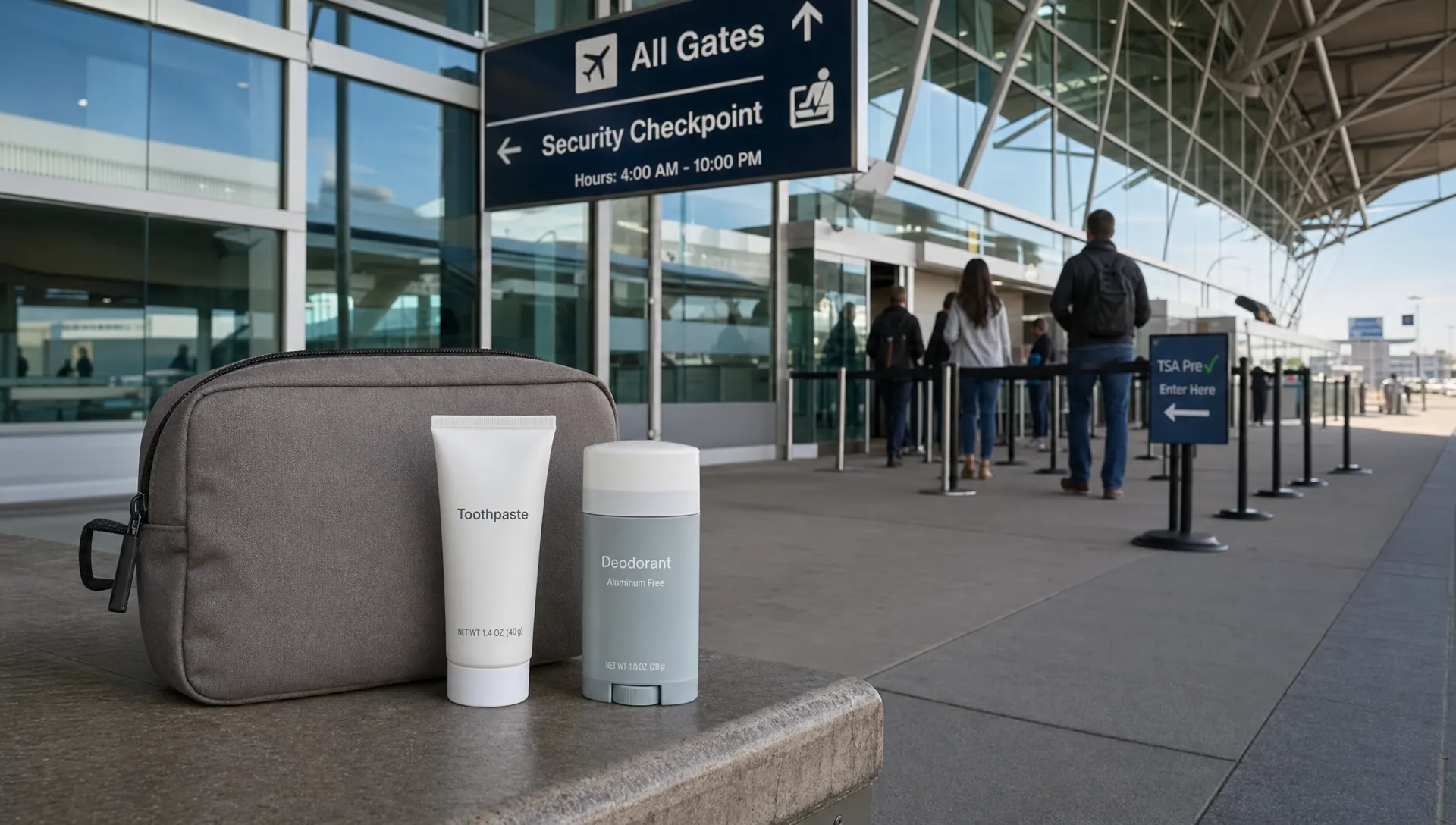
Packing toiletries for airport security feels simple until a half-used moisturizer, gel deodorant or oversized toothpaste tube gets pulled aside. The problem is rarely the product itself. It is usually the way security classifies it.
Airport screeners do not sort toiletries the way you do at home. They look at texture, container size, aerosol pressure, sharp edges and whether an item needs a special exception. A toiletry bag that seems harmless can still be flagged because one bottle is too large or one product behaves like a gel, paste, cream, spray or foam.
This guide focuses on the personal care items most likely to cause delays, how to pack them and when to check airport-specific rules before you leave.
What security means by toiletries
Toiletries include personal care products such as toothpaste, shampoo, conditioner, deodorant, sunscreen, perfume, shaving cream, hair gel, lotion, makeup and contact lens solution. At the checkpoint, the key question is not whether something is a bathroom item. The key question is whether it is liquid-like.
If a product spreads, smears, pours, sprays, pumps, foams or gels, assume it may need to follow liquid rules. In the United States, the TSA liquids rule limits most carry-on liquids, aerosols, gels, creams and pastes to containers of 3.4 oz or 100 ml that fit in a quart-size bag. Many other countries use a similar 100 ml limit, though procedures vary by airport.
Some airports have newer scanners or local processes that change what you need to remove from your bag. That does not mean every airport on your trip allows the same thing. Connections and return flights can be stricter than your departure airport, especially if different security technology or national rules apply.
Toiletries most likely to get flagged
The items below are not automatically banned. They are simply the ones most likely to trigger a closer look when packed in carry-on luggage.
| Toiletry type | Common examples | Why it gets flagged | Safer carry-on choice |
|---|---|---|---|
| Toothpaste and oral care | Toothpaste, whitening gel, mouthwash | Pastes and liquids count under liquid rules | Use a 100 ml or 3.4 oz tube, mouthwash tablets or a small bottle |
| Hair washing products | Shampoo, conditioner, leave-in treatment | Bottles are often larger than the cabin limit | Decant into travel-size containers or pack solids |
| Skin care | Sunscreen, moisturizer, cleanser, body lotion | Creams and gels are treated as liquids | Keep each container at or below the local limit |
| Deodorant | Roll-on, gel, spray, cream deodorant | Gel, liquid and aerosol formats are liquid-like | Choose stick deodorant or a compliant travel-size container |
| Shaving products | Shaving cream, foam, gel, aftershave | Foams, gels and aerosols can be screened as liquids | Use a small shaving cream or shaving soap |
| Hair styling | Hair gel, wax, pomade, mousse, hairspray | Thick products and aerosols often need inspection | Pack small containers and make sure caps are secure |
| Makeup | Mascara, liquid foundation, lip gloss, cream blush | Liquid, gel and cream cosmetics are included | Put liquid makeup in the liquids bag |
| Fragrance | Perfume, cologne, body spray | Liquids and aerosols are limited by container size | Use travel sprays or small rollerballs |
| Nail products | Nail polish, remover, cuticle oil | Liquids, sometimes flammable, can draw attention | Carry only small amounts and keep lids tight |
The easiest rule of thumb is this: if you could squeeze it, smear it or spray it, pack it as a liquid unless the airport clearly says otherwise.
Container size matters more than what is left inside
One of the most common toiletry mistakes is packing a large bottle that is almost empty. At many checkpoints, the limit applies to the container capacity printed on the bottle, not the amount of product remaining. A 150 ml sunscreen bottle with only a small amount left can still be rejected if the local cabin limit is 100 ml.
This is especially relevant for toothpaste, sunscreen, cleanser and hair products because full-size packaging often looks close to travel-size at a glance. If the number on the container is over the limit, do not count on explaining that it is nearly empty.
For a deeper breakdown of how airport staff interpret the limit, see Liquid Limits’ guide to what counts as 100ml of liquid at security. If your main concern is oral care, the separate guide to airport toothpaste tube rules covers tube size, bags and checks in more detail.
Toiletries that surprise travelers
Some toiletries get flagged because they do not look like traditional liquids. Mascara, lip gloss, cream concealer and gel eyeliner are small, but they are still liquid-like cosmetics. Hair pomade and wax may feel thick or solid in the jar, yet they can be treated like gels or pastes. Sunscreen sticks are usually easier to pack than sunscreen lotion, but gels and sprays still need liquid-rule treatment.
Deodorant is another common confusion point. A solid stick deodorant is usually less troublesome than roll-on, gel, cream or spray deodorant. If you are packing for a strict 100 ml checkpoint, put non-solid deodorants in your liquids bag.
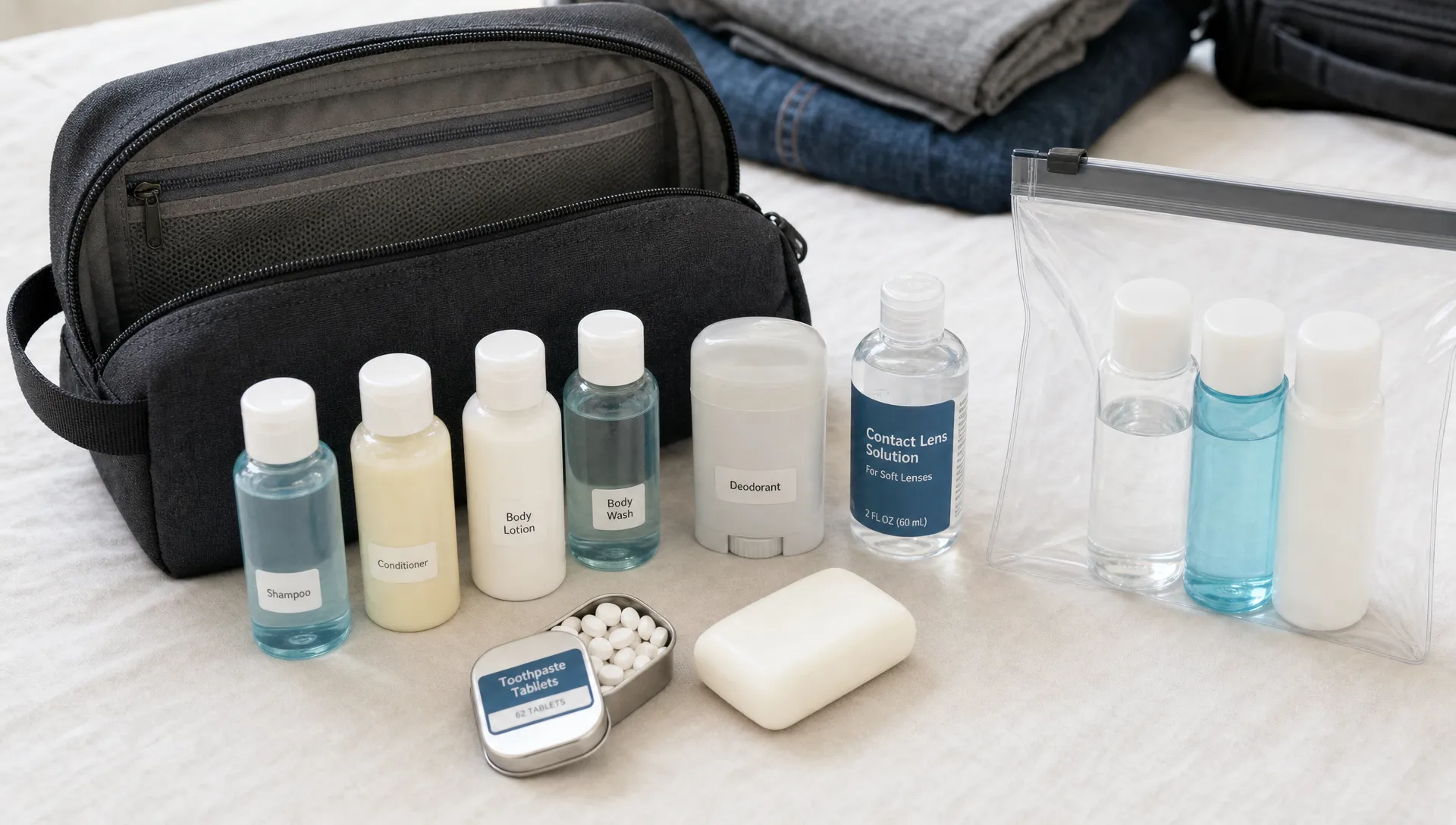
Solid toiletries can simplify packing. Bar soap, solid shampoo, solid conditioner, toothpaste tablets and stick deodorant are less likely to be limited by the liquids rule. They still need to be screened, but they usually avoid the container-size problem that catches travelers at security.
Medical and accessibility toiletries need separate planning
Some personal care products are not optional, such as prescription creams, liquid medication, medicated shampoo, saline, contact lens solution or products needed for a medical condition. These may qualify for exceptions in some countries, but the process is not the same everywhere.
In the United States, TSA allows medically necessary liquids in larger quantities when declared for inspection. Security may test them, open outer packaging or ask questions. Other jurisdictions may have different limits or documentation expectations. If you need a medical toiletry over the standard limit, keep it separate from your regular liquids bag, carry a prescription or medical note when relevant and leave extra time for screening.
Contact lens solution is a good example. Small travel-size bottles usually fit the standard liquid rules. Larger bottles may be allowed as medically necessary in some places, but they are more likely to be inspected. If you are traveling internationally, check the airport rules for each security checkpoint rather than assuming one country’s exception applies everywhere.
Aerosol toiletries can be flagged twice
Aerosol toiletries, such as hairspray, spray deodorant, dry shampoo, body spray and shaving foam, can raise two separate questions at security. First, they may count as liquids, aerosols or gels for cabin liquid limits. Second, they are pressurized containers, so they may also be subject to aviation safety rules.
For carry-on packing, use travel-size aerosols that fit the applicable liquid limit and keep them in the correct liquids bag if required. Make sure the cap is attached so the product cannot spray accidentally. Large aerosols are better left out of a carry-on unless you have confirmed they are allowed for your airports and airline.
Dry shampoo is often misunderstood because the product may feel powdery, but aerosol dry shampoo is still packaged in a pressurized spray can. Non-aerosol powder dry shampoo avoids the aerosol issue, though powders can still be inspected if they appear dense or unusual on the scanner.
Grooming tools that get flagged for non-liquid reasons
Not every flagged toiletry is a liquid issue. Grooming tools can be pulled aside because they include blades, sharp points or batteries.
Disposable razors and cartridge razors are commonly allowed in carry-on bags in many places, but loose razor blades and straight razors are much more restricted. Nail clippers, tweezers and small grooming scissors may be allowed in some countries, but size and blade rules vary. Electric razors and electric toothbrushes are generally easier, but batteries can create separate airline or safety requirements.
The main takeaway is that your toiletry kit can be checked for more than liquids. If an item cuts, punctures, heats, sprays or contains a battery, verify the rule before packing it in your cabin bag.
Why return trips cause toiletry problems
Many travelers pack correctly on the outbound flight, then buy full-size toiletries during the trip. That is when problems start. Your return airport may enforce a different cabin liquid limit from your home airport. A connecting airport can also require re-screening, which means items allowed through the first checkpoint may be questioned later.
Duty-free liquids can be another trap. Sealed duty-free bags with receipts are accepted in many situations, but not always on every route or after every connection. If you break the seal, lose the receipt or need to pass through another security checkpoint, the item may be treated like any other liquid.
This is why packing for the strictest checkpoint is safer than packing for the easiest one. Liquid Limits lets you check the strictest cabin liquid rule for your whole trip, including the return flight, so you can decide what belongs in carry-on and what belongs in checked luggage. The guide to travel liquid guidelines for airports and return trips also explains why round trips deserve a separate check.
What happens if a toiletry gets flagged
When a toiletry is flagged, your bag may be pulled aside for manual inspection. The officer may ask whose bag it is, remove the item, inspect the label or test the product. Being flagged does not always mean the item will be confiscated. It means the screener needs to resolve the image or rule question before the bag can continue.
Possible outcomes include the item being allowed, moved to checked baggage if that option is still available, surrendered or left behind. Some airports may offer mailing or storage services, but you should not rely on that.
Do not open bottles, spray aerosols or handle sharp grooming tools unless instructed. Keep your liquids bag easy to remove, make labels visible and avoid packing toiletries deep inside a crowded carry-on. A tidy bag does not guarantee approval, but it makes inspection faster.
A simple packing plan for toiletries at airport security
Use this quick system before every trip:
- Put all creams, gels, pastes, aerosols, sprays, foams and liquids in containers that meet the strictest rule on your route.
- Treat large, half-empty bottles as over the limit if the printed capacity is too high.
- Choose solid versions where practical, such as bar soap, solid shampoo, stick deodorant or toothpaste tablets.
- Keep medical liquids and necessary accessibility items separate, labeled and easy to declare.
- Pack sharp grooming tools only after checking the airport and airline rules for your route.
- Re-check the return airport if you plan to buy toiletries while traveling.
This approach may feel conservative, but it reduces the chance that a favorite product gets taken at the checkpoint.
Frequently Asked Questions
Does toothpaste count as a liquid at airport security? Yes. Toothpaste is usually treated as a paste, so it follows the same carry-on liquid rules at many airports. Use a tube at or below the local size limit, often 100 ml or 3.4 oz.
Can I bring full-size shampoo in my carry-on if it is almost empty? Usually no if the checkpoint applies a 100 ml container limit. Security normally looks at the container capacity, not how much shampoo remains inside.
Does deodorant get flagged at airport security? It can. Solid stick deodorant is usually less likely to cause trouble, but gel, roll-on, cream and spray deodorants are commonly treated as liquid-like items.
Are makeup products considered toiletries for liquid rules? Many are. Mascara, liquid foundation, lip gloss, cream blush, concealer and gel eyeliner can count as liquids, gels or creams. Powder makeup is usually less of a liquid-rule concern.
Can I bring contact lens solution over 100 ml? In some countries, larger contact lens solution may be allowed as a medically necessary liquid, but it may need to be declared and screened separately. Rules vary, so check every airport on your route.
Do toiletry rules change by airport? Yes. Airports can differ because of national rules, scanner technology, local procedures and temporary policy changes. Connections and return flights are especially important to check.
Check your toiletries before you pack
Before you decide what goes in your carry-on, check the rules for your actual route. Liquid Limits helps you look up airport liquid rules, item-specific guidance and round-trip restrictions with source links and last-checked dates. When a rule is unclear, the tool defaults to the stricter 100 ml approach so you can pack with fewer surprises at security.