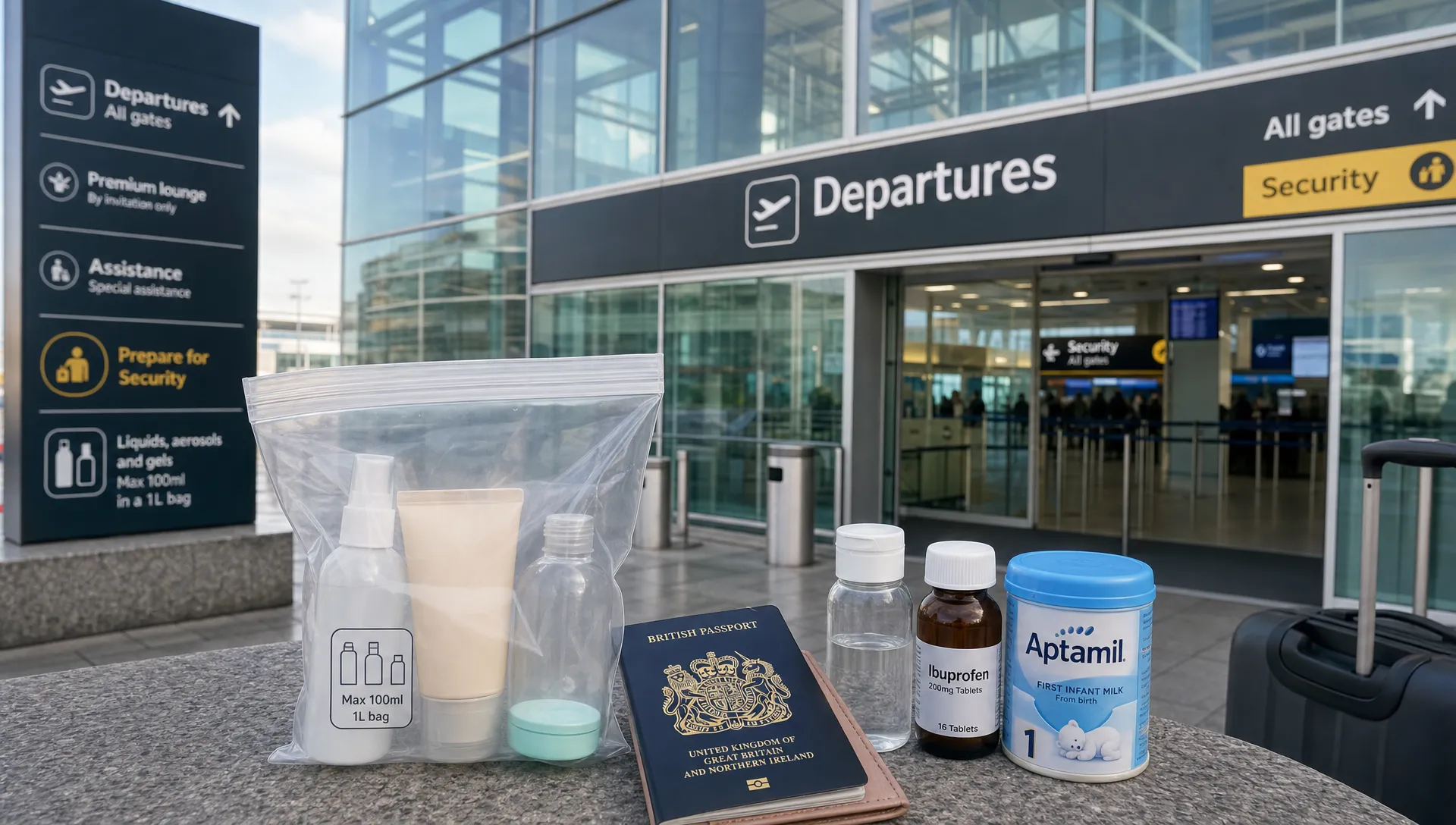
If you are flying from a UK airport with liquids in your cabin bag, the safest rule is still simple: pack liquids in containers of 100ml or less, place them in one clear resealable plastic bag, and be ready to show that bag at security.
That may sound old-fashioned if you have heard about newer airport scanners and relaxed liquid limits. The confusing part is that UK airports have not always moved at the same pace, and temporary rule changes have made the picture harder to follow. For most travellers, especially anyone connecting or returning through a different airport, packing to the 100ml rule remains the least risky choice.
This guide explains the UK flight liquids rules for cabin bags, what counts as a liquid, what exceptions apply, and how to avoid losing toiletries, makeup, drinks, medicine, or duty-free purchases at security.
Quick answer: the UK cabin liquid rule
According to the UK government’s hand luggage restrictions guidance, liquids carried through airport security in cabin baggage should usually meet these rules:
- Each liquid container must hold 100ml or less.
- Containers must fit inside one transparent, resealable plastic bag.
- The bag should hold no more than about 1 litre and be roughly 20cm by 20cm.
- The contents must fit comfortably so the bag can close.
- Each passenger is normally allowed one liquids bag.
- Containers larger than 100ml are usually not allowed through security, even if they are nearly empty.
This applies to common travel items such as shampoo, shower gel, perfume, toothpaste, mascara, sunscreen, moisturiser, aerosols, and contact lens solution.
Some UK airports may use newer security scanners that change how you present items at screening, but you should not assume this means larger liquids are allowed. Airport-specific rules can change, and staff at the security checkpoint have the final say.
What counts as a liquid in UK airport security?
The word “liquid” is broader than many travellers expect. UK airport security generally treats liquids, aerosols, gels, creams, pastes, lotions, and similar substances as liquids for cabin bag screening.
That means the rule is not limited to water bottles and shampoo. If an item can be poured, sprayed, squeezed, spread, smeared, or is semi-fluid, you should usually treat it as a liquid.
| Item type | Usually treated as a liquid? | Cabin bag packing tip |
|---|---|---|
| Shampoo, conditioner, shower gel | Yes | Use containers of 100ml or less. |
| Toothpaste | Yes | Travel-size tubes are safest. |
| Mascara, liquid eyeliner, lip gloss | Yes | Put them in your liquids bag. |
| Foundation, concealer, primer | Yes | Cream and liquid makeup should go in the bag. |
| Perfume and aftershave | Yes | Check bottle size, not remaining amount. |
| Aerosol deodorant or hairspray | Yes | Must be 100ml or less for cabin bags. |
| Contact lens solution | Yes | Use a small bottle unless medically necessary. |
| Jam, honey, syrup, soft cheese | Yes | Pack in checked luggage if over 100ml. |
| Solid soap or powder makeup | Usually no | Keep accessible if staff need to inspect it. |
A common mistake is assuming a product is fine because only a small amount remains. Security normally checks the container capacity, not the amount left inside. A 200ml bottle with 50ml of shampoo in it can still be refused.
The 100ml rule is about container size, not contents
This detail matters. If a bottle, tube, jar, or aerosol can is labelled as holding more than 100ml, it is usually not allowed through UK airport security in cabin baggage, even if it is almost empty.
For example, these are likely to cause problems in a cabin bag:
- A 150ml toothpaste tube with only a little toothpaste left.
- A 200ml sunscreen bottle that feels half empty.
- A 250ml water bottle containing only a sip of water.
- A full-size perfume bottle larger than 100ml.
The safer approach is to decant toiletries into clearly sized travel containers or buy travel minis that show 100ml or less on the label. If the container has no label and looks larger than allowed, it may be challenged.
Do UK airports still require the clear plastic liquids bag?
At many UK airports, yes. The standard rule is one clear, resealable liquids bag per passenger. Even where screening technology is newer, procedures can differ between airports, terminals, and lanes.
This is why it is smart to pack your liquids as if you will need to remove them. If you are not asked to take the bag out, great. If you are, you are prepared.
For a broader look at how the standard UK rules apply across airports, Liquid Limits has a separate guide to UK airports liquids rules for carry-on bags. Use that for airport-level context, then check your exact route before you travel.
Are there exceptions for medicine, baby milk, and special dietary items?
Yes. UK rules allow certain essential liquids over 100ml in cabin baggage, but they may need additional screening and you should carry only what you need for the journey.
Common exceptions include:
- Essential medicines in liquid, gel, aerosol, or cream form.
- Medical equipment involving liquids.
- Baby milk, baby food, and sterilised water needed for the journey.
- Special dietary liquids needed during travel.
For medicines, it is sensible to carry supporting evidence such as a prescription, doctor’s letter, or pharmacy label where possible, especially if the item is over 100ml. You should also keep essential medicines in your cabin bag rather than checked luggage, because checked bags can be delayed or lost.
Baby milk and baby food rules are usually more flexible than standard toiletries rules, but security staff may need to inspect them. Do not hide these items at the bottom of your bag. Keep them separate and easy to present.
What about water bottles and drinks?
You cannot usually take a full bottle of water, soft drink, coffee, or juice through UK airport security if the container is over 100ml. The easiest option is to carry an empty reusable bottle through security and refill it airside.
Drinks bought after security are generally allowed onto the aircraft, but there are two important caveats. First, your airline may have its own rules about consuming alcohol on board. Second, if you have a connecting flight, you may face another security checkpoint where the local liquid rules apply.
This is especially important if you buy drinks during a layover. An item that was allowed onto your first flight may not be allowed through security for your next flight.
Duty-free liquids: allowed, but keep the sealed bag intact
Liquids bought after airport security, such as perfume, alcohol, cosmetics, or large toiletries, can usually be taken on board if they are packed correctly by the retailer. For international travel, duty-free liquids are often placed in a sealed security tamper-evident bag with the receipt visible.
Do not open the sealed bag before your final destination if you have a connection. If you break the seal, your duty-free liquid may be treated like any other liquid at the next security checkpoint.
Also remember that duty-free rules do not override customs rules, airline rules, or security rules at connecting airports. If you are flying out of the UK and returning from another country, your return airport may apply different screening processes.
Why return flights can be the real problem
Many travellers only check the liquid rules for the airport they depart from. That is a mistake. The rule that matters is not only the UK airport on your outbound journey. It is every security checkpoint on your route, including your return flight.
For example, you may fly from a UK airport using one screening process and return from an airport that still enforces the 100ml rule strictly. Or you may connect through a hub where you pass through security again. In both cases, larger liquids bought abroad or packed for the return trip could be refused.
A good rule of thumb is to pack for the strictest airport on your whole trip, not the most relaxed one. If you want help checking both directions, Liquid Limits can compare rules for liquids on flights and return trips so you do not plan around only one airport.
Cabin bag vs checked bag: where should liquids go?
If you do not need a liquid during the flight, checked baggage is often the easier place for full-size toiletries. The 100ml cabin rule is a security screening rule for carry-on bags, not a general ban on larger liquids in checked luggage.
That said, checked luggage has its own practical limits. Aerosols, flammable products, alcohol, and other hazardous items can be restricted by aviation safety rules. Airlines may also set their own conditions. Always check airline guidance for unusual items such as large aerosols, strong chemicals, camping fuel, or high-alcohol products.
For everyday packing, this split works well:
| Put in cabin bag | Put in checked bag |
|---|---|
| Travel-size toothpaste | Full-size shampoo |
| Small hand sanitiser | Large sunscreen bottle |
| Essential medicine | Spare toiletries not needed in flight |
| Contact lens solution for the journey | Extra cosmetics and skincare |
| Baby milk or food needed during travel | Non-essential liquids over 100ml |
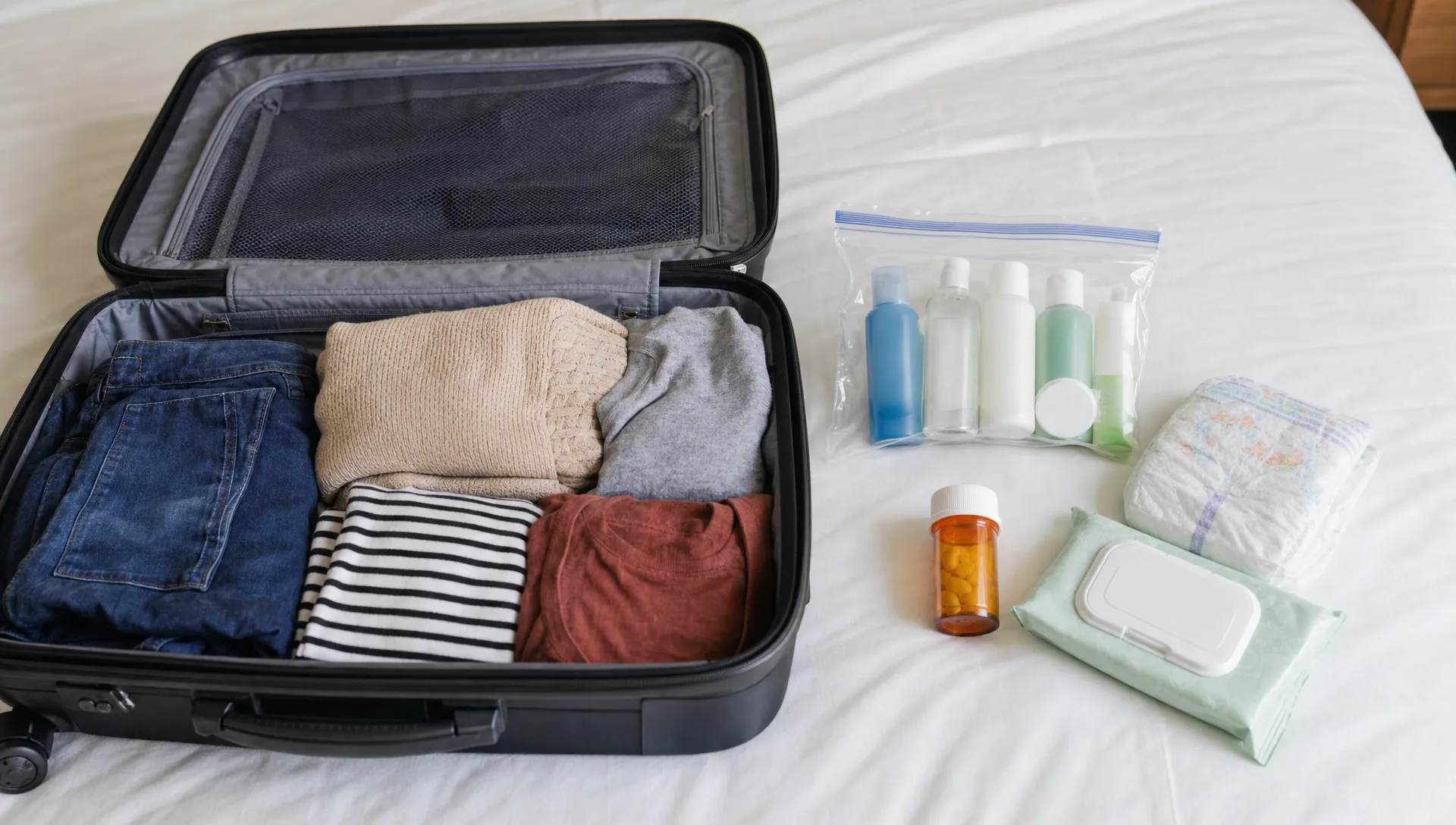
If you are travelling with only a cabin bag, choose travel sizes carefully and avoid bringing “just in case” liquids that take up space in your clear bag.
Practical packing checklist for UK flight liquids
Before leaving for the airport, spend two minutes checking your cabin liquids. It can save time at security and prevent expensive items from being thrown away.
Use this checklist:
- Check every bottle, tube, jar, spray, and roll-on for the printed capacity.
- Move anything over 100ml into checked luggage, unless it qualifies as an essential exception.
- Place all standard liquids in one clear resealable bag.
- Make sure the bag closes without forcing it.
- Keep medicine, baby items, and special dietary liquids easy to show separately.
- Empty reusable water bottles before security.
- Keep duty-free liquid receipts and sealed bags intact if connecting.
If you are unsure about an item, treat it as a liquid. This is especially helpful for borderline products such as balms, gels, spreads, creams, pastes, and semi-solid foods.
Common UK cabin liquid mistakes to avoid
The most common mistakes are small, but they can slow you down at security.
One is packing full-size toiletries because they are partly empty. Another is putting makeup outside the liquids bag because it “doesn’t feel like a liquid.” Mascara, lip gloss, liquid foundation, gel blush, cream highlighter, and similar products should usually go in the bag.
A third mistake is assuming every UK airport has the same scanner process. Even if you recently travelled through one airport without removing liquids, another airport may ask you to separate them. The rule can also depend on the terminal or security lane.
Finally, travellers often forget the return trip. If you buy large toiletries, perfume, sunscreen, sauces, or drinks abroad, check whether you can bring them through the return airport in your cabin bag. If not, pack them in checked luggage or avoid buying more than you can use before flying home.
How to check the rule for your exact airport or route
Official airport and government pages are the best starting point, but rules can still be difficult to compare when you are flying through more than one airport. The safest method is to check your outbound airport, your return airport, and any connection points before packing.
Liquid Limits is built for that situation. You can use the Liquid Limits trip liquid checker to check airport liquid rules for a route, including round trips, item-specific checks, verified source links, and last-checked dates. When a rule is unclear, Liquid Limits defaults to the stricter 100ml approach, which is the safer assumption for cabin bags.
Frequently Asked Questions
Can I take liquids on flights from the UK in my cabin bag? Yes, but standard liquids should usually be in containers of 100ml or less and fit inside one clear resealable plastic bag. Exceptions can apply for essential medicine, baby supplies, and special dietary needs.
Does the UK 100ml liquid rule still apply? For most travellers, the safest answer is yes. Some airports have newer scanners or different presentation procedures, but you should not assume larger liquids are allowed unless your exact airport confirms it for your journey.
Can I take a 150ml bottle if it is half empty? Usually no. UK airport security normally looks at the container size, not the amount of liquid left inside. A container larger than 100ml can be refused even if it is nearly empty.
Does makeup count as liquid in UK hand luggage? Many makeup items do. Mascara, liquid eyeliner, lip gloss, foundation, primer, concealer, cream blush, and similar products should normally go in your liquids bag.
Can I bring medicine over 100ml in my cabin bag? Essential liquid medicine may be allowed over 100ml, but it may need extra screening. Carry supporting evidence such as a prescription, doctor’s letter, or pharmacy label where possible.
Can I take duty-free perfume or alcohol onto the plane? Usually yes if it was bought after security and remains sealed in the correct security bag with the receipt. If you have a connection, keep the sealed bag intact until your final destination.
Pack for the strictest checkpoint, not the easiest one
UK flight liquids rules for cabin bags are manageable once you plan around the 100ml limit. The main risk is assuming that one airport’s process applies everywhere, or forgetting that your return flight may be stricter than your outbound flight.
Before you pack, check your route, your return airport, and your specific items. If anything is unclear, use the stricter 100ml rule. It is better to travel with smaller containers than to lose an expensive product at security.