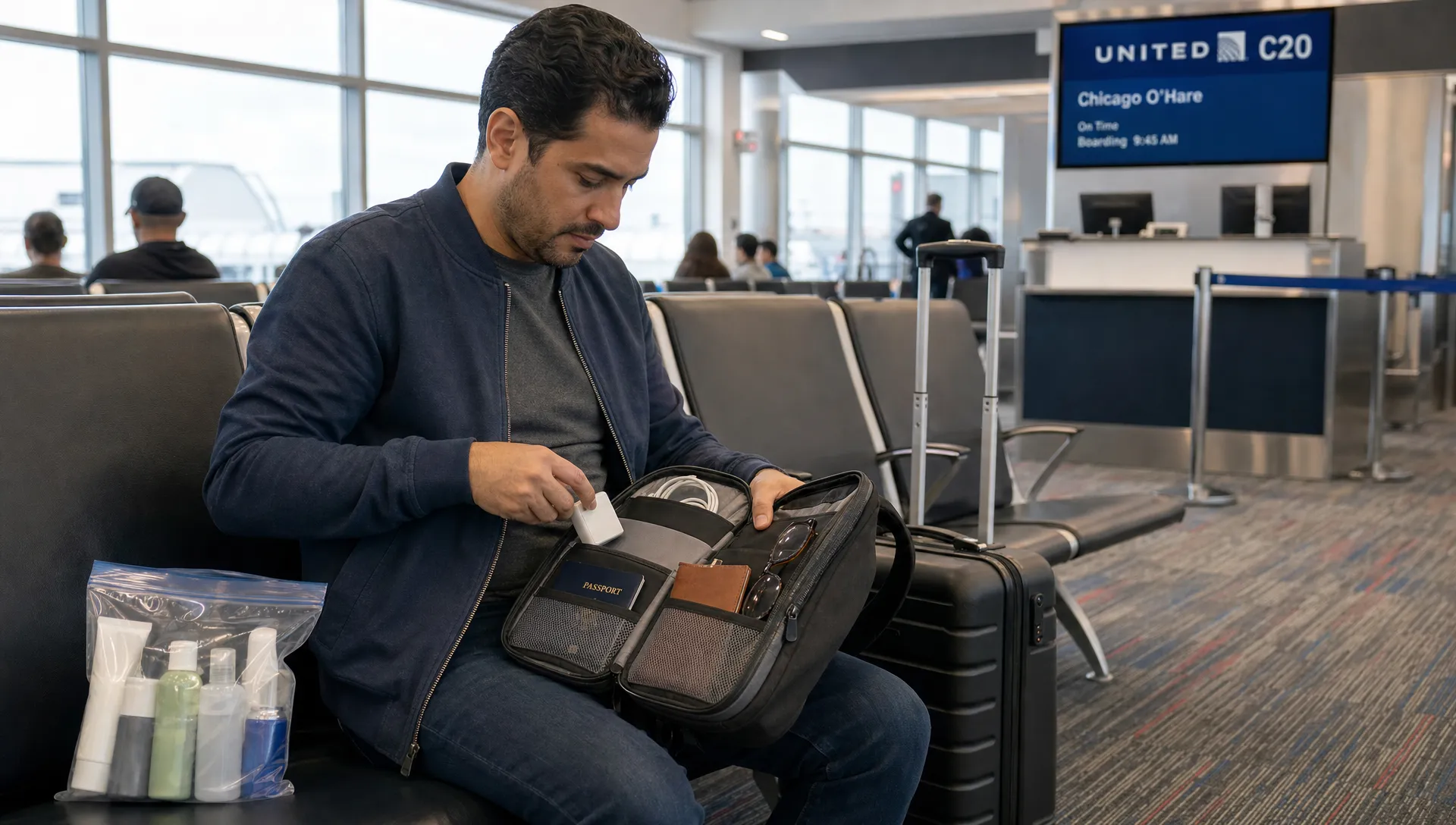
If your liquids bag is already zipped shut, your hand luggage still has plenty of useful space. The trick is not to force one more miniature bottle into the clear bag. It is to move everything that is not a liquid, gel, cream, paste or aerosol into the rest of your carry-on where it is easier to reach and less likely to cause a security delay.
Start by separating packing from rule-checking. Packing is about convenience, comfort and what you need during the flight. Rule-checking is about whether an item must fit inside the liquids bag, can travel separately or should go in checked luggage instead.
Build your hand luggage around what security actually checks
Airport security is not judging whether an item is a toiletry. It is usually judging the form of the item. A shampoo bottle is a liquid. Toothpaste is normally treated as a paste. Mascara can be treated as a liquid or gel. A bar of soap is solid, so it usually does not need space in the clear liquids bag.
That distinction matters when your bag is full. Do not move extra gels or creams into a side pocket and hope they will pass unnoticed. If the airport applies the common 100ml or 3.4 oz container rule, extra liquids outside the clear bag can be removed at screening. If you need a refresher, Liquid Limits explains the clear bag basics in more detail.
A better approach is to identify the solid, valuable and flight-essential items that deserve cabin space.
What belongs outside the liquids bag
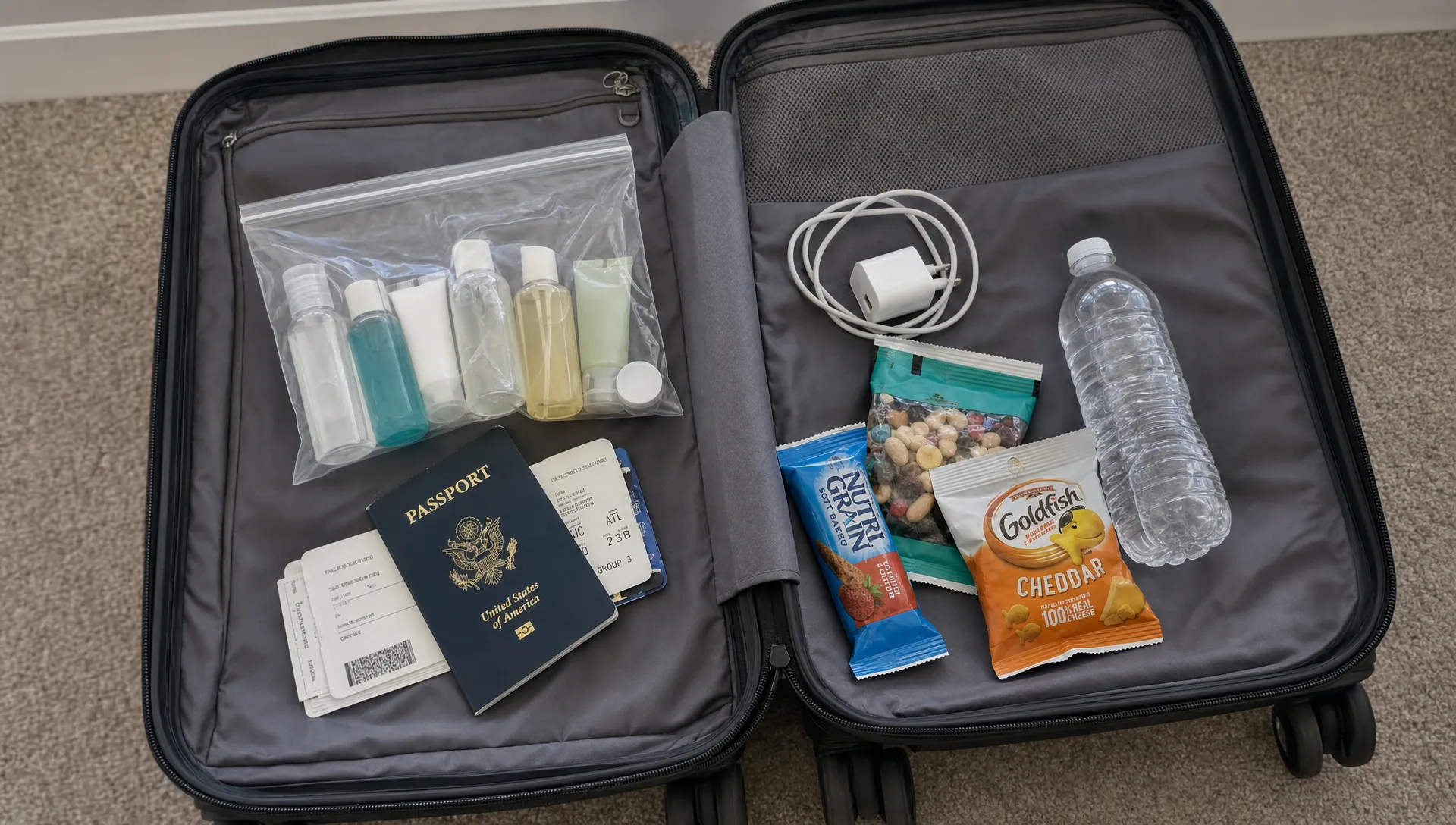
Your hand luggage has room for the items you actually need in the airport and on the plane, especially when those items do not count toward your liquid allowance. Think in categories rather than individual products.
| Category | Good items to pack | Why it helps |
|---|---|---|
| Travel essentials | Passport, ID, boarding pass, visa documents, travel insurance | You need fast access at check-in, immigration and boarding |
| Valuables | Wallet, keys, jewelry, glasses, camera | These are safer with you than in checked luggage |
| Electronics | Phone, laptop, tablet, chargers, power bank | Security may ask you to remove larger devices |
| Comfort items | Scarf, sweater, eye mask, earplugs, reusable mask | Useful during delays, cold cabins and long flights |
| Solid toiletries | Bar soap, solid shampoo, lip balm in solid form, comb, toothbrush | Saves clear-bag space for true liquids |
| Food and hydration | Solid snacks, empty water bottle, gum | Helps during connections without using liquid allowance |
This is also where common sense matters. If an item is expensive, difficult to replace or needed within the next 12 hours, it usually belongs in your carry-on rather than checked baggage.
Toiletries that can usually stay out
A smart hand luggage toiletries setup often uses solids wherever possible. Solid shampoo, solid conditioner, bar soap, tooth tablets and a dry facial cleansing cloth can replace several small bottles. These swaps do not make sense for every traveler, but they are useful when your clear bag is already committed to sunscreen, medication, contact lens solution or other must-have liquids.
Be careful with products that look solid but behave like gels or creams. A stick deodorant may be fine at many airports, while a gel deodorant usually belongs with liquids. A compact powder is typically different from liquid foundation. A lip balm stick is not the same as a lip gloss tube.
If you are unsure, ask one question: would the product pour, smear, spray, spread or squeeze if you pressed it? If yes, treat it as a likely liquid or paste until you can check the rule for your departure airport.
Items not to rescue from the liquids bag
When space runs out, these are the items travelers are most tempted to hide elsewhere. That is usually the wrong move.
- Full-size shampoo, conditioner or body wash
- Toothpaste tubes over the allowed container size
- Perfume bottles that do not meet the local rule
- Sunscreen, moisturizer, hand cream and liquid makeup
- Nut butter, jam, honey, sauces and other spreadable foods
These items may be useful, but usefulness does not change the screening category. If they exceed the airport limit, put them in checked luggage, buy them after security if available or replace them with a solid alternative.
Medicines, baby items and special cases
Some essential items are treated differently from ordinary toiletries. Liquid medicines, baby milk, baby food and special dietary liquids may be allowed in quantities above the standard liquids limit in many jurisdictions, but they often need to be declared and screened separately.
Do not bury those items under clothing. Put them where you can remove them quickly and keep any prescription label, doctor note or original packaging if it helps explain the item. Rules can vary by airport, so a medicine that was straightforward on your outbound flight may still deserve a check before the return leg.
This is one reason round trips deserve extra attention. Your departure airport and return airport may not apply the same liquid screening setup.
Electronics, batteries and valuables deserve priority
Your cabin bag is usually the safest place for electronics and valuables. Laptops, tablets, cameras, hard drives and glasses are easier to protect when they stay with you. They are also easier to present at screening if the airport requires large electronics to be removed.
Power banks and spare lithium batteries need extra care. The US Federal Aviation Administration explains in its PackSafe lithium battery guidance that spare lithium batteries and power banks are generally for carry-on baggage, not checked baggage. Terminals should also be protected from short circuits.
This is a good reminder that liquids are only one part of cabin packing. Sharp objects, tools, batteries, powders and sports gear can create their own problems, which is why it helps to review rules that go beyond liquids before you finish packing.
Food and drinks when the liquids bag is full
Keep this part of your hand luggage simple. Solid snacks such as granola bars, crackers, sandwiches, nuts, dried fruit and sweets are usually easier to manage than anything spreadable or saucy. They are also practical if your flight is delayed or your connection is tight.
An empty reusable water bottle is one of the best space-saving choices. It does not use any liquid allowance when empty, and you can fill it after security where drinking water is available. Avoid packing drinks bought before security unless you know the airport allows them under its current screening rules.
Food rules can also change when crossing borders. Fresh fruit, meat, dairy and agricultural products may be restricted on arrival even if they are allowed through departure security. If you plan to eat it on the plane, pack only what you can realistically finish before landing.
A packing order that works at security
When your liquids bag is full, the order inside the carry-on matters almost as much as the contents. Pack your hand luggage so the items most likely to be checked are easiest to remove.
- Place the clear liquids bag near the top.
- Keep medicines, baby items or special dietary items together.
- Put large electronics in a sleeve or top compartment.
- Store documents in one flat pocket.
- Use a small pouch for chargers, adapters and cables.
This layout prevents the common airport scramble where a traveler has to unpack half a suitcase at the tray table. It also helps you notice liquids that accidentally escaped the clear bag before a security officer does.
Check the rule before you rely on a workaround
The most frustrating packing mistake is assuming yesterday's rule still applies today. Some airports use newer scanners that can allow larger quantities in certain lanes or terminals, while others still apply the stricter 100ml approach. Transfers and return flights can add another layer of confusion.
Before you decide what to move, toss or check, use Liquid Limits to check the strictest liquid rule for your route. You can look up airports, items and routes, then compare the outbound and return flight side by side. When a rule is unclear, Liquid Limits defaults to the stricter 100ml guidance so you are not left guessing at security.
Frequently Asked Questions
Can I put extra liquids anywhere else in my hand luggage? No, not if they exceed the applicable cabin liquid rule. Extra liquids, gels, creams, pastes and aerosols should not be hidden in another pocket just because the clear bag is full.
Do solid toiletries have to go in the clear liquids bag? Usually not. Solid soap, solid shampoo, tooth tablets and similar products normally sit outside the liquids bag, though airport staff always have the final say at screening.
What if my medicine is liquid? Necessary liquid medicine may be allowed separately from the normal liquids bag in many places, but you should keep it accessible, declare it when required and carry supporting information where appropriate.
Can I bring an empty water bottle through security? In most cases, yes. An empty bottle is not a liquid, and you can fill it after security if water is available.
What should I do if my return airport has different rules? Check the return airport before you fly home. A product that passes easily on the outbound trip may not meet the stricter rule on the way back.
Before you zip up
A full liquids bag is not a packing failure. It is a signal to prioritize. Keep true liquids within the rule, move solid toiletries and essentials into the rest of your carry-on, and keep documents, medicine, electronics and valuables easy to reach.
For the final check, verify the airport and item rules for your actual route rather than relying on memory. Liquid Limits updates guidance daily, shows source links and last-checked dates, and helps you avoid surprises before you get to the tray table.