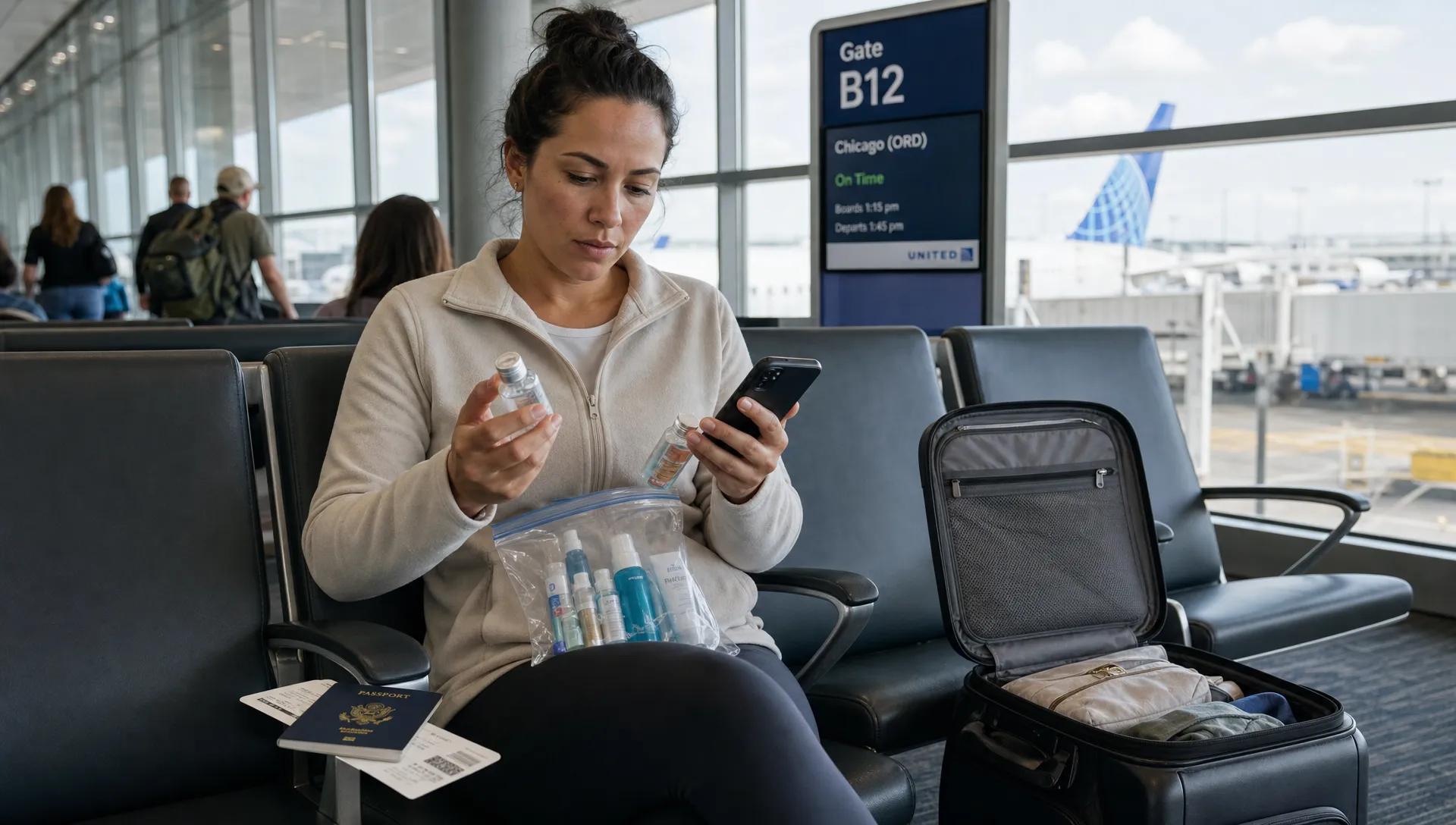
Trying to work out the liquid max for flights can be surprisingly confusing because there are two different questions: what can pass through airport security in your carry-on bag and what can travel in checked luggage. The safest general answer for carry-on bags is 100 ml, or 3.4 oz, per container, with those containers packed in one clear resealable liquids bag, unless every security checkpoint on your route clearly publishes a more generous rule.
That last detail matters. Liquid rules are usually enforced at airport security, not simply by the airline printed on your ticket. A round trip, international connection or airport with newer scanners can change what is allowed, so the practical maximum is the strictest checkpoint you will pass through.
Liquid max for flights: the short answer
For most travelers, the cabin liquid limit is still best treated as the 100 ml rule. In the United States, the TSA liquids rule allows liquids, aerosols, gels, creams and pastes in containers of 3.4 oz or 100 ml, packed in a quart-sized clear bag. In the United Kingdom, GOV.UK hand luggage guidance also describes the familiar 100 ml container rule at many security points.
The exact wording can vary by country, but the basic idea is consistent: small containers, grouped together, visible for screening. If an airport has a newer screening setup and publishes a larger allowance, that allowance applies only where that checkpoint accepts it.
| Where the liquid is packed | Common maximum | What to watch |
|---|---|---|
| Carry-on bag before security | 100 ml or 3.4 oz per container | Containers usually need to fit in one clear resealable bag |
| Checked luggage | No standard 100 ml security limit for ordinary toiletries | Dangerous goods, alcohol, aerosols and airline weight limits still apply |
| Duty-free bag after security | Often allowed above 100 ml | Connections and tamper-evident bag rules can affect acceptance |
| Airports with larger published allowances | May allow larger containers, sometimes up to 2 L | Only trust the rule for that exact airport and checkpoint |
The liquid max for flights is therefore not one universal number. For cabin baggage, 100 ml per container is the safest planning limit. For checked baggage, larger toiletries are usually possible, but hazardous materials rules still matter.
Why container size matters more than how much liquid is inside
Airport security normally looks at the container capacity, not the amount of liquid remaining. A 200 ml shampoo bottle that is half full may still be treated as a 200 ml container, which means it can fail a 100 ml carry-on rule even though it contains only about 100 ml of product.
This catches travelers out with expensive skincare, sunscreen and perfume. The label on the bottle matters. If the printed capacity is above the limit, decant it into a travel-size container before you leave home or pack it in checked luggage if the item is permitted there.
The rule also covers more than obvious drinks. Security teams commonly treat the following as liquids or liquid-like items:
- Shampoo, conditioner, body wash and lotion
- Toothpaste, gel deodorant, mascara and lip gloss
- Sunscreen, perfume, aftershave and shaving gel
- Creams, pastes, spreads and some soft foods
- Aerosols, including hairspray and spray deodorant
When in doubt, assume a spreadable, squeezable, sprayable or pourable item belongs in your liquids bag. For a closer look at borderline items, Liquid Limits has a separate guide to which liquids are allowed in carry-on bags.
Carry-on vs checked luggage: two different limits
The liquid max for flights is strictest when you are carrying items through the passenger security checkpoint. That is where the 100 ml or 3.4 oz rule usually applies. Once an item is in checked luggage, it does not go through the same cabin bag screening process, so full-size toiletries are generally easier to pack.
Checked baggage is not unlimited, though. Airlines have weight and size limits, and aviation safety rules restrict some liquids because they are flammable, pressurized, corrosive or otherwise hazardous. Ordinary shampoo or body lotion is usually straightforward, but high-proof alcohol, fuel, paint, strong chemicals and certain aerosols can be restricted or forbidden.
Alcohol is a good example. The FAA PackSafe guidance on alcoholic beverages states that beverages over 24 percent and up to 70 percent alcohol by volume are limited to 5 liters per passenger in unopened retail packaging, and beverages over 70 percent alcohol by volume are not allowed in carry-on or checked bags. Rules like this are separate from the 100 ml cabin liquid rule.
A simple packing principle helps: use your carry-on for the small quantities you need during the trip, and put larger permitted toiletries in checked luggage. If you are traveling carry-on only, buy larger liquids after arrival or choose solid alternatives such as bar soap, solid shampoo, powder cleanser or stick deodorant.
Why some airports mention 2 liters
Some airports have introduced or tested advanced cabin baggage scanners that can support less restrictive liquid screening. That is why travelers sometimes hear that larger containers, even up to 2 liters, may be allowed at certain checkpoints.
The problem is that this is not consistent worldwide. A route can include one airport with newer equipment, another that still applies the 100 ml rule and a return airport with a different setup again. Equipment can also be rolled out terminal by terminal, paused for regulatory reasons or handled differently during transfers.
For that reason, the liquid max for flights should be based on your exact airport sequence, not on a general news headline about scanners. If even one security checkpoint on your trip requires 100 ml containers, packing to the 100 ml rule prevents problems.
This is especially important for round trips. You might depart from an airport that allows larger liquids, then return from one that does not. If you buy a full-size bottle at your destination and put it in your cabin bag for the flight home, the return airport’s rule is the one that matters.
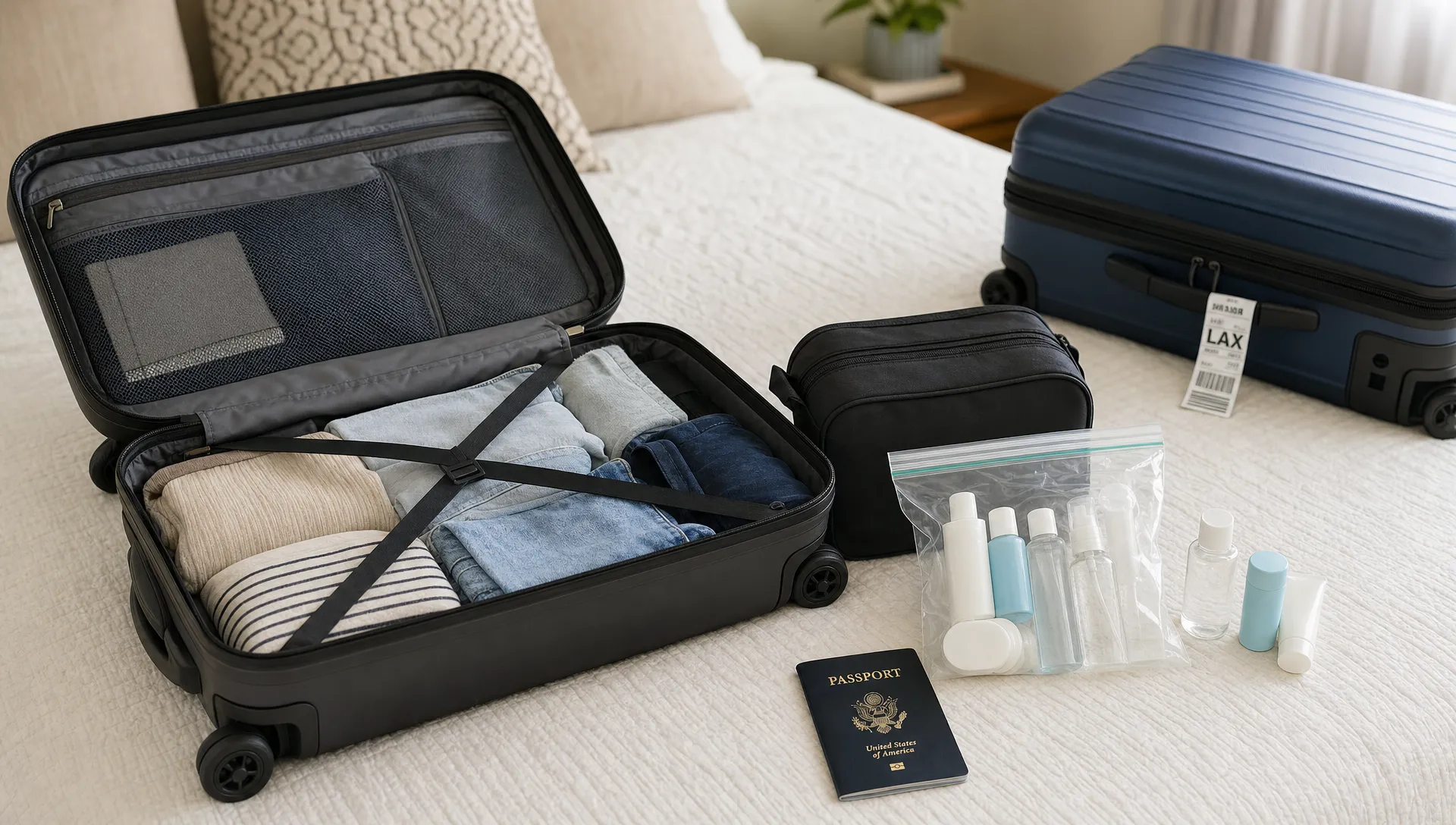
How connections and return flights change the real maximum
Direct flights are easier because you usually pass through security once before departure. Connecting flights can be different. Some airports require transfer passengers to clear security again, especially when changing terminals, entering a new country or moving between international and domestic flights.
If you pass through another screening point, that airport’s liquid rule applies. A bottle bought before your first flight may not automatically be accepted at the second security check. Duty-free liquids are often handled through sealed tamper-evident bags with receipts, but acceptance can still depend on the airport, connection type and local rules.
For a round trip, the liquid max for flights is only as generous as the strictest security checkpoint on the full journey. That includes the outbound airport, connection airports, the return airport and any transfer screening on the way back. If you want to avoid comparing all of that manually, you can use Liquid Limits to check rules for liquids on flights and return trips before you pack.
A useful habit is to plan your liquids twice: once for the outbound flight and once for the return. Travelers often pack carefully before leaving home, then forget that souvenirs, cosmetics, sauces, olive oil, perfume or skincare bought during the trip must also comply with the journey home.
Exceptions for medicine, baby items and special needs
Many airport security systems allow exceptions for medically necessary liquids, baby formula, breast milk and certain dietary requirements. These items may be allowed above 100 ml, but they normally need to be presented separately and may require additional screening.
The liquid max for flights changes for these exceptions because the purpose of the item matters. A medically necessary liquid is treated differently from a regular cosmetic. That does not mean every large container will pass without question, so bring only what is reasonable for the journey, keep medication in original packaging where possible and carry documentation when it may help explain the need.
Parents should also separate baby liquids before screening. Formula, breast milk, baby food and cooling accessories may be screened differently from toiletries. Policies vary by country, so check the airports on your route if you are carrying large quantities.
If you need an exception, arrive with extra time. Additional screening is routine, but it can slow you down. The key is to avoid hiding exempt items inside your regular liquids bag and to answer security questions clearly.
A practical packing plan for the maximum allowed amount
To avoid losing items, treat the liquid max for flights as a packing constraint before you choose your bag. Start with the strictest cabin rule that may apply, then work backward from what you truly need during the flight.
For most trips, this packing plan works well:
- Put every carry-on liquid in a labeled container of 100 ml or less
- Use one clear resealable bag and make sure it closes comfortably
- Move full-size permitted toiletries to checked luggage if you have it
- Check alcohol, aerosols and chemicals separately before packing them
- Keep medicines and baby items separate so they can be screened properly
- Recheck the return airport rule before buying liquid souvenirs
Do not rely on the airline alone for the final answer. Airlines can explain baggage size, weight and onboard restrictions, but airport security rules decide what passes through screening. If your trip includes multiple countries or airports, verify the route rather than assuming the same rule applies everywhere.
Liquid Limits is built for that exact problem. The site can compare airport rules, item-specific guidance and route details, with source links and last-checked dates. It also defaults to the stricter 100 ml rule when a rule is unclear, which is the safer approach for travelers who do not want surprises at security.
Frequently Asked Questions
What is the maximum liquid amount allowed in carry-on luggage? At many airports, the maximum is 100 ml or 3.4 oz per container, and the containers must fit in one clear resealable liquids bag. Some airports may publish larger allowances, but you should only rely on them for that exact checkpoint.
Can I bring a 150 ml bottle if it is half empty? Usually no. Security commonly checks the container capacity, not the amount left inside. A 150 ml bottle can be rejected under a 100 ml rule even if it contains less than 100 ml.
Is there a liquid limit for checked bags? The 100 ml cabin liquids rule does not usually apply to checked luggage, so full-size toiletries are often allowed. However, hazardous materials rules still restrict items such as high-proof alcohol, aerosols, fuels, solvents and certain chemicals.
Are medicines allowed above 100 ml? Many airports allow medically necessary liquids above the standard cabin limit, but they may need separate screening. Carry a reasonable amount for your trip and keep supporting information available when appropriate.
Does the 2 liter liquid rule apply everywhere? No. Larger allowances depend on the airport, screening equipment, local approval and sometimes the terminal. If any airport on your route still uses the 100 ml rule, pack your cabin liquids to that stricter limit.
Do return flights follow the same liquid rules as outbound flights? Not always. Your return airport may have different rules from your departure airport. Connections can also add another security check, so the safest approach is to follow the strictest rule across the whole trip.
Check your exact route before you pack
The safest answer to the maximum liquid question is simple: use 100 ml containers for carry-on unless your exact route confirms something more generous. For checked luggage, think beyond volume and check whether the item is restricted by aviation safety rules.
Before you close your suitcase, use Liquid Limits to check airport liquid rules for your route, including the return flight. You will see the strictest relevant rule side by side with source links, so you can pack liquids with fewer last-minute surprises.