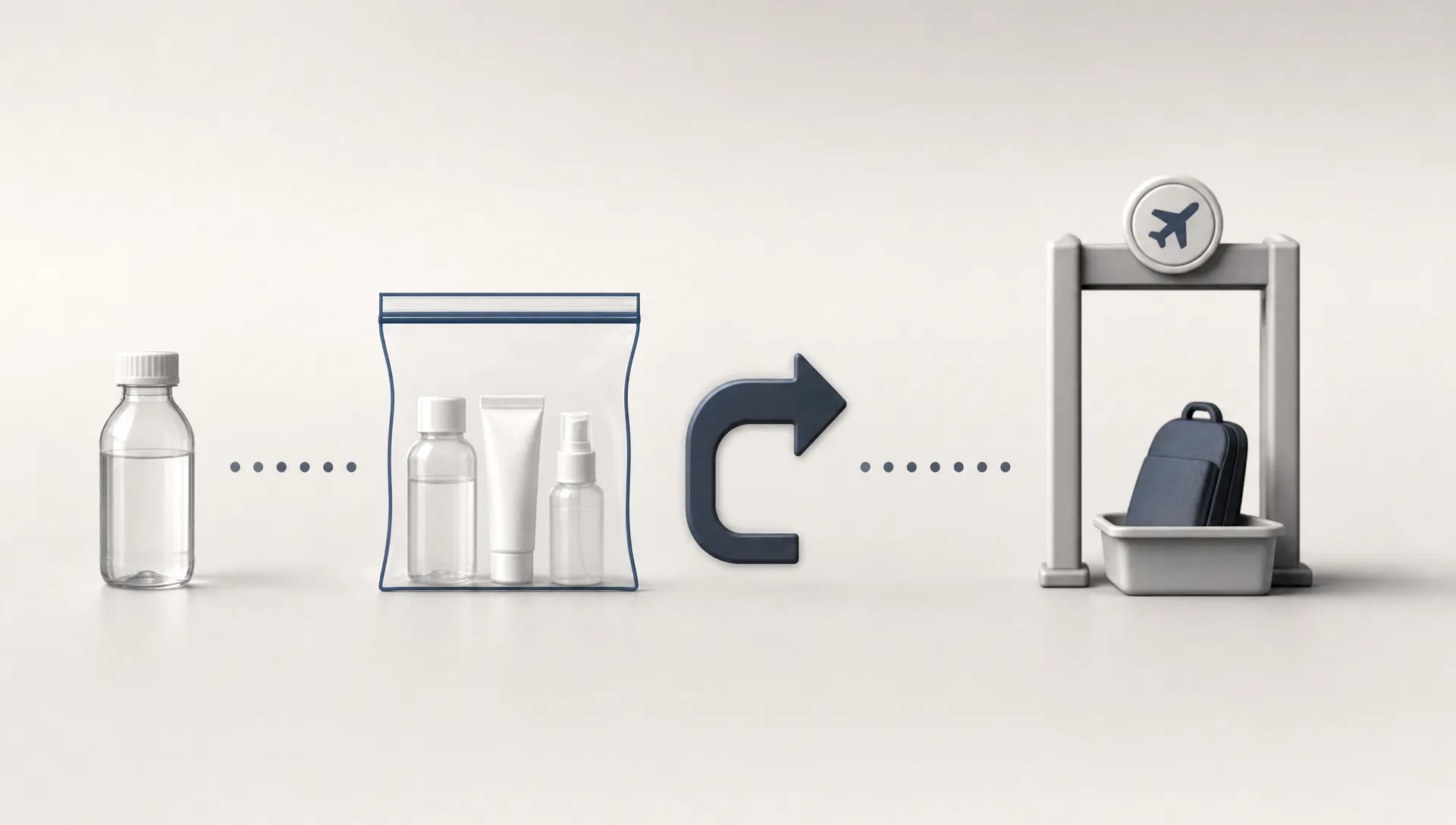
Most travelers do not lose a bottle at security because the liquid itself is banned. They lose it because the container is too large, it is packed in the wrong bag or the airport on their route applies a stricter rule than they expected.
The short answer is simple: most everyday liquids are allowed on flights in carry-on bags if each container is 100 ml, or 3.4 oz, or smaller and fits in the required liquids bag where that rule applies. Larger amounts may be allowed for medical needs, baby supplies and some duty-free purchases, but those exceptions come with extra screening and route-specific limits.
Because airport liquid rules are not identical everywhere, the safest approach is to check the rule for your departure airport, any connection airport and your return flight before you pack. If you want the route-specific answer instead of a general rule, you can check your airports and items with Liquid Limits before you zip your carry-on.
The basic carry-on liquid rule
In the United States, the Transportation Security Administration describes the standard carry-on rule as 3-1-1 for liquids: containers must be 3.4 oz, or 100 ml, or less, and they must fit in one quart-size bag. Other countries often use the same 100 ml container limit, usually with a transparent resealable bag.
That rule applies to more than obvious liquids. Airport security usually treats these as liquids, aerosols, gels, creams or pastes:
- Shampoo, conditioner, body wash and lotion
- Toothpaste, sunscreen, hair gel and shaving cream
- Perfume, cologne, deodorant sprays and roll-ons
- Mascara, liquid eyeliner, foundation and lip gloss
- Drinks, soups, sauces, spreads and yogurt
- Aerosols such as dry shampoo, hairspray and spray deodorant
The container size matters as much as the amount inside. A 200 ml bottle with only a little shampoo left can still be rejected under a 100 ml rule because the container itself is over the limit.
If you are mainly trying to understand size limits rather than item categories, our separate guide to what liquid sizes are allowed on flights today goes deeper into container sizes, scanner changes and the difference between cabin and checked baggage.
Quick answer: which liquids are allowed in carry-on bags?
Use this table as a practical starting point. It covers common travel items, but airport staff always make the final call at screening.
| Item type | Allowed in carry-on? | Usual carry-on limit | What to know |
|---|---|---|---|
| Toiletries | Yes | 100 ml or 3.4 oz per container where the standard rule applies | Must fit in the liquids bag if required |
| Makeup liquids and gels | Yes | 100 ml or 3.4 oz per container | Mascara, foundation and lip gloss usually count as liquids |
| Drinks | Yes, but not through security in large bottles | 100 ml or 3.4 oz before security | Buy drinks after security or bring an empty bottle to fill airside |
| Liquid food, sauces and spreads | Yes | 100 ml or 3.4 oz per container | Peanut butter, hummus, jam and soup are commonly treated as liquids or gels |
| Prescription and necessary medicines | Usually yes | Often allowed over 100 ml when medically necessary | Declare them for screening and keep labels or documentation if available |
| Baby milk, formula and baby food | Usually yes | Often allowed in reasonable quantities over 100 ml | Expect separate screening |
| Duty-free liquids | Sometimes | Can be over 100 ml if sealed correctly | Transfer rules can be strict, especially on connecting flights |
| Aerosols for personal care | Yes, with limits | 100 ml or 3.4 oz in carry-on under the liquids rule | Caps should be secure, and hazardous aerosols may be banned |
| High-proof alcohol | Restricted or banned | Depends on alcohol strength and where purchased | Alcohol over 70 percent ABV is generally not allowed in checked or carry-on baggage under FAA rules |
Toiletries you can usually bring
Most toiletries are allowed in carry-on bags when they meet the airport’s liquid size rule. That includes shampoo, conditioner, body wash, face cleanser, mouthwash, toothpaste, moisturizer, sunscreen, aftershave and shaving gel.
For a short trip, travel-size containers are the easiest option. For longer trips, consider packing full-size toiletries in checked luggage or buying them after arrival. Solid swaps can also simplify packing. A shampoo bar, bar soap, solid deodorant or solid sunscreen stick may not need to go in your liquids bag, though airport staff can still inspect any item.
Be careful with products that feel “almost solid.” Toothpaste, creams, balms, gels and pastes are often treated as liquids for screening purposes. If it can be squeezed, spread, sprayed or poured, pack it as a liquid unless your airport says otherwise.
Makeup and beauty products
Makeup is one of the most common sources of confusion because some products count as liquids and others do not.
Liquid foundation, concealer, mascara, liquid eyeliner, primer, setting spray, cream blush, lip gloss and gel brow products should usually go in your liquids bag. Powder foundation, powder blush, pressed eyeshadow, pencils and most solid lipsticks are normally treated as solids.
Perfume and cologne are allowed, but the bottle must meet the liquid size limit if you are taking it through security in your carry-on. A 30 ml perfume bottle is usually fine under the standard rule. A 150 ml bottle is not, even if it is half empty.
Food and drinks in carry-on bags
You can bring many foods in your carry-on, but liquid or spreadable foods are subject to the same liquid restrictions at security. Water, juice, coffee, soup, yogurt, honey, jam, peanut butter, hummus, salsa and salad dressing are the classic examples.
A full-size water bottle will usually be stopped before security. An empty reusable bottle is normally allowed, and many airports have refill stations after screening. Food bought after security can usually be taken onto the plane, subject to airline rules and customs rules at your destination.
There is one important distinction: airport security liquid rules are not the same as customs or agriculture rules. A sauce, dairy product or fresh food item may pass security but still be restricted when you land in another country. For international trips, check destination customs rules as well as carry-on liquid limits.
Medicines and health-related liquids
Liquid medicines are commonly allowed in carry-on bags, including amounts over 100 ml when they are medically necessary. The TSA says medically necessary liquids, medications and creams can be brought in reasonable quantities and should be declared to officers for inspection.
Examples may include prescription liquid medicine, insulin, injectable medication supplies, contact lens solution, cough syrup, nutritional liquids and medically necessary creams. You do not always need a prescription label for every item, but clear labeling can make screening easier. If you rely on a medicine during travel, keep it in your carry-on rather than checked luggage whenever possible.
Pack health-related liquids separately enough that you can remove or present them quickly. If an officer needs to test the container, that is usually faster when the item is easy to identify and not buried under toiletries.
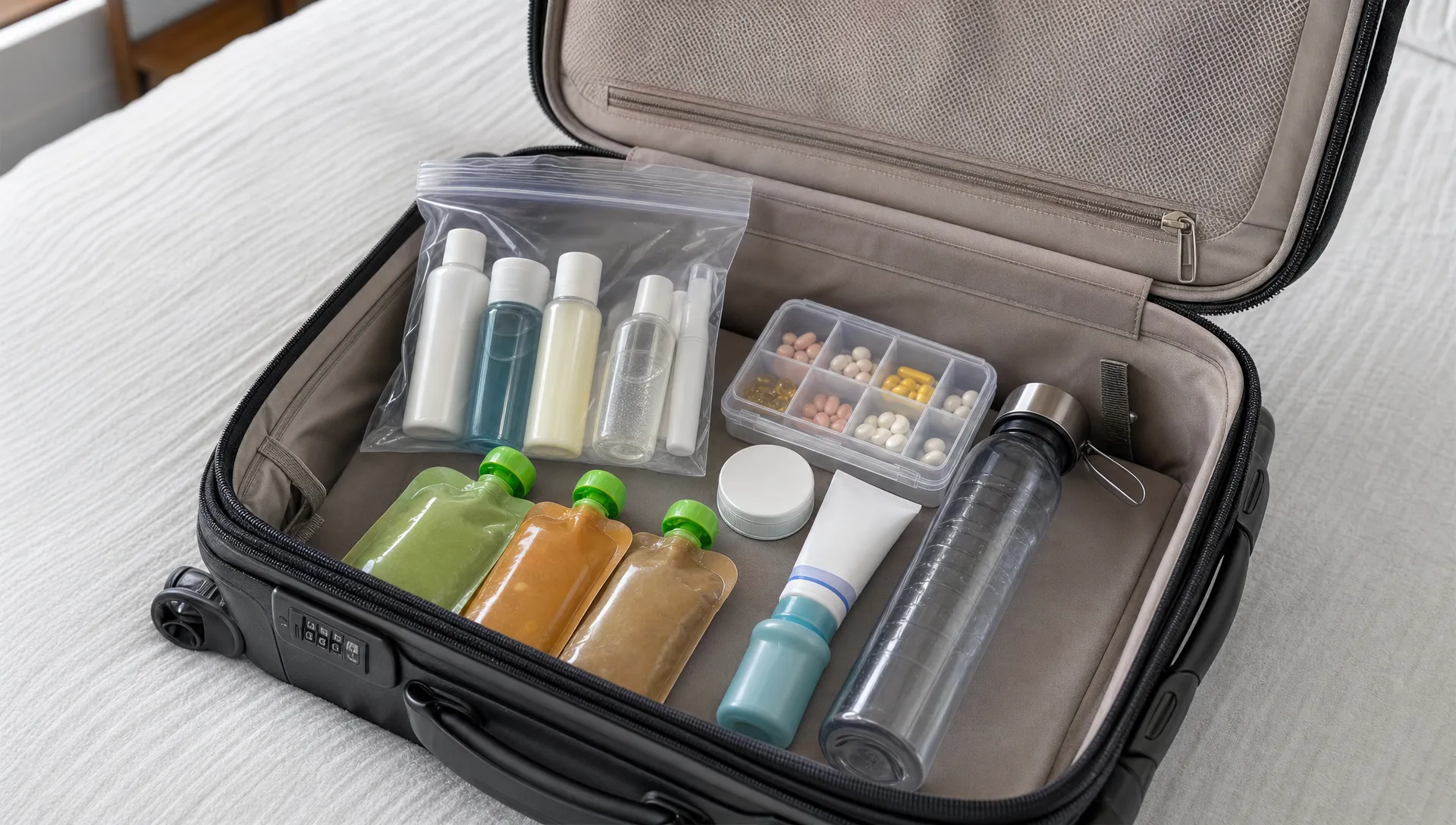
Baby formula, breast milk and children’s items
Baby formula, breast milk, toddler drinks, baby food pouches and cooling accessories for these items are usually treated as special exceptions. They may be allowed in quantities greater than 100 ml, but they are typically screened separately.
Parents and caregivers should keep these items easy to access and tell security staff before screening starts. You may be asked to open containers or allow additional testing. Rules and procedures can vary by country, so families traveling internationally should check each airport on the itinerary, not just the first departure airport.
This is especially important on round trips. Your outbound airport may have a modern scanner or a more flexible process, while your return airport may apply the standard 100 ml rule more strictly for everything except recognized exemptions.
Duty-free liquids and airport purchases
Duty-free liquids can be allowed in carry-on bags even when containers are larger than 100 ml, but only under specific conditions. In many airports, the item must be packed in a sealed, tamper-evident security bag with proof of purchase. If the bag is opened before your final security screening, the exemption may no longer apply.
Connections are where travelers run into problems. A large bottle of perfume, liquor or cosmetics bought at one airport may be fine on the first flight but rejected at a transfer checkpoint if the security bag, receipt or route does not meet local requirements.
Alcohol adds another layer. According to the FAA’s PackSafe guidance on alcoholic beverages in baggage, beverages over 70 percent alcohol by volume are forbidden in both carry-on and checked baggage. Alcohol between 24 percent and 70 percent has quantity limits in checked baggage, and carry-on alcohol must still comply with liquid screening rules unless it was bought after security and accepted under duty-free procedures.
Aerosols, sprays and pressurized containers
Aerosols are allowed only when they are safe and within the relevant size limits. Personal care aerosols such as hairspray, shaving foam, spray deodorant and dry shampoo are commonly allowed in carry-on bags if each container meets the liquid limit and has a protective cap.
Not all sprays are treated the same. Flammable, industrial or chemical aerosols may be banned from both carry-on and checked baggage. That can include certain spray paints, insecticides, fuel canisters and cleaning products. If the product is not a personal care item, check airline and airport rules before packing it.
Why the airport matters as much as the item
A product can be allowed in one airport and still cause trouble at another because screening technology and local policy are not always aligned. Some airports have installed newer computed tomography scanners that can support different liquid rules, but those rules may apply only at certain terminals, lanes or times. Other airports continue to enforce the standard 100 ml limit.
The UK government’s hand luggage restrictions page is a good example of why travelers should check official rules close to departure. National rules, airport implementation and scanner availability can change. Airlines may also publish reminders, but airport security rules decide what passes through the checkpoint.
For multi-airport trips, the strictest checkpoint is the one that matters. If you fly from an airport that allows larger liquids but return from one that does not, you may need to pack for the stricter return rule or put larger items in checked luggage. Liquid Limits is built for that exact problem: it checks the strictest cabin liquid rule for your whole trip, including the return flight, and uses the 100 ml fallback when a rule is unclear.
How to pack liquids without delays
Good packing reduces the chance of losing items at security. It also makes your bag easier to repack after screening.
Keep containers upright, close caps tightly and use leak-proof pouches for anything that could spill. If your airport requires a clear liquids bag, place all standard liquids together before you reach the checkpoint. Put medicines, baby supplies and duty-free bags where you can show them separately if asked.
A practical carry-on setup might look like this:
- One clear bag for standard toiletries and makeup under 100 ml
- One separate pouch for medicines or medical liquids
- One accessible section for baby liquids and food, if traveling with a child
- One empty reusable bottle for filling after security
- Receipts and sealed bags kept with duty-free liquids until the final destination
Do not rely on airline cabin crew to solve a security issue. Once an item is rejected at the checkpoint, your options are usually limited to checking the bag if time allows, handing the item to someone not flying, mailing it where available or surrendering it.
Carry-on liquids vs checked baggage
Checked baggage allows larger toiletries and many liquids that would not pass through cabin security. If you need a full-size shampoo, large sunscreen, wine bottle or specialty food liquid, checked baggage may be the better place for it.
There are still limits. Hazardous liquids, high-proof alcohol, fuels, some chemicals and certain aerosols can be restricted or banned in checked baggage too. Checked liquids should be sealed in plastic bags or leak-proof cases because pressure changes and rough handling can cause spills.
If an item is expensive, medically necessary or hard to replace, carry it in the cabin only if it clearly complies with the rules or qualifies for an exemption. Otherwise, check the exact rule before travel.
Frequently Asked Questions
Can I bring perfume on a plane in my carry-on? Yes, perfume is allowed if the bottle meets the liquid size rule at your airport, usually 100 ml or 3.4 oz. Larger perfume bottles may be allowed only if bought duty-free and kept in the required sealed bag.
Is mascara considered a liquid when flying? Yes, mascara is usually treated as a liquid, gel or paste for airport screening. Pack it with other liquids if your airport requires a clear liquids bag.
Can I take a full water bottle through airport security? Usually no. A full bottle over 100 ml will normally be rejected before security. Bring an empty bottle and fill it after screening.
Are liquid medicines allowed over 100 ml? Usually yes when they are medically necessary and in reasonable quantities. Declare them at screening and keep them easy to inspect.
Can I bring baby formula or breast milk in carry-on luggage? Yes, baby formula and breast milk are usually allowed in quantities greater than the standard liquid limit, but they may need separate screening.
Do liquid rules depend on the airline? Usually the airport security authority sets liquid screening rules, not the airline. Airlines can set baggage size and weight limits, but the security checkpoint decides whether liquids can pass.
Check your liquids before you pack
Most liquids are allowed on flights in carry-on bags, but the allowed size depends on the airport, item and route. The safest default is still 100 ml or 3.4 oz per container unless your exact airport clearly allows more.
Before your next trip, use Liquid Limits to check your departure airport, return airport and specific items side by side. You will see the relevant rule, source links and last-checked dates so you can pack with fewer surprises at security.