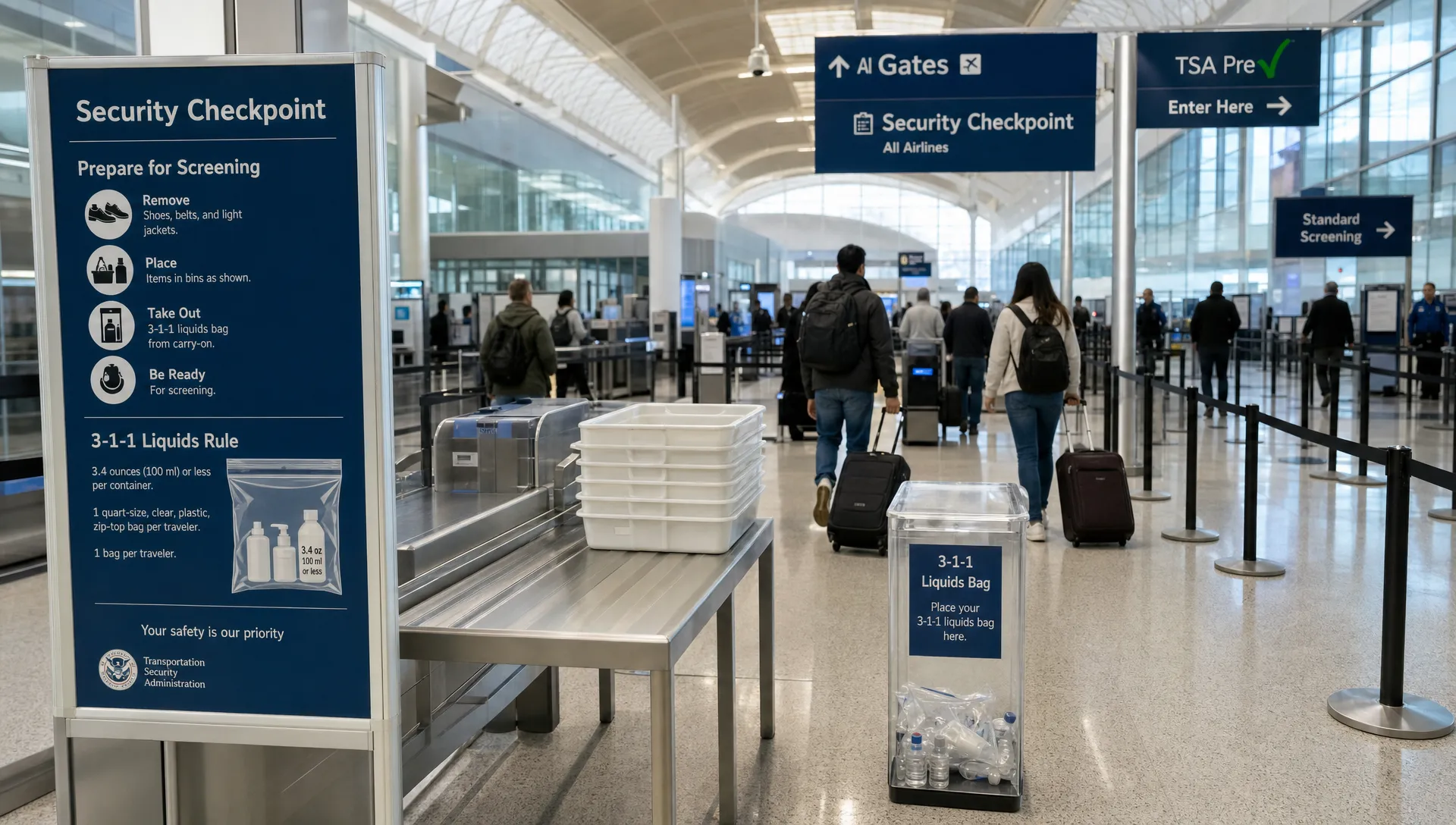
When travelers ask who decides the liquid volume allowed on flights, the answer is not “the airline.” Cabin liquid limits are created through a layered aviation security system: global standards shape national rules, national regulators set enforceable checkpoint requirements and airports apply those rules at screening.
That structure explains why liquid rules can feel simple on one trip and confusing on the next. A traveler flying from a U.S. airport may think in terms of TSA’s 3-1-1 rule, while a passenger departing from an EU or UK airport may see a 100 ml container rule with local variations. The checkpoint you depart from, transfer through or return from is usually what matters most.
Who sets the liquid volume allowed on flights?
The liquid volume allowed on flights is set mainly by government aviation security authorities, not commercial airlines. In the United States, the Transportation Security Administration sets and enforces checkpoint screening requirements. In the European Union, the European Commission creates common aviation security rules that member states and airports apply. In the UK, government security rules are reflected in passenger guidance from GOV.UK and implemented at airport screening.
At the international level, the International Civil Aviation Organization, known as ICAO, sets aviation security standards and recommended practices for member states. ICAO does not inspect your shampoo at the checkpoint. Instead, it helps create the global framework that countries use when building their own aviation security programs.
Airports then operate within those national or regional rules. The staff member at the security lane may be the person who removes an oversized bottle from your bag, but the authority behind that decision comes from regulation, airport security procedures and the applicable national aviation security program.
The rule-making chain, from global standards to your tray
Think of liquid rules as a chain of responsibility. ICAO provides the international security framework. National or regional authorities turn that framework into legal rules. Airports apply the rules at checkpoints. Airlines communicate the rules to passengers, but usually do not create the carry-on liquid limit themselves.
The liquid volume allowed on flights became a prominent passenger issue after security agencies restricted liquids, aerosols and gels in cabin baggage in response to aviation security threats. Since then, many jurisdictions have used a version of the 100 ml, or 3.4 oz, container rule for cabin baggage.
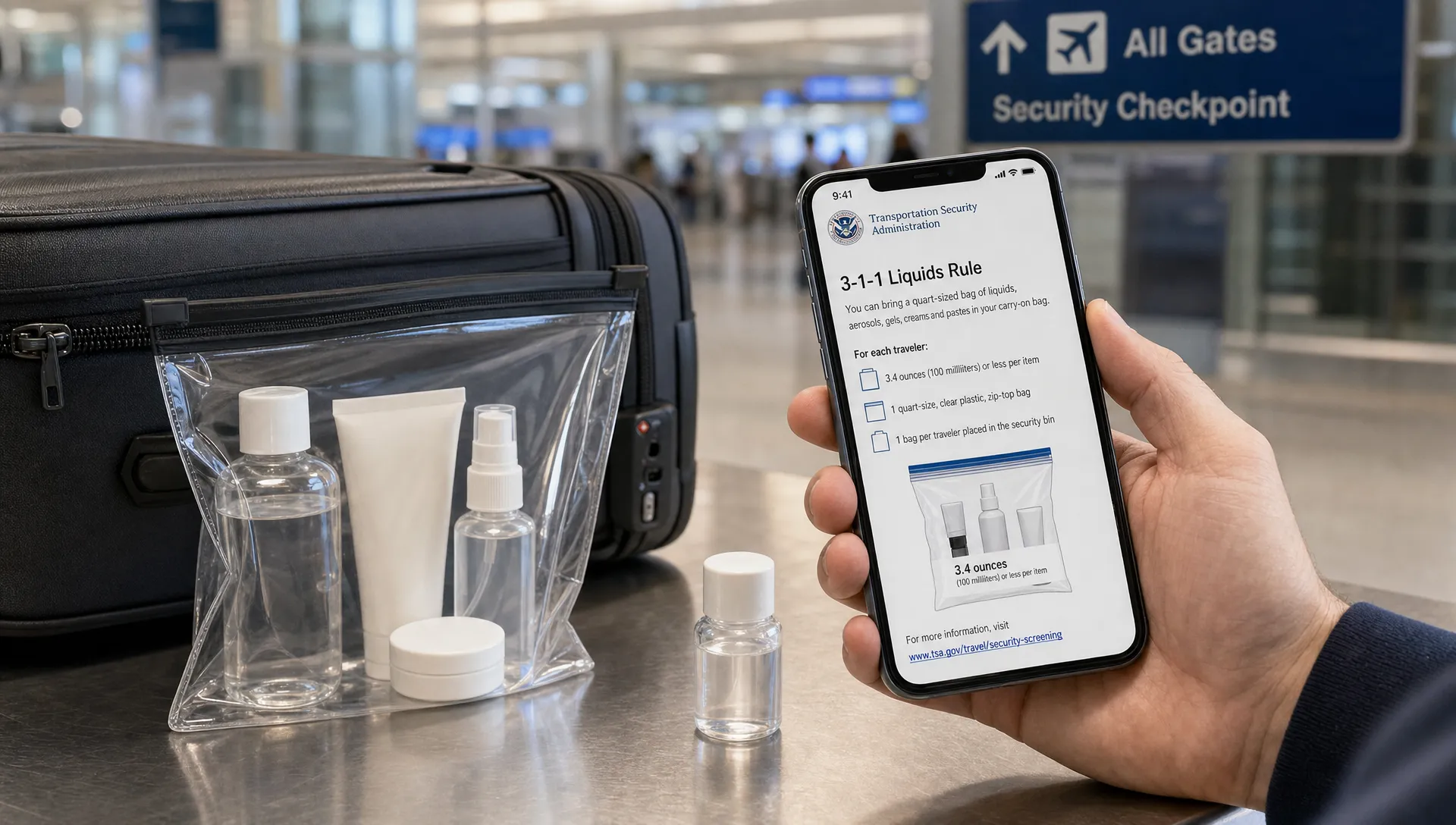
For example, the TSA liquids rule requires liquids, aerosols, gels, creams and pastes in carry-on bags to be in containers of 3.4 oz or 100 ml or less, with those containers fitting inside one quart-size bag. The European Commission’s passenger baggage guidance similarly explains the 100 ml container approach for many airport security checkpoints, with exemptions for certain necessary items.
Why liquid limits are not identical everywhere
If liquid rules come from aviation security authorities, why do they vary? Because regulators can set different implementation rules, airports can have different screening technology and governments can change policy when equipment or risk assessments change.
The most common cabin standard remains the 100 ml container rule, but some airports have introduced advanced computed tomography scanners that can screen liquids differently. In some locations, that has led to temporary or limited relaxations. In others, regulators have paused relaxed rules or required a return to the 100 ml limit while technology standards are reviewed.
That means the liquid volume allowed on flights can depend on the exact airport, terminal, date and direction of travel. A traveler may depart from an airport using one rule and return through an airport using another. The safest practical approach is to pack for the strictest checkpoint on your full itinerary, especially if you have a return flight or connection.
For a traveler-focused breakdown of this problem, Liquid Limits has a separate guide to rules for liquids on flights and return trips, which explains why the return airport can be just as important as your departure airport.
The main authorities involved
The table below shows how responsibility usually works. Exact agency names vary by country, but the structure is similar across many aviation systems.
| Level | Who is involved | What they do | What it means for travelers |
|---|---|---|---|
| International framework | ICAO | Sets aviation security standards and recommended practices for states | Creates the baseline that countries use when building security programs |
| National or regional rules | TSA, European Commission, UK Department for Transport and similar authorities | Define enforceable liquid screening requirements | Determines the container size, bag rules and exemptions at checkpoints |
| Airport implementation | Airport security operators and screening contractors | Apply the rules at lanes, terminals and transfer points | Your bag is checked against the local rule in force that day |
| Airline communication | Airlines and travel agents | Share passenger guidance and may add baggage policies | Helpful for planning, but not usually the source of the checkpoint liquid limit |
Do airlines set the liquid volume allowed on flights?
Airlines usually do not set the liquid volume allowed on flights for carry-on screening. They may publish liquid guidance on their websites, remind passengers during check-in or direct travelers to national security rules, but the checkpoint decision belongs to the airport security authority operating under government regulation.
That said, airlines can still affect what you pack. They set cabin baggage size and weight allowances, define checked baggage policies and may restrict certain items for safety or operational reasons. Airlines also follow dangerous goods rules, which can affect products such as aerosols, fuel, solvents, high-proof alcohol or lithium battery devices.
There is a useful distinction here: airport security rules decide whether your 150 ml lotion can pass through the cabin baggage checkpoint, while airline baggage rules decide whether your bag fits onboard or must be checked. Both matter, but they are not the same rule.
Who decides exceptions for medicine, baby food and duty-free liquids?
Most major liquid regimes include exemptions for necessary items, but those exemptions are also set by security authorities rather than airlines. Common examples include prescription medicine, medically necessary liquids, baby milk, baby food and special dietary liquids.
The liquid volume allowed on flights may be higher for these exempt items, but passengers should expect additional screening. TSA, for instance, says medically necessary liquids may exceed 3.4 oz in reasonable quantities for the flight, but they must be declared for inspection. EU and UK guidance also recognizes exemptions for essential medical and baby-related liquids, subject to screening.
Duty-free liquids are a separate case. Many international systems allow duty-free liquids above 100 ml if they are sealed in a tamper-evident security bag with proof of purchase. This can still become complicated during connections, especially if you leave the secure area or transfer through an airport with different screening rules.
If you are carrying a borderline item, such as liquid medication, breast milk, gel ice packs or sealed duty-free alcohol, check the rules for every checkpoint on your route before you rely on an exemption.
Why scanners matter, but do not replace the rulebook
Modern checkpoint scanners can change how liquids are screened, but technology does not automatically change the legal limit. A new scanner may give security officers a clearer image of bag contents, yet passengers still have to follow the rule that the airport is authorized to apply.
This is why travelers sometimes see mixed messages. A news story may report that one airport has relaxed its liquid rules, while another airport in the same region still applies the 100 ml limit. A terminal may have upgraded lanes, but not all lanes may be operating under the same passenger process. A regulator may also reintroduce stricter limits after new equipment reviews.
The practical lesson is simple: do not assume that “new scanners” means larger liquids are accepted. The liquid volume allowed on flights is whatever the relevant authority and airport publish for your checkpoint on your travel date.
Liquid Limits is designed around that reality. Instead of asking travelers to guess from outdated airport news, the tool helps compare airport rules, item-specific checks and route-level guidance with source links and last-checked dates.
How to know which liquid rule applies to your trip
For most passengers, the source of the rule matters less than the rule they must actually follow at the checkpoint. The challenge is that a trip can include more than one relevant checkpoint: departure, transfer and return.
Start by checking the departure airport for each flight segment where you pass through security. Then check whether your route includes a connection that requires re-screening. Finally, check the return airport, because a relaxed outbound rule does not guarantee a relaxed rule on the way home.
If you want a quick practical reference, Liquid Limits can help you check airport liquid rules before you pack. For more detail on the passenger-facing limits themselves, see this guide to the maximum liquid amount allowed on flights.
When the rule is unclear, pack to the stricter 100 ml container standard for cabin baggage. It is not always the most generous answer, but it is often the least risky one for toiletries, cosmetics, gels, creams and other liquid-like items.
What this means when you pack
Understanding who sets the rules helps you avoid relying on the wrong source. An airline app may be useful, but the airport security checkpoint has the final say. A friend’s recent trip may be relevant, but only if they traveled through the same airport, terminal and security process under the same rules.
The liquid volume allowed on flights should be checked against your route, not against a generic memory of the 100 ml rule. For many travelers, the 100 ml container limit remains the safest packing standard for carry-on bags, especially across international trips. Larger toiletries are usually better placed in checked baggage, provided they are not restricted dangerous goods and are packed to prevent leaks.
A good packing habit is to separate three categories: standard toiletries that must fit the cabin liquid rule, exempt essentials that may need declaration and larger liquids that belong in checked baggage. This reduces surprises at the lane and makes it easier for screening officers to inspect anything that needs special handling.
Frequently Asked Questions
Who has the final say on liquids at airport security? The airport security screening authority has the practical final say at the checkpoint, acting under national or regional aviation security rules. Airlines can provide guidance, but they usually do not decide whether a carry-on liquid passes screening.
Does ICAO set the exact 100 ml rule? ICAO sets global aviation security standards and frameworks for member states. Exact passenger liquid rules, such as 100 ml or 3.4 oz container limits, are implemented by national or regional authorities.
Can an airline allow a larger liquid if airport security does not? No. If the security checkpoint rule limits cabin liquids to 100 ml containers, an airline cannot override that screening requirement for your carry-on bag.
Why was a larger liquid allowed at one airport but not another? Airports may operate under different national rules, different technology approvals or different temporary restrictions. The rule can also vary by terminal, connection process and date.
What should I do if I cannot confirm the rule before flying? Use the stricter 100 ml container standard for carry-on liquids, keep them accessible for screening and put larger nonessential liquids in checked baggage when allowed.
The bottom line
The liquid limit you face at the airport is not an airline preference. It comes from a security system built by international standards, national regulation and airport-level enforcement.
For travelers, the key is not memorizing every regulator. It is checking the exact airports and route you will use. If there is any doubt, pack for the strictest checkpoint on the trip, including the return flight.