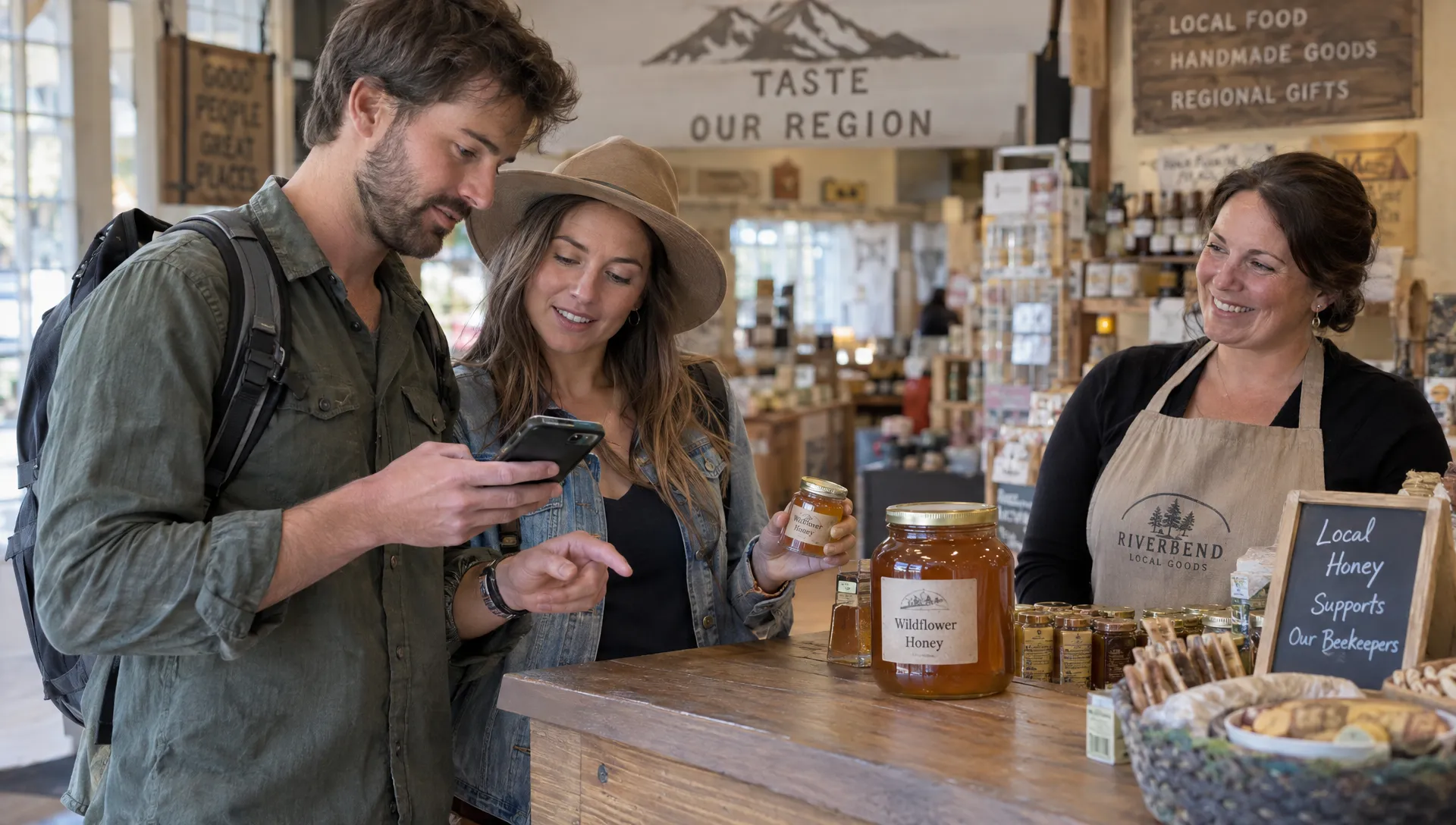
A bottle of local olive oil, a jar of honey or a duty-free perfume set can become an expensive mistake if you overlook the 100ml travel rules. Gifts do not get a separate allowance simply because they are wrapped, unopened or bought while traveling. What matters is the item, its container and the rules at each security checkpoint on your journey.
Duty-free purchases need a different approach. Some liquids larger than 100ml can pass through security in an approved sealed bag, but the purchase location, receipt and transfer rules all matter. A shopping bag with a duty-free logo is not enough.
Before buying, decide how the gift will travel: through security in your carry-on, inside checked baggage or under a qualifying duty-free exception. Include connections and the return flight in that decision, not just the airport where you start.
How 100ml travel rules apply to gifts
At a checkpoint enforcing the standard limit, ordinary liquids must be in containers with a capacity of no more than 100ml. The amount left inside does not change that capacity: a half-empty 200ml perfume bottle is still too large.
The liquid category extends beyond drinks. Honey, jam, sauces, creams, gels and many spreadable foods can be treated as liquids during screening. A sealed jar is not exempt, and packaging labeled in grams does not automatically establish that the container meets a milliliter limit.
For souvenir shopping, the 100ml travel rules make container size more useful than serving size or net weight. Choose clearly labeled miniature bottles where possible. A set containing several qualifying containers may work, but all your ordinary liquids must fit within the checkpoint’s required liquids allowance alongside your toiletries.
The TSA’s liquids guidance specifies containers of 3.4 ounces (100ml) or less in one quart-sized bag for standard US carry-on screening. Other airports may use a one-liter bag or different procedures. Do not assume that permission to leave liquids inside your luggage also means larger bottles are allowed.
Gift wrap does not change any of these requirements. Security staff may need to inspect the contents, so save elaborate wrapping for after arrival or use a gift bag that opens easily.
When duty-free liquids can exceed 100ml
The sealed bag and receipt matter
Duty free describes how a purchase is sold for tax purposes. It is not, by itself, a security exemption.
Where a duty-free liquids exception applies, larger purchases generally need an approved security tamper-evident bag, often called a STEB, with the required proof of purchase. An ordinary carrier bag, resealable food bag or your own shrink wrap is not a substitute.
The 100ml travel rules therefore require more than keeping a large duty-free bottle unopened: the security packaging must also remain intact, subject to any official inspection procedure.
The UK government’s hand-luggage guidance explains that qualifying airport or onboard purchases must be sealed in a security bag when purchased, with the receipt sealed inside and visible. It also advises travelers not to open that bag until reaching their final destination.
Ask the retailer to explain the packaging before paying, particularly if you have another security checkpoint ahead. A sealed bag is useful only when the next checkpoint accepts the purchase under its rules.
US international connections have specific conditions
TSA permits certain duty-free liquids larger than 100ml in carry-on baggage when travelers are entering the United States from abroad and connecting to another flight. Its published conditions include an international purchase, a transparent tamper-evident bag sealed by the retailer, no signs of tampering and an original receipt showing purchase within the previous 48 hours.
The liquid must also be screenable. TSA states that items that cannot be screened and cleared will not be allowed in carry-on baggage; checking them may be necessary if that option is available.
Under these conditions, the 100ml travel rules allow an exception for an eligible purchase, not a blanket exemption for every item sold at an airport. An ordinary bottle bought before security does not become eligible because you keep the receipt.
Connections and return flights can change the answer
A purchase that you can carry onto your first flight may face another decision during a connection. Remaining within a secure departure area and passing through a new security checkpoint are different situations. Transfers can involve rescreening, even when you never leave the airport.
Before buying a large bottle, identify every checkpoint between the shop and your destination. Ask whether the transfer airport accepts the relevant sealed duty-free purchase and whether any time limit or additional screening condition applies.
The return journey deserves the same attention. A 500ml bottle of olive oil purchased in town is an ordinary souvenir, not an airport duty-free purchase. If your departure airport allows larger containers but your return airport enforces 100ml, the bottle needs another plan for the trip home.
For a round trip, the 100ml travel rules at the stricter checkpoint are the safest basis for shopping unless you have confirmed an applicable exception. Our guide to liquid rules on flights and return trips explains how outbound and inbound restrictions can differ.
Opening a duty-free security bag during your vacation also matters. Once opened, do not assume that the original receipt and bag will protect the purchase at a later checkpoint. An opened oversized bottle generally needs checked baggage or another permitted transport option when the standard limit applies.
Which souvenirs are easiest to bring home?
Use this table to choose the transport plan before you choose the gift. It describes ordinary screening considerations, not a guarantee that an item is permitted at every destination.
| Gift or souvenir | Carry-on consideration | Practical shopping choice |
|---|---|---|
| Perfume, lotion or skincare | Liquids, creams and gels fall under liquid restrictions | Choose clearly labeled containers of 100ml or less, or arrange checked transport |
| Olive oil, vinegar or syrup | Ordinary bottles must meet the checkpoint’s liquid limit | Buy a small bottle or protect a larger one in checked baggage |
| Honey, jam or spreadable foods | These can be treated as liquids or gels | Do not rely on a weight label alone; confirm the container and screening rules |
| Wine or spirits | Security limits apply unless an accepted exception covers the purchase | Check duty-free transfer conditions or plan for checked baggage |
| Solid chocolate or hard candy | Usually outside the liquid category | A convenient carry-on alternative, subject to destination import rules |
| Snow globes | They contain liquid, and size can be difficult to establish | Check item-specific guidance before buying, particularly for larger globes |
The 100ml travel rules often make solid souvenirs the simpler option for carry-on-only trips. That does not remove customs restrictions, especially for food, plant materials or animal products.
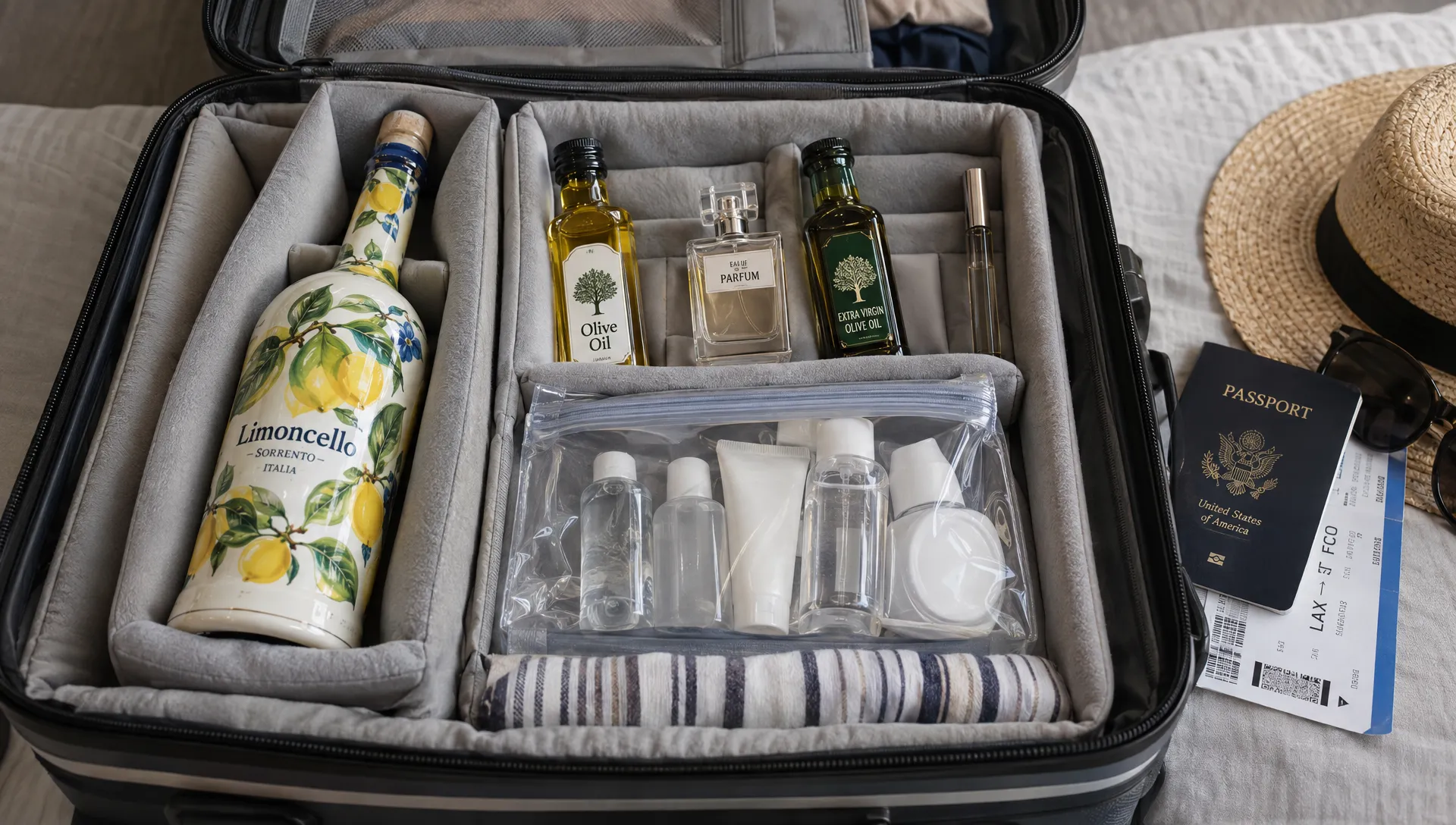
Packing larger gifts in checked baggage
Protect bottles without assuming unlimited allowances
Ordinary liquids in checked baggage are not subject to the standard carry-on 100ml container limit. However, airline baggage limits and dangerous-goods rules still apply. Perfume, aerosols and alcohol can have restrictions separate from airport screening.
For an eligible bottle, secure the cap, place it in a leak-resistant bag and add cushioning around the sides, neck and base. Position it away from the suitcase’s outer edges, with protection separating glass containers. Keep liquids away from documents, electronics and gifts that would be ruined by a leak.
If you hope to check a purchase during a connection, confirm that you will actually have access to your luggage and a bag-drop opportunity. A bottle bought after your checked suitcase has already been accepted cannot simply be added to it without an available baggage process.
The 100ml travel rules may make checked baggage the practical choice for a large souvenir, but the packing plan needs to exist before you reach security. Otherwise, your choices may be limited to leaving the item behind or abandoning the security line to find another option.
Alcohol has separate safety limits
The FAA’s guidance on alcoholic beverages distinguishes alcohol by strength. Beverages above 24% and no more than 70% alcohol by volume are limited to five liters per person in unopened retail packaging. Alcohol above 70% ABV is prohibited in both carry-on and checked baggage.
Beverages at 24% ABV or below are not subject to those hazardous-material quantity limits. That does not mean unlimited luggage: security rules, airline baggage allowances and customs limits still apply.
Check the ABV on unusual spirits rather than assuming every souvenir bottle can fly. A duty-free sale does not override aviation safety restrictions.
What to check before paying for a gift
A short check at the shop can prevent a much harder decision at the checkpoint:
- Identify the item: Is it a liquid, cream, gel, paste or spreadable food rather than a solid souvenir?
- Confirm the container: Look for its capacity, not just the amount of product or weight printed on the label.
- Map the journey: Include departure, transfer and return security checks, plus whether checked baggage is available.
- Verify any exception: For a larger duty-free purchase, confirm the sealed packaging, receipt requirements and acceptance at your next checkpoint.
The 100ml travel rules govern screening, while customs rules govern what you may bring into a country. These are separate checks. For example, the US Customs and Border Protection guidance on prohibited and restricted items covers restrictions affecting agricultural products and other purchases.
Keep receipts for valuable gifts and check your destination’s declaration requirements. “Duty free” does not necessarily mean free of import taxes when you arrive.
Frequently asked questions
Can I bring a gift set containing several 100ml bottles? Usually, each ordinary liquid container must meet the checkpoint’s size limit, and the complete set must fit within the required liquids allowance alongside your other products. A presentation box does not create an extra allowance. You may need to remove the bottles from the box for screening.
Does an unopened jar of jam get an exemption? No. Factory sealing does not exempt ordinary souvenirs from the 100ml travel rules. Jam can be treated as a liquid or gel, so an oversized jar generally needs checked baggage when the standard limit applies.
Can I open my duty-free bag on the plane? If another security check remains, keep the bag sealed. Opening it can invalidate the packaging condition needed for an exception. Follow the applicable airport guidance and keep the receipt where it is required, rather than assuming the first flight ends the restriction.
Can I wrap liquid gifts before flying? You can, but wrapping does not prevent inspection or make an oversized container acceptable. A reusable gift bag is easier to open if needed. For qualifying duty-free liquids, do not open the official security bag just to add decorative wrapping.
Check the whole trip before you shop
Use Liquid Limits to check your trip’s liquid rules before buying gifts or duty-free bottles. Compare the airports on your route, including the return journey, and review the verified source links and last-checked dates. If a rule is unclear, Liquid Limits defaults to the stricter 100ml limit, giving you a conservative basis for deciding what to buy and how to pack it.