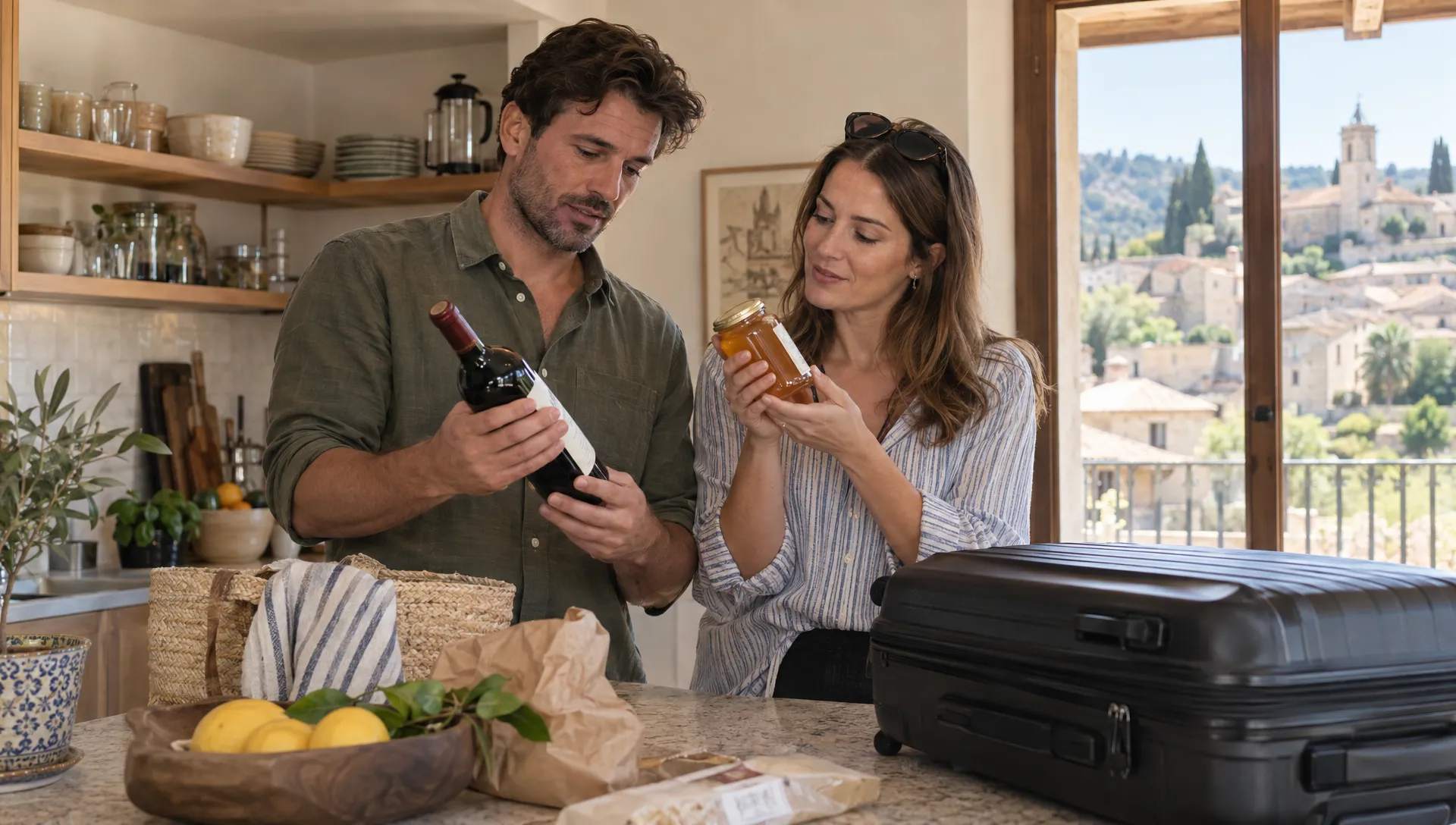
The rules for flying liquids can become more complicated on the way home, when your bag contains leftover sunscreen, local wine and gifts you did not have on departure. A bottle that cleared security at your outbound airport might not be allowed through the checkpoint you use for your return flight.
Before leaving your hotel, separate three questions: what can pass through security, what can travel in checked baggage and what you must declare when you arrive. Those are different checks. This guide focuses on getting vacation purchases and half-used toiletries home without a last-minute repack at security.
Audit your return trip before buying liquid souvenirs
Start with your actual journey home, not the airport where your vacation began. Check the official guidance for your return departure airport and any connecting airport where you will pass through security again. Include a separate-ticket transfer or overnight stop if it means collecting bags and re-entering departures.
Some airports permit larger liquid containers, sometimes up to 2 liters, while others retain the familiar 100ml limit. Scanner upgrades do not, by themselves, establish what passengers may carry. Follow the published passenger rules rather than assuming that newer equipment means larger bottles are accepted.
The rules for flying liquids should influence souvenir shopping before checkout, especially if you are traveling with cabin baggage only. A full-size bottle of olive oil may be an easy purchase but an awkward item to transport through a 100ml checkpoint.
If you cannot confirm a larger allowance, plan around containers of 100ml or less, packed within the applicable liquids-bag allowance. Also check whether you have checked baggage on the return booking. An outbound allowance does not establish what is included on a different airline or fare home.
Sort hotel leftovers and gifts by container size
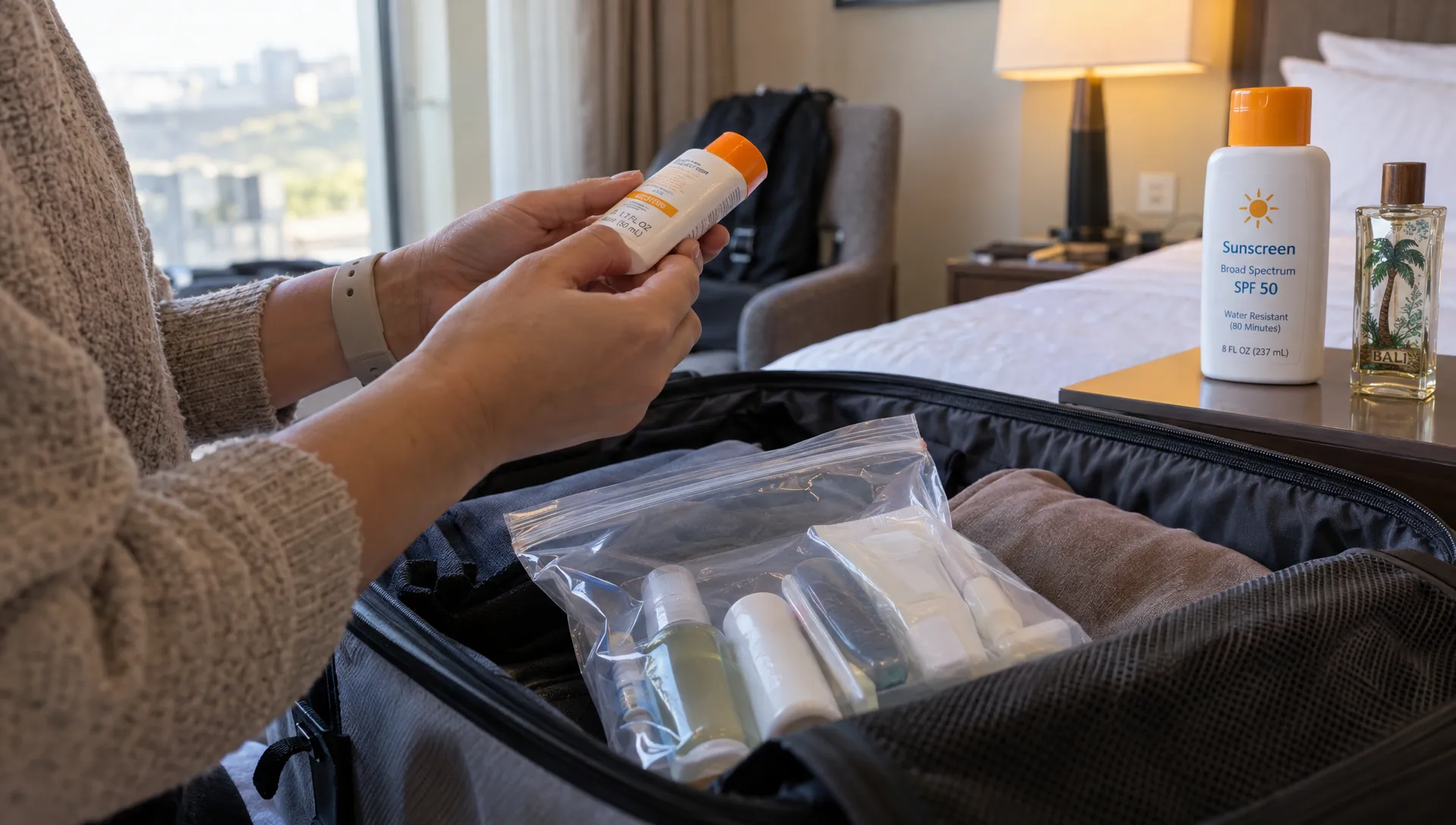
At a checkpoint applying the standard limit, the container's capacity matters, not how much remains inside. A 200ml sunscreen bottle containing only a few applications is still a 200ml container. Use a suitable smaller travel bottle or leave the remainder behind if you cannot check it.
Under TSA's liquids rule, ordinary carry-on liquids at US checkpoints must be in containers of 3.4 ounces (100ml) or less, fitting into one clear, quart-sized resealable bag per passenger. Other countries may specify a one-liter bag instead, so check the local requirements rather than treating the two descriptions as identical.
When sorting vacation purchases, the rules for flying liquids apply to more than drinks and toiletries:
| Item you are bringing home | Cabin-bag consideration | Practical packing decision |
|---|---|---|
| Half-used shampoo or sunscreen | The original bottle may exceed the permitted capacity | Transfer ordinary toiletries into suitable travel containers or check the bottle |
| Toothpaste, lotion and hair gel | These count toward the liquids allowance | Keep compliant containers together in the liquids bag |
| Honey, jam, sauces and spreadable foods | Treat these as liquids or gels for screening | Check larger jars, then verify destination food rules |
| Perfume and cosmetic sprays | Security limits and dangerous-goods restrictions can both apply | Check the product type, container size and airline guidance |
| Wine, spirits and local liqueurs | Ordinary full-size bottles exceed a 100ml checkpoint limit | Use checked baggage if permitted, or assess a qualifying duty-free purchase |
Do not assume a food label in grams proves that a jar meets a milliliter limit. Our guide to commonly missed details of the 100ml rule explains why container markings matter.
Treat duty-free bottles as conditional purchases
Buying a bottle after security usually solves the problem at that departure checkpoint. It does not automatically solve the problem at your connection. If another airport screens you again, your purchase must meet its rules or qualify for an applicable exception.
Before paying, tell the retailer your full itinerary and ask whether the purchase can be packaged in an approved security tamper-evident bag for that journey. Keep the receipt with the purchase as required and do not open the sealed bag before any remaining security checks. An ordinary shopping bag is not the same thing.
The rules for flying liquids can still affect duty-free purchases even when the shop correctly seals them. Acceptance depends on the screening authority, the journey and whether security staff can clear the contents.
For travelers entering the United States and taking a connecting flight, TSA allows certain internationally purchased duty-free liquids over 100ml when they meet its conditions. These include an intact, transparent security tamper-evident bag and an original receipt showing purchase within the previous 48 hours. Screening is still required, and an item that cannot be cleared may not be accepted.
If you will collect and recheck a suitcase, putting permitted bottles into checked baggage before the next checkpoint may be an alternative. Confirm that you can access the suitcase at that stage. Do not build your plan around access to a bag that remains checked through.
Use checked baggage carefully for larger bottles
Checked baggage avoids the ordinary cabin checkpoint's small-container restriction, but it does not make every liquid permissible. Alcohol, aerosols and other regulated products can have separate limits. Your airline's baggage allowance also still applies, including weight and any additional-bag charges.
Before adding a bottle, check its contents as well as its volume. A culinary oil, perfume and high-strength spirit can have very different transport requirements, even when their bottles look similar.
Check alcohol strength, not just bottle size
For US-regulated flights, the FAA's alcoholic beverage guidance distinguishes drinks by alcohol content. Beverages above 24% and up to 70% alcohol by volume are limited to five liters per passenger and must be in unopened retail packaging. Drinks above 70% are prohibited in both carry-on and checked baggage.
Drinks containing 24% alcohol or less are not subject to that particular dangerous-goods quantity limit. Airline baggage limits and destination customs requirements still apply. The rules for flying liquids therefore involve more than deciding whether a bottle belongs in your suitcase or cabin bag.
Protect bottles against leaks and breakage
Keep original labels visible and closures secure. Place each bottle in a leak-resistant bag, cushion it on every side and position it away from the suitcase's edges. A purpose-made bottle protector can help, but no packing method guarantees that glass will survive rough handling.
Pack toiletries separately from edible gifts. One leaking shampoo bottle can spoil food packaging even if nothing breaks.
Recheck the rules for flying liquids at connections
A connection does not always involve another security screening, but you should establish whether yours does before relying on an oversized bottle. Terminal changes, landside transfers and separate tickets can alter the process. Follow the airport's transfer instructions for your specific itinerary.
A common return-home complication is entering the United States before continuing on a domestic flight. On many such itineraries, passengers collect checked baggage for customs, recheck it and go through security again. Procedures differ at airports with US preclearance and on some other journeys, so confirm the process rather than assuming every connection works alike.
An opened drink purchased in your vacation airport may then be unsuitable for the next checkpoint. Finish or discard ordinary drinks before screening and refill an empty reusable bottle afterward where drinking water is available.
Customs is a separate issue. Passing aviation security does not establish that a food or agricultural souvenir may enter the country. When returning to the US, CBP's prohibited and restricted items guidance explains relevant restrictions and declaration requirements. Declare food and agricultural products, and check the requirements for alcohol as well. Other destinations have their own import rules.
Do a final packing check before leaving the hotel
Make your decisions while you still have space, time and access to both bags. Sorting liquids in a hotel room is easier than deciding what to surrender in a security queue, particularly when several family members have mixed their toiletries together.
Use this short check before closing your suitcase:
- Confirm each checkpoint: Review the return departure airport and any connection requiring fresh screening.
- Read container capacities: Set aside oversized bottles even if they are nearly empty.
- Test the liquids bag: Make sure ordinary cabin liquids fit within the required bag and that it closes properly.
- Inspect larger purchases: Check alcohol strength, product restrictions, bottle protection and suitcase weight.
- Keep exceptions accessible: Carry essential medication and supporting information where you can present them at screening.
The rules for flying liquids often provide exceptions for medically necessary liquids and certain baby or child-feeding supplies, but local procedures differ. Do not assume an ordinary drink or oversized cosmetic qualifies. Check the relevant authority's requirements for presenting exempt items.
Finally, keep receipts and any required duty-free packaging accessible until your remaining security checks are complete. Put items you may need to show staff somewhere you can reach without unpacking the entire bag.
Frequently asked questions
Can I bring a half-empty 150ml bottle in my carry-on? Not through a checkpoint applying the ordinary 100ml container limit. The bottle's capacity is what matters. Transfer an ordinary toiletry into a compliant container, pack it in checked baggage if permitted or leave it behind.
Does toothpaste count as a liquid? Yes. TSA treats toothpaste as a gel or paste subject to its liquids restrictions. Other toiletries such as mascara, creams and hair gel also need attention when sorting your return-flight liquids bag.
How many 3-ounce bottles can I bring home? At a standard TSA checkpoint, there is no separate fixed bottle count. Your compliant containers must all fit in one clear, quart-sized resealable bag per passenger. Elsewhere, follow the local bag and quantity requirements.
Can I bring a large bottle home if my outbound airport allowed it? Only if your return journey allows it too. The rules for flying liquids are applied at the security checkpoints you actually use, so your outbound experience is not proof of the return allowance.
Is duty-free alcohol guaranteed to pass through a connection? No. A qualifying sealed purchase may be accepted, but the next screening authority's conditions still apply. Keep the required receipt and packaging intact, check the transfer rules before buying and allow for screening.
Check your journey home before you pack
Use Liquid Limits to check your return route, including airports where you may be screened again. Compare the available rules, review linked sources and last-checked dates, then pack to the strictest confirmed requirement. Where a rule is unclear, Liquid Limits defaults to the more cautious 100ml limit rather than assuming your larger bottle will pass.