
Most travelers know there is a liquid rule. Fewer know which rule applies to their exact trip, especially when a route includes a connection, a return flight, or an airport using newer security scanners. That is where confusion starts: one airport may still enforce the classic 100ml limit, while another may allow larger containers in some circumstances.
The safest way to understand the flying rules for liquids is to think like airport security. The rule is not just about what is inside your bottle. It is about container size, bag placement, screening technology, exemptions, and the strictest checkpoint you will pass through.
This guide explains the practical rules every traveler should know before packing cabin bags, checked luggage, toiletries, medicines, baby items, duty-free purchases, and common borderline products.
The basic cabin liquid rule most travelers should expect
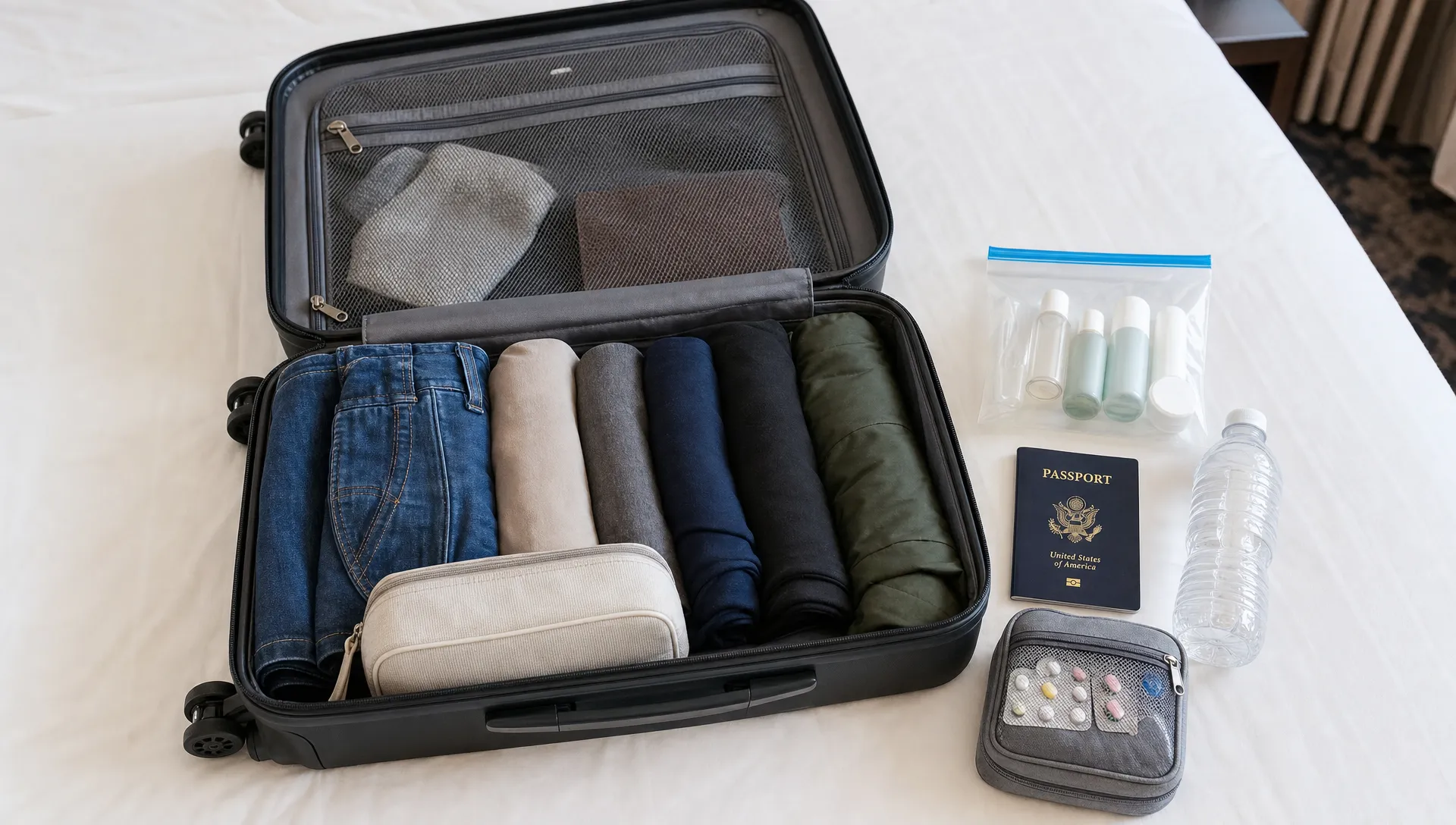
At many airports, the standard cabin rule is simple: liquids, gels, aerosols, creams, and pastes must be in containers of 100ml, 3.4oz, or less. Those containers usually need to fit inside one clear, resealable plastic bag, often around one liter or one quart in size.
The key detail is container capacity. A 200ml shampoo bottle that is half empty can still be refused because the container itself is larger than 100ml. Security officers do not measure how much liquid remains inside. They look at the container label or size.
In the United States, the TSA describes this as the 3-1-1 liquids rule: 3.4oz containers, one quart-sized bag, one bag per passenger. In the UK, official government guidance also explains restrictions for liquids in hand luggage, including gels, pastes, lotions, and similar substances.
Although the details vary by country, the practical takeaway is consistent: if you want the least stressful packing plan, assume 100ml containers in a clear bag unless you have verified a more generous rule for every airport on your route.
What counts as a liquid at airport security?
Airport liquid rules cover more than water, perfume, and shampoo. Security typically treats anything spreadable, pourable, sprayable, squeezable, or gel-like as a liquid. This is why travelers are sometimes surprised when peanut butter, mascara, toothpaste, or hair gel gets flagged.
Here is a quick guide to common categories:
| Item type | Usually treated as a liquid? | Practical packing tip |
|---|---|---|
| Shampoo, conditioner, shower gel | Yes | Use containers of 100ml or less for cabin bags |
| Toothpaste and mouthwash | Yes | Pack travel sizes or move full sizes to checked luggage |
| Perfume and cologne | Yes | Check bottle size, not just remaining amount |
| Creams, lotions, sunscreen | Yes | Solid sunscreen sticks may be easier for cabin bags |
| Mascara, lip gloss, liquid foundation | Yes | Keep makeup liquids in the clear bag where required |
| Peanut butter, jam, hummus, soft cheese | Often yes | Put larger jars in checked luggage |
| Aerosol deodorant, shaving foam, hairspray | Yes | Check both liquid rules and airline dangerous goods limits |
| Empty water bottle | No, if empty | Fill it after security |
The easiest mental test is this: if it can spill, smear, spread, spray, or squeeze, treat it as a liquid until proven otherwise.
For a more item-focused breakdown, Liquid Limits has a guide to what liquids you can pack in cabin bags, including toiletries, food, makeup, medicine, and duty-free items.
Carry-on bags vs checked bags
Liquid restrictions are much stricter for carry-on bags because cabin bags pass through the passenger security checkpoint. Checked baggage is screened differently, so full-size toiletries are usually allowed there.
That does not mean checked luggage is a free-for-all. Some items, especially aerosols, alcohol, flammable products, chemicals, and large quantities of certain substances, may be restricted by airline safety rules or dangerous goods regulations.
| Packing location | Liquid rules in practice | Best for |
|---|---|---|
| Carry-on personal item | Usually limited to 100ml containers in a clear bag unless a verified airport exception applies | Essential toiletries, medicines, small cosmetics |
| Carry-on suitcase | Same liquid rules as any cabin baggage | Travel-size liquids only |
| Checked luggage | Larger toiletries usually allowed, subject to safety restrictions | Full-size shampoo, sunscreen, non-essential liquids |
| Duty-free bag | May be allowed if sealed correctly, but connections can complicate this | Airport purchases, alcohol, perfume |
If you are checking a bag, put non-essential full-size liquids there. Keep only what you genuinely need during the journey in your cabin bag. This reduces the risk of losing expensive items at security and makes the screening process faster.
The 100ml rule is not always the whole story in 2026
Some airports use newer CT security scanners that can screen cabin baggage differently. In certain airports or lanes, these systems may allow passengers to leave liquids in bags or carry containers larger than 100ml. This is why travelers sometimes hear that the liquid limit has changed to 2L.
The problem is that scanner rollout is uneven, rules can change, and one airport may operate different procedures from another. Even within the same country, some terminals may have newer scanners while others still apply the 100ml rule. Temporary restrictions can also return if regulators or airports require them.
For travelers, this creates a simple rule of thumb: do not pack for the most generous airport on your trip. Pack for the strictest checkpoint.
That matters for:
- Your departure airport
- Any connecting airport where you must pass security again
- Your return airport
- A different terminal on the way home
- Separate tickets where you may need to collect bags and re-clear security
If one airport on your route enforces 100ml, that rule can decide what you should pack, even if another airport allows more. Liquid Limits is built around this exact problem. You can check your route, compare airport rules, and see when the information was last verified through the Liquid Limits trip liquid checker.
For the current landscape, including how scanner changes affect carry-ons, see this 2026 guide to airport liquid limits for carry-ons.
Return flights and connections are where travelers get caught
Many packing mistakes happen because travelers only check the outbound airport. They fly out from an airport with relaxed procedures, buy full-size toiletries or perfume during the trip, then return from an airport that still enforces 100ml.
Connections can be just as tricky. If you stay airside and do not pass security again, your liquids may not be rechecked. But if you change terminals, enter another country, travel on separate tickets, or collect checked bags before a second flight, you may need to pass security again. At that point, the connecting airport's liquid rule applies.
This is especially important for round trips and multi-city itineraries. A traveler flying New York to London to Rome, then returning from a smaller airport, may face different rules at each stage. The strictest one should shape the packing plan.
Travel professionals should pay attention here too. Agencies arranging group itineraries can reduce client confusion by combining clear liquid guidance with organized back-office processes, especially when payments, supplier bookings, and traveler communication overlap. Platforms such as Elia Pay's travel agency payment platform help agencies streamline payment operations, while route-specific tools like Liquid Limits help keep packing advice accurate for each trip.
Exceptions: medicines, baby food, and special dietary needs
Most airport security systems make exceptions for essential medical, baby, and dietary liquids. These exceptions are important, but they are not a reason to pack casually. Security officers may inspect, test, or ask questions about exempt liquids.
Medicines in liquid form, medically necessary gels, contact lens solution, baby milk, formula, breast milk, baby food, and liquids required for special dietary needs may be allowed in quantities over 100ml. Rules vary by country, so check the airports on your route before you travel.
A few best practices make screening easier:
- Keep essential liquids separate and easy to remove from your bag.
- Carry prescriptions, doctor letters, or labels when helpful.
- Do not mix essential liquids with ordinary toiletries.
- Bring only a reasonable amount for the journey when possible.
- Arrive earlier if you are carrying larger medical or baby-related liquids.
For medicine, the safest approach is to carry what you need during the journey in your cabin bag, not only in checked luggage. Delays, missed connections, and lost bags happen. If the medicine is critical, keep it accessible and check the relevant airport rules in advance.
Duty-free liquids: sealed does not always mean safe
Duty-free liquids create another common trap. You may be allowed to buy perfume, spirits, cosmetics, or other liquids after security and carry them onto your flight. But if you have a connecting flight, the next security checkpoint may treat those items differently.
In many regions, duty-free liquids are placed in a sealed tamper-evident bag with a receipt. This can help them pass through transfer screening, but it is not a universal guarantee. If the bag is opened, the receipt is missing, the connection is in a country with different rules, or the airport does not accept the packaging, your item could be refused.
Before buying a large duty-free liquid, ask yourself three questions:
| Question | Why it matters |
|---|---|
| Do I have a connection? | A second security checkpoint may apply stricter rules |
| Will I leave the secure area? | Re-entering security can expose your purchase to liquid limits |
| Can I place it in checked baggage before the next flight? | This may be safer for large bottles on complex trips |
If you are flying nonstop, duty-free liquids are usually easier to manage. If you are connecting internationally, be cautious with expensive bottles unless you know the transfer rules.
A practical packing system that works almost everywhere
You do not need a complicated packing method. You need a system that survives the strictest likely checkpoint.
Start by separating liquids into three groups: essential for the flight, useful at destination, and replaceable. Essential items include medicine, baby supplies, contact lens solution, and anything you cannot easily buy after arrival. Useful items include toiletries and cosmetics. Replaceable items include common products like shampoo, body wash, and toothpaste that you can buy almost anywhere.
Put essential cabin liquids where they are easy to access. Put ordinary travel-size liquids in the clear bag if your airport requires it. Put full-size destination liquids in checked luggage if you have a checked bag. Leave replaceable full-size items at home when cabin-only travel makes them risky.
Solid alternatives can also simplify everything. Shampoo bars, conditioner bars, solid deodorant, powder makeup, toothpaste tablets, and sunscreen sticks can reduce the number of liquids you carry. They are not perfect for every traveler, but they are useful when you want to avoid liquid limits entirely.
Finally, check the rule shortly before departure. Liquid rules can change due to scanner rollout, temporary restrictions, or airport-specific procedures. Liquid Limits updates airport and route guidance daily, includes source links and last-checked dates, and defaults to the stricter 100ml rule when the rule is unclear.
Quick checklist before you leave for the airport
Use this final check before zipping your bag:
- Are all ordinary cabin liquids in containers of 100ml, 3.4oz, or less?
- Do those containers fit in the required clear resealable bag?
- Are medicines and baby liquids separated for screening?
- Are full-size toiletries packed in checked luggage or left at home?
- Have you checked the return airport, not just the departure airport?
- Do you have a connection where you may pass security again?
- Are duty-free purchases safe for your whole route?
- Is your water bottle empty before security?
This checklist may feel conservative, but conservative packing is usually cheaper than replacing confiscated perfume, sunscreen, or skincare at the airport.
Frequently Asked Questions
What is the main flying rule for liquids in carry-on bags? In many airports, liquids, gels, aerosols, creams, and pastes must be in containers of 100ml or 3.4oz or less, and they usually need to fit in one clear resealable bag. Some airports may allow more, but you should verify the rule for your exact route.
Does the 100ml limit mean the amount inside the bottle or the bottle size? It means the container size. A 200ml bottle that is half full can still be refused because the container capacity is over 100ml.
Can I bring medicine over 100ml on a plane? Often yes, if it is medically necessary, but it may need separate screening. Keep it accessible, bring supporting documentation when useful, and check the rules for your departure and connection airports.
Are food items like peanut butter or hummus considered liquids? Often yes. Spreadable or paste-like foods can be treated as liquids or gels at security. If the container is over 100ml, pack it in checked luggage or buy it after arrival.
Can I rely on an airport allowing 2L liquids? Not unless you have confirmed that every relevant security checkpoint on your trip allows it. If your return airport or connection still enforces 100ml, pack for that stricter rule.
Do liquid rules apply to checked luggage? The 100ml cabin rule usually does not apply to checked bags, so larger toiletries are often allowed. However, dangerous goods rules can still restrict aerosols, alcohol, flammable products, and certain chemicals.
Check the strictest liquid rule before you pack
The safest packing decision is not based on a rumor, a past trip, or one airport's scanner upgrade. It is based on the strictest liquid rule for your whole journey, including the way home.
Before you zip your cabin bag, use Liquid Limits to check airport, item, and route-specific liquid rules side by side. You will see verified guidance, source links, last-checked dates, and a stricter 100ml fallback when rules are unclear, so you can pack with fewer surprises at security.