
Hand luggage liquid limits are easy to underestimate because the rule looks simple: small bottles, clear bag, no fuss. In practice, the moment you add a connection, a return flight, duty-free shopping, medicine, baby food, or an airport with newer scanners, the answer can change.
The safest habit is to check the liquid rule for every security checkpoint you will pass through, not just the airport you leave from first. A bottle that is fine at one airport may be refused at another, and a full-size product bought on vacation can become a problem on the way home.
This guide focuses on the practical checks every flyer should make before packing hand luggage, so you can avoid throwing away toiletries, repacking at security, or relying on outdated advice.
The baseline rule: assume 100ml unless you confirm otherwise
For most travelers, the standard hand luggage liquid limit is still built around containers of 100ml, or 3.4oz, or less. In the United States, the TSA liquids rule describes this as liquids, aerosols, gels, creams, and pastes in travel-size containers that fit in one quart-sized bag. In the UK, GOV.UK hand luggage guidance also sets out the familiar 100ml container rule and transparent resealable bag requirement.
The key detail many travelers miss is that the limit usually applies to the container size, not the amount left inside. A half-empty 200ml shampoo bottle is still a 200ml container. If your airport is enforcing the 100ml rule, it may be rejected even if it contains only a small amount.
Some airports and terminals with newer CT scanners may allow larger liquid containers, sometimes up to 2L, but this is not universal. Rules can differ by airport, terminal, route, and date. If you want a broader update on how scanner changes affect passengers, Liquid Limits keeps a practical guide to airport liquid limits for carry-ons in 2026.
Until you have verified your exact airports, packing to 100ml remains the lowest-risk approach.
What counts as a liquid in hand luggage?
Airport security uses “liquids” as a broad category. It does not only mean water, drinks, or perfume. Many items that feel solid, creamy, sticky, spreadable, or pressurized may be treated as liquids for cabin baggage screening.
Common examples include:
- Shampoo, conditioner, shower gel, lotion, sunscreen, perfume, and aftershave
- Toothpaste, hair gel, shaving foam, deodorant sprays, and roll-on deodorant
- Mascara, liquid eyeliner, foundation, lip gloss, and some cream cosmetics
- Peanut butter, hummus, jam, honey, sauces, soft cheese, and other spreadable foods
- Aerosols, including certain travel-size sprays, if permitted by airline and security rules
A good test is this: if it can be poured, squeezed, sprayed, smeared, spread, or has a gel-like texture, check it as a liquid. Borderline items are where many travelers get caught, especially makeup, food gifts, sports gels, and grooming products.
The hand luggage liquid checks to make before every flight
The easiest way to avoid confusion is to stop thinking of “the rule” as one global rule. Instead, treat it as a set of checks for your specific trip.
| Check before packing | Why it matters | Safer packing decision |
|---|---|---|
| Departure airport | This is your first security screening point | Use the airport’s current cabin liquid rule |
| Connection airport | Transfers can include another security check | Pack for the strictest transfer checkpoint |
| Return airport | Your flight home may have different rules | Check before buying full-size liquids abroad |
| Container size | Security usually measures the bottle, not what remains | Use 100ml containers unless larger sizes are verified |
| Item type | Creams, gels, pastes, sprays, and spreads may count | Treat borderline products as liquids |
| Exceptions | Medicine, baby food, and special dietary items may be handled differently | Carry proof where useful and separate items for screening |
| Duty-free purchases | Sealed airport shopping can still be affected by transfers | Keep receipts and tamper-evident bags intact |
This is especially important on multi-city trips. If your outbound airport allows larger liquids but your return airport does not, the stricter return rule is the one that matters for the products you bring home.
Check the return flight before you buy liquids abroad
Return flights are one of the most common reasons travelers lose items at security. You may leave from an airport that allows larger containers, arrive at your destination, buy full-size sunscreen, cosmetics, wine, olive oil, perfume, or sauces, then discover your return airport applies the 100ml rule.
The problem is not always the airline. Cabin liquid rules are generally enforced at airport security screening, and that screening happens again when you fly home. If you have a connection, it may happen at the transfer airport too.
Before buying liquids during a trip, ask three questions:
- Will I put this in checked baggage on the way home?
- Will I pass through security again with this item in my hand luggage?
- Does my return airport or transfer airport allow this container size?
For round trips, the cleanest approach is to check both directions before you pack. Liquid Limits explains this route-based issue in more depth in its guide to rules for liquids on flights and return trips.
Do not rely on scanner rumors
Newer airport scanners have created a lot of confusion. You may hear that “liquid limits are gone” or that “you can now take 2L bottles.” That may be true at a particular checkpoint, but it is not safe to treat it as a global rule.
Even within the same country, airports can be at different stages of scanner rollout. Even within the same airport, different terminals or lanes may operate under different procedures. Temporary rule changes can also happen when regulators update security requirements.
That is why your best packing rule is: follow the strictest security checkpoint on your route. If one airport says 2L and another says 100ml, pack for 100ml unless the larger item will go in checked baggage.
Liquid Limits is designed around this exact problem. You can check airport liquid rules before you pack, compare route restrictions, and see guidance with source links and last-checked dates. When a rule is unclear, the safer default is the stricter 100ml approach.
Medicines, baby food, and special dietary liquids
Some liquids are treated differently because they are needed during travel. This can include prescription medicines, over-the-counter medicines, baby milk, baby food, and liquids required for medical or dietary reasons.
These exceptions do not mean you should pack carelessly. Larger quantities may be allowed, but you may need to present them separately at security. In some places, you may be asked for supporting documentation, such as a prescription, doctor’s note, or proof that the item is medically necessary.
A practical approach is to keep essential liquids in their original packaging where possible, pack only what you reasonably need for the journey, and place them where they can be removed quickly for screening. If the item is critical, check your exact airport rules before travel rather than relying on general advice.
Duty-free liquids: sealed does not always mean simple
Duty-free liquids can be allowed in hand luggage when they are packed in a sealed, tamper-evident security bag with the receipt inside. This is common for perfume, alcohol, and cosmetics bought after security.
The complication is your route. If you have a connecting flight and must pass through another security checkpoint, the transfer airport may inspect the sealed bag. If the bag has been opened, the receipt is missing, or the purchase does not meet that airport’s rules, the item can still be refused.
If you plan to buy duty-free liquids, keep the bag sealed until your final destination. Do not open perfume, alcohol, or cosmetic purchases during the journey. If you are unsure about a connection, especially an international one, consider placing liquids in checked baggage where permitted.
Work trips, samples, and unusual carry-on items
Business travelers often carry items that are not typical vacation toiletries. Product samples, trade-show kits, cosmetic testers, art materials, cleaning sprays, fabric treatments, and adhesives can all create liquid-limit issues.
This matters for people traveling in apparel, events, retail, beauty, food, and manufacturing. For example, if you work with a full-service custom clothing manufacturer and travel with garment samples, keep any fabric sprays, stain removers, dyes, glues, or care products separate from the clothing itself and check whether they count as liquids, aerosols, or restricted materials.
The same applies to conference giveaways and client gifts. A branded bottle of sauce, a sample jar of cream, or a promotional aerosol can may look harmless, but security will judge it by aviation rules, not by its marketing purpose.
How to pack liquids with less airport stress
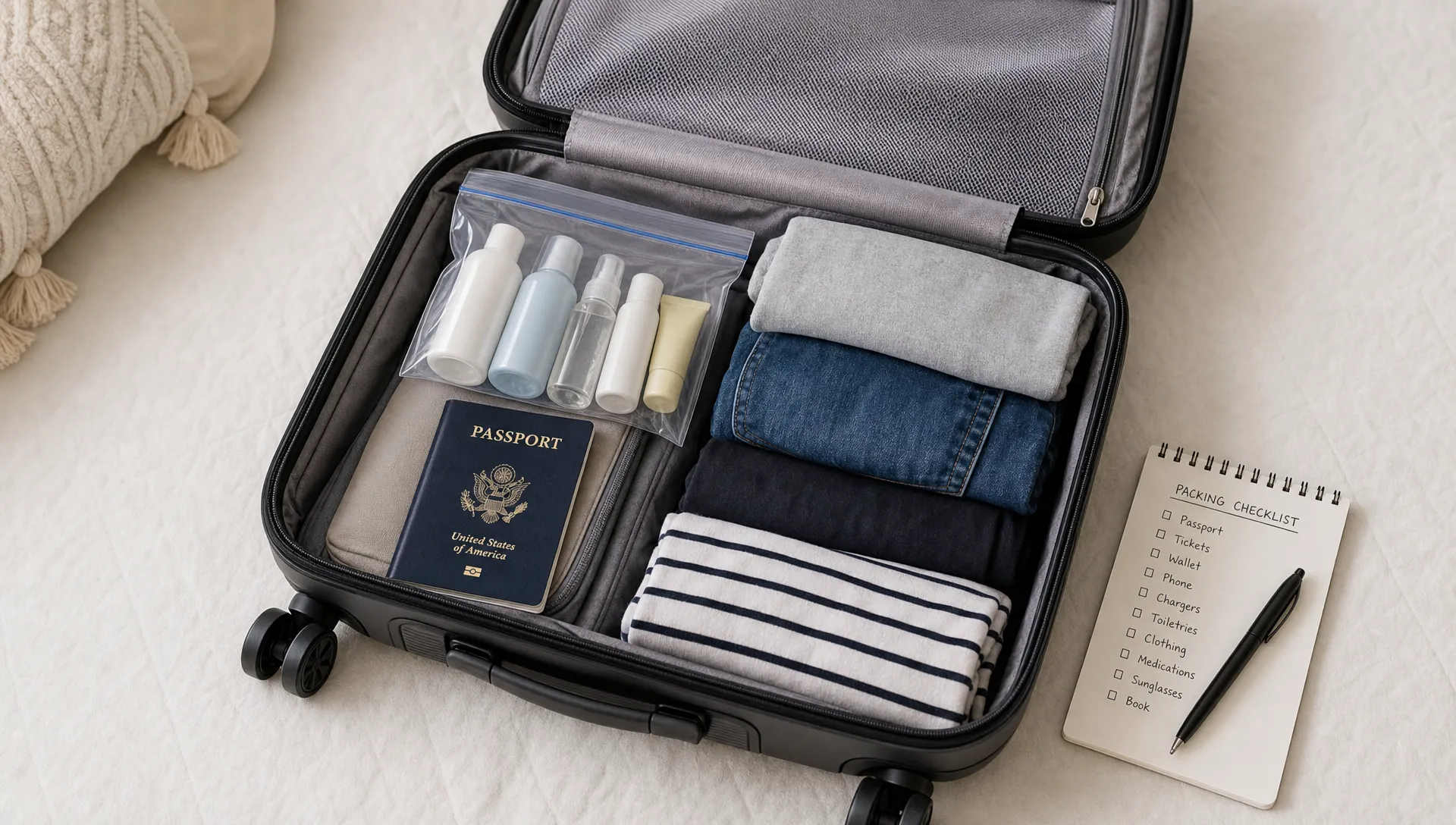
A little organization goes a long way. Before you zip your bag, group all liquids and liquid-like items together. If your airport requires a clear bag, make sure it closes comfortably. Overstuffed bags can cause delays, and oversized containers are still a problem even if the bag itself is clear.
For toiletries, use travel-size bottles clearly marked 100ml or less. If you decant products into reusable containers, choose containers with printed capacity labels. Unlabeled bottles are not automatically banned everywhere, but labeled containers make screening smoother and reduce the chance of questions.
For higher-value items, such as perfume, skincare, or specialty grooming products, think carefully before placing them in hand luggage. If the container is over the cabin limit and you cannot afford to lose it, pack it in checked baggage if allowed, ship it separately, or leave it at home.
Finally, check your route close to departure. Liquid rules can change, and airport websites are not always easy to compare. A rule that was correct when you booked may not be the one enforced when you fly.
Quick packing checklist for hand luggage liquids
Use this short checklist the day before travel:
- Confirm the cabin liquid rule for your departure, connection, and return airports
- Pack liquids in containers of 100ml or less unless every checkpoint allows more
- Treat creams, gels, pastes, sprays, and spreadable foods as liquids
- Keep medicines, baby food, and dietary liquids separate for screening
- Leave duty-free liquids sealed with receipts until your final destination
- Move full-size toiletries, sauces, alcohol, and cosmetics to checked baggage when permitted
- Recheck rules if your route, airport, or terminal changes
The goal is not to memorize every global variation. The goal is to identify the strictest point in your journey and pack for that.
Frequently Asked Questions
Are hand luggage liquid limits the same in every country? No. Many airports use the 100ml rule, but some airports or terminals may allow larger containers with newer scanners. Your route, transfer points, and return airport all matter.
Can I bring a 200ml bottle if it is almost empty? Usually no if the airport is enforcing the 100ml rule. Security typically looks at the container capacity, not the amount left inside.
Does toothpaste count as a liquid in hand luggage? Yes, toothpaste is generally treated as a paste, which falls under liquid rules for cabin baggage.
Can medicines be over 100ml in hand luggage? Often yes when they are needed for the journey, but rules vary. Keep them separate for screening and carry supporting documentation when appropriate.
Are duty-free liquids safe to take on connecting flights? They can be, but only if they meet the transfer airport’s rules and remain sealed in the approved security bag with the receipt. Check your connection before buying.
Check before you pack, not at the security tray
Hand luggage liquid limits are manageable when you check the whole trip, not just the first flight. The safest plan is simple: verify each airport, assume 100ml when rules are unclear, and keep exceptions easy to inspect.
Before your next flight, use Liquid Limits to compare the strictest liquid rule for your route, including the return journey. You can look up airports, items, and routes, review verified source links, and pack with more confidence before you leave for the airport.