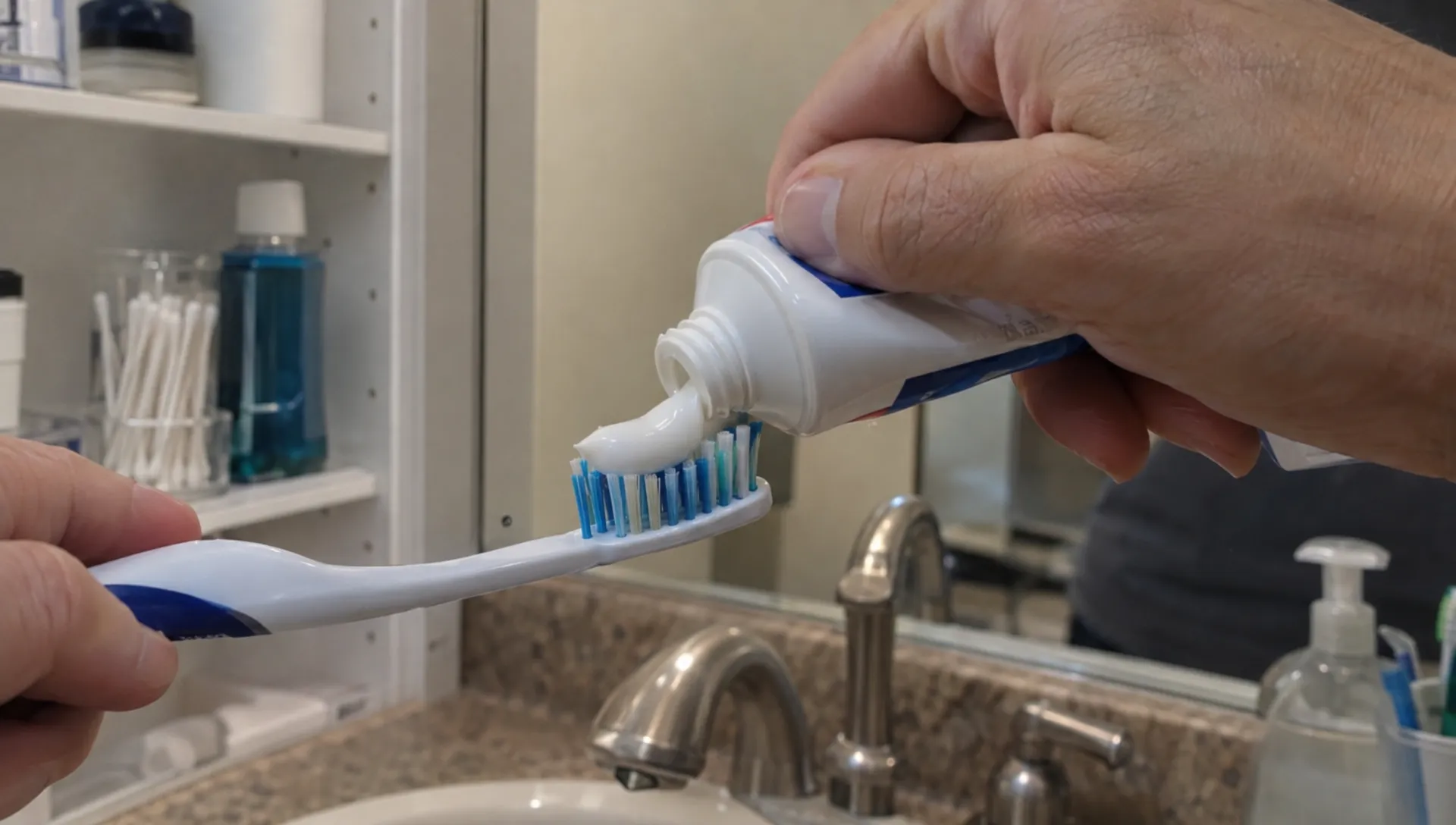
Some of the hand luggage toiletries most likely to cause problems at airport security do not look like liquids. Toothpaste, mascara, shaving foam and gel deodorant can all fall into the same screening category as shampoo. A small pot of thick cream is not automatically exempt just because it will not pour out.
The useful distinction is the product’s form, not its purpose or how watery it looks. Use the guide below to separate liquids from genuine solids, identify borderline products and choose containers that work throughout your trip.
The texture test: pour, squeeze, spread or spray
For airport screening, “liquids” commonly includes gels, creams, pastes and aerosols. If a product pours, pumps, squeezes out as paste or sprays from a can, plan to pack it under the applicable liquid rules.
Soft, scoopable products deserve the same attention. Body butter, petroleum jelly and cleansing balm can look solid in a bathroom cabinet but still be treated as creams, gels or pastes at security.
A genuinely solid bar or stick is different. Soap bars and solid deodorant sticks generally sit outside liquid-container restrictions, even though they transfer onto skin during use. Thickness alone does not make something a solid. When the texture is ambiguous, check the departure airport’s guidance rather than relying on the product name.
Which hand luggage toiletries count as liquids?
These common hand luggage toiletries belong in your liquid allowance wherever standard liquid restrictions apply. The final column highlights products that are easy to overlook.
| Product category | Forms that count as liquids | Commonly missed examples |
|---|---|---|
| Hair washing and conditioning | Shampoo, liquid conditioner, hair masks | Thick conditioning treatments |
| Hair styling | Gel, mousse, spray, oil, soft styling paste | Aerosol dry shampoo and hairspray |
| Skin care | Cream, lotion, serum, oil, gel | Sunscreen, body butter and petroleum jelly |
| Oral care | Toothpaste, mouthwash, dental gel | Toothpaste marketed as a thick paste |
| Deodorant | Aerosol, roll-on, gel, cream | Clear gel sticks that resemble solid sticks |
| Shaving | Foam, gel, cream, aftershave liquid | Pressurized shaving foam |
| Makeup | Liquid or cream foundation, mascara, lip gloss | Liquid concealer and cream blush |
| Fragrance and lens care | Perfume, body mist, contact lens solution | Small refillable fragrance atomizers |
The TSA’s liquids guidance explicitly includes aerosols, gels, creams and pastes. The UK government’s liquid restrictions guidance also identifies toiletries such as toothpaste, mascara and lip gloss. These categories are broader than everyday use of the word “liquid.”
Makeup: tiny tubes still count
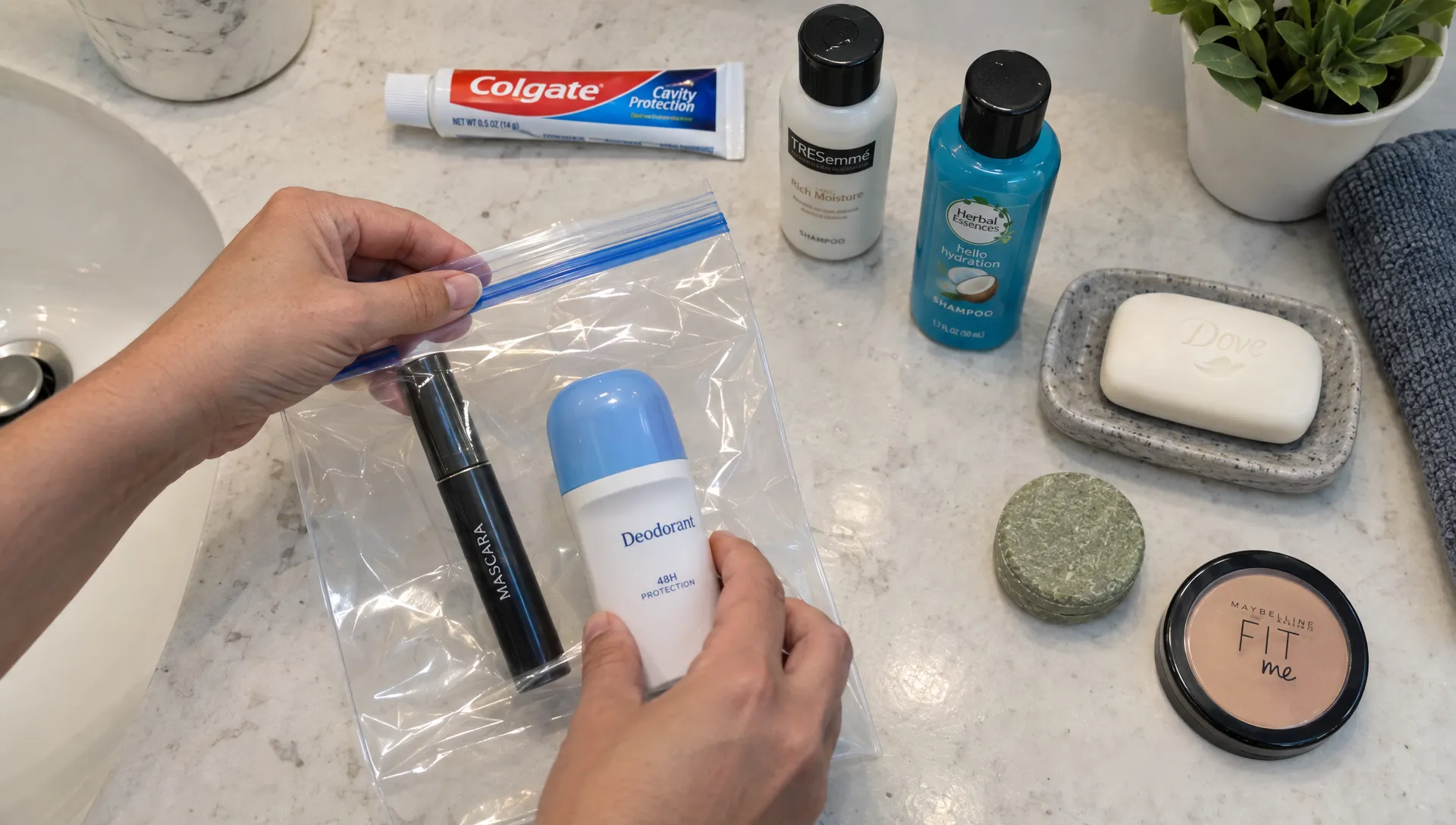
Mascara is a frequent surprise because its packaging looks nothing like a drink bottle. Nevertheless, its contents count as liquid or gel for screening. The same applies to liquid eyeliner, lip gloss, liquid concealer and cream foundation.
Do not assume a compact is exempt. A powder compact is generally a solid product, while a compact containing cream foundation or cream blush belongs with your liquids. Cushion foundation contains liquid product even though a sponge holds it inside the case.
When sorting hand luggage toiletries, open each makeup item and identify the actual formula rather than grouping everything in one cosmetic pouch. A conventional solid lipstick is generally outside the liquid allowance; a squeezable lip treatment or soft lip mask should be treated as a liquid, gel or cream.
This check is especially useful for miniature products. A tiny mascara still belongs in the liquids bag where one is required, even if its volume is well below the container limit.
Deodorant: the delivery method changes the answer
Deodorant is not one screening category. An aerosol spray, a liquid roll-on and a clear gel stick all need to be considered under liquid restrictions. A firm, genuinely solid deodorant stick generally does not.
Cream deodorant in a jar is another easy mistake. Being sold as “natural,” “water-free” or “concentrated” does not make it exempt. Treat a scoopable cream as a liquid for packing purposes unless your departure airport gives different guidance.
For hand luggage toiletries such as deodorant, read both the product format and the container capacity. Under a standard 100ml rule, a 200ml aerosol is not acceptable simply because you have used most of it. A smaller container is needed.
Aerosols also have separate aviation safety requirements. Keep the protective cap or other protection against accidental release in place and check airline guidance if carrying unusually large quantities. Permission under an airline’s aerosol allowance does not override the airport’s security limit.
Which toiletries usually stay outside the liquids bag?
Genuinely solid alternatives can reduce the number of products competing for space. Common examples include bar soap, solid shampoo bars, firm deodorant sticks, conventional solid lipstick and pressed powder makeup.
Loose face powder and powdered dry shampoo are not liquids either. However, being outside the liquid allowance does not mean an item is exempt from screening or other restrictions. Keep powders identifiable and allow for additional inspection if requested.
Ordinary moist wipes, including facial cleansing wipes, are generally permitted outside the liquids bag. Do not extend that assumption to every wet beauty product. A sheet mask surrounded by free-flowing serum is less straightforward; packing it with liquids is the cautious choice unless the airport confirms otherwise.
Before replacing hand luggage toiletries with solid versions, make sure the replacement really is solid. A shampoo bar differs from a bottle of concentrated gel, just as a firm fragrance stick differs from a scoopable perfume balm.
If bag space is the problem, our guide to what belongs in hand luggage when your liquids bag is full explains how to separate non-liquid essentials from products that still need space in the bag.
Container size matters more than what is left inside
Once you have classified your hand luggage toiletries, check their containers. Under standard 100ml restrictions, the limit applies to each container’s capacity, not the amount remaining inside it. A 150ml toothpaste tube with only a few uses left is still an oversized container.
For US TSA checkpoints, the standard allowance is containers of 3.4 fluid ounces, or 100ml, or less, fitting in one quart-sized resealable bag per passenger. Other airports commonly specify a one-liter bag, but requirements vary. Do not assume every airport uses the same bag dimensions or screening procedure.
Refillable bottles can help, provided their capacity fits the applicable rule. Choose clearly marked containers to make their size easier to establish. Travel-size branding alone is not proof: some products marketed for travel exceed 100ml.
Also check whether the bag closes properly with everything inside. Individually compliant bottles do not create an unlimited combined allowance. Our explanation of how much liquid is allowed in hand luggage covers container limits and bag requirements in more detail.
Toiletries that may qualify for medical exceptions
Some liquid products have a medical purpose, but that does not mean every pharmacy purchase receives an exemption. Ordinary moisturizer, cosmetic serum and routine mouthwash should not be assumed to qualify simply because they support personal care.
For hand luggage toiletries with a medical use, check the security authority’s specific exception before packing an oversized container. TSA permits medically necessary liquids in reasonable quantities above its standard limit, subject to declaration and screening. Other countries may apply different documentation or quantity requirements.
Contact lens solution is worth checking individually. TSA lists it as a medically necessary liquid, but you should not assume that every airport worldwide handles a large bottle in exactly the same way. A compliant small bottle avoids relying on an exception when that is practical for your needs.
Keep necessary medical liquids accessible and tell security staff about them as instructed. Do not reduce or leave behind an essential treatment merely to fit an ordinary toiletries allowance; confirm the appropriate procedure instead.
Check every airport where you will pass through security
An airport that allows larger liquid containers does not make those containers acceptable everywhere else. Your return airport or a connection requiring another security check may apply a stricter limit.
The classification of hand luggage toiletries still matters at airports with more generous allowances. A cream remains a liquid-category product; the permitted container size or packing procedure is what changes. New scanners alone are not proof that larger bottles are allowed.
Check the airport’s published passenger guidance, including whether it specifies a 100ml limit, permits larger containers or requires a clear bag. Follow staff instructions about taking products out of your luggage, since screening procedures can differ between checkpoints.
For a round trip, packing to the strictest confirmed rule avoids buying a large bottle outbound that cannot come home in your cabin bag. Recheck close to departure, particularly if you are depending on an allowance above 100ml.
Frequently asked questions
Can I take 200ml of deodorant in hand luggage? Not if it is a spray, roll-on or gel in a 200ml container and your checkpoint applies a 100ml limit. Being half empty does not help. A genuinely solid stick is generally outside liquid-container restrictions. An airport permitting larger liquids may have a different answer, so check your route.
Does toothpaste count as a liquid even when it is very thick? Yes. Toothpaste is a paste and falls within the liquid screening category. Under standard restrictions, choose a tube with a capacity of 100ml or less and put it in the required liquids bag.
Do powder toiletries have a 100ml limit? Not under liquid rules. However, powders can receive additional screening. TSA advises that powder-like substances greater than 12 ounces, or 350ml, must be placed in a separate bin for X-ray screening and may need additional inspection. This is not the same as a universal ban on larger powders.
Can I leave liquid makeup in my normal makeup bag? Only if that complies with the checkpoint’s instructions. Where a separate clear resealable liquids bag is required, liquid and cream makeup must go in that bag. Solid cosmetics can generally stay in your regular makeup pouch.
Check your toiletries against your whole trip
Before you pack, use Liquid Limits to check hand luggage toiletries against your departure, connection and return airports. Its trip and item checks include source links and last-checked dates, with a stricter 100ml fallback when rules are unclear. Pack for the strictest checkpoint you will encounter, not just the first flight.