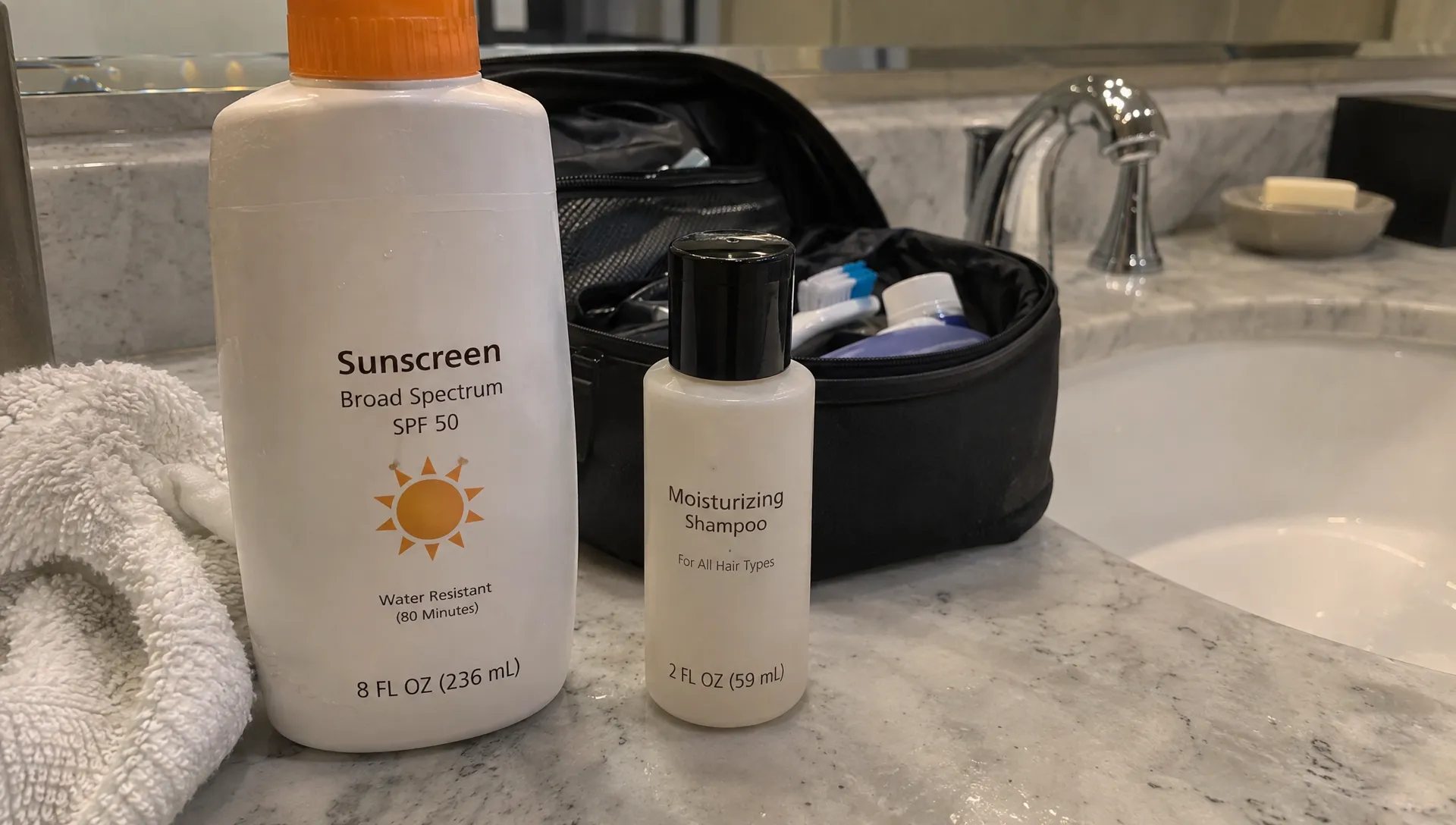
Travel liquid restrictions carry on applying at every security checkpoint, not just the airport where your trip begins. A bottle accepted on departure may be refused during a connection or on your return flight. That makes your full itinerary, rather than one airport’s allowance, the starting point for packing your carry-on.
The practical question is not simply whether you can bring shampoo or sunscreen. It is whether the container, packaging and contents will meet the rules everywhere you expect to be screened. Here is how those restrictions affect your packing decisions, airport purchases and journey home.
The checkpoint sets the liquid rule, not your airline
For ordinary toiletries and drinks, the cabin liquid limit is primarily a security-screening rule. Your airline separately sets baggage dimensions and weight limits, while dangerous-goods rules can prohibit particular substances regardless of bottle size.
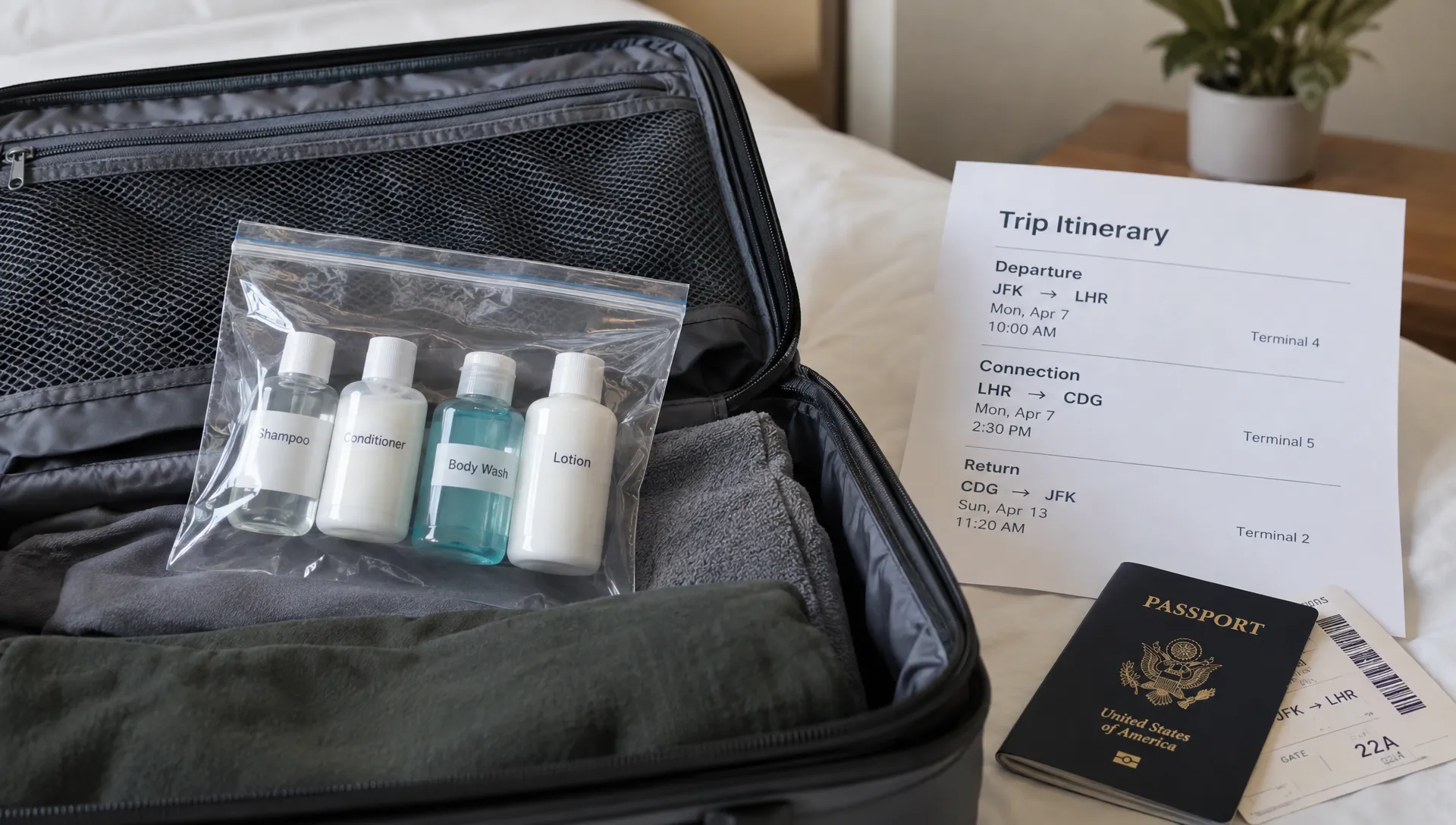
Under the standard TSA liquids rule, ordinary liquids, aerosols, gels, creams and pastes must be in containers of 3.4 ounces (100 milliliters) or less. They must fit inside one quart-sized, clear, resealable bag, with one bag allowed per passenger. Qualifying exemptions are handled separately.
Many other airports use a similar 100ml container limit, but packaging requirements are not identical worldwide. A one-liter bag requirement, for example, should not be assumed to apply at every checkpoint.
Use the published rule for the airport where you will pass through security. An airline accepting your carry-on at check-in does not establish that its contents will clear screening.
What the restrictions change about your packing
Carry-on travel liquid restrictions affect more than the amount of liquid you bring. They determine which containers you can use, how much space your toiletries occupy and whether you need a different plan for larger products.
Container capacity matters more than what is left inside
At a checkpoint applying the standard 100ml rule, a 200ml sunscreen bottle is normally too large even if only a small amount remains. The restriction concerns the container’s capacity, not your estimate of its contents.
Choose containers with clearly marked capacities. For ordinary products, decanting into a compliant travel bottle can solve the size problem. For medication, preserving original packaging and identification may be more useful, so check the relevant exemption rather than treating it like shampoo.
The liquids bag creates a second limit
A collection of compliant bottles may still fail the packing requirement if they cannot fit inside the required bag with it closed. Ten small containers are not automatically acceptable merely because each is under 100ml.
Toothpaste, gel deodorant, mascara and spreadable foods can also count as liquids or gels. If you are unsure about a particular product, check which liquids are allowed in carry-on luggage before allocating your limited bag space.
Solid alternatives can reduce that pressure, but assess the actual product. A solid soap bar and a liquid shower gel are treated differently; a product marketed as a “balm” may still have a gel or paste consistency.
How travel liquid restrictions carry on through your itinerary
The easiest packing mistake is checking the outbound airport and stopping there. Your return airport may have a different allowance, and a connection can introduce another security checkpoint.
Connections matter when you are screened again
Not every connection involves a fresh security check. The answer depends on the airport layout, your arrival arrangements and whether you remain within a secure transfer area.
If you are screened again, that checkpoint’s rules apply to what you are carrying at that moment. This can affect toiletries packed at home as well as drinks purchased after your first security check.
For a self-transfer that requires leaving the secure area and checking in again, plan for another screening. For other connections, check the airport’s transfer guidance rather than assuming that staying in the same terminal means avoiding security.
A more generous departure allowance may not help on the return
Consider this hypothetical itinerary. The allowances below are examples, not claims about specific airports:
| Screening point | Confirmed ordinary-liquid allowance | Packing consequence |
|---|---|---|
| Departure airport | Containers up to 2L under its published rules | A larger toiletry bottle may clear this checkpoint |
| Connection with fresh screening | Containers up to 100ml | That same bottle may be refused here |
| Return airport | Containers up to 100ml | The bottle cannot return in your carry-on under the ordinary-liquid rule |
For products you want to carry throughout the trip, pack to the strictest checkpoint you expect to encounter. This is a planning approach, not a separate regulation. Qualifying exempt items still need their own checks.
New scanners do not automatically mean a 2L allowance
Advanced screening equipment can change airport procedures, but the presence of a new scanner does not by itself establish the liquid allowance.
There are two separate questions: how large your containers can be and whether liquids must be removed from your bag. An airport may let liquids stay inside your luggage while still enforcing a 100ml container limit.
The UK government’s hand-luggage guidance directs travelers to check airport rules because allowances can differ. Apply that approach to your whole route: confirm the published container limit and any bag or presentation requirements separately.
Carry-on liquid restrictions can also change after you book. Check again shortly before travel and pay attention to official instructions at the checkpoint. If an airport’s allowance is unclear, packing ordinary liquids in containers of 100ml or less is the safer fallback, alongside the applicable bag requirements.
Build a checkpoint plan before choosing your bottles
A short route check can prevent you from buying travel containers you do not need or bringing a full-size product you cannot bring home.
- Map your screenings: Include departure, any connection where you may be screened again and the return journey.
- Record each allowance: Check container capacity, liquids-bag requirements and whether items must be taken out for screening.
- Separate exemptions: Look up medicines, baby supplies and other qualifying items independently from ordinary toiletries.
- Choose your packing standard: For products traveling through every checkpoint, use the strictest confirmed ordinary-liquid allowance.
- Plan for purchases: Decide what you will use up, place in checked baggage if permitted or leave behind before returning.
You do not necessarily need to minimize every product. You need a workable plan for each one. A larger sunscreen bought at your destination may be useful during the trip even if you cannot return with it in your carry-on.
Medicines and baby supplies need a separate check
Ordinary liquid limits do not tell the whole story for essential items. Qualifying medicines, infant feeds and related supplies can have exemptions, although eligibility and screening procedures vary by jurisdiction.
Medically necessary liquids
TSA allows medically necessary liquids in quantities greater than 3.4 ounces within its published procedures, subject to declaration and additional screening. Other authorities may have different requirements for documentation, quantity or presentation.
Keep essential medication accessible and check the official guidance for each relevant checkpoint. Do not assume you must discard or decant a prescribed liquid simply because it exceeds 100ml. Medication import rules at your destination are also separate from security-screening rules.
Baby milk and feeding supplies
Baby formula, breast milk and certain related supplies may qualify for exceptions. Whether a child must be traveling with you, which products qualify and what checks are required depend on the authority screening your bag.
For carry-on travel liquid restrictions involving exempt items, verify the item itself rather than relying on a general statement that “baby products are allowed.” Keep supplies organized so you can identify them and present them when requested.
Airport purchases can create problems later
A drink bought after security can usually be taken onto that departing flight, subject to applicable boarding and airline rules. But “bought at the airport” is not a permanent exemption from later screening.
If you reach another checkpoint, an ordinary drink above the local limit may be refused. Finishing it before that checkpoint avoids the problem. An empty refillable bottle is generally a useful alternative, provided the bottle itself is permitted and you fill it only after the relevant screening.
Duty-free liquids need more careful handling. A security tamper-evident bag and proof of purchase may allow them through a transfer checkpoint under that authority’s rules, but acceptance is not universal. Follow the retailer’s sealing instructions and check your transfer arrangements before purchasing.
For larger toiletries or destination purchases, checked baggage may offer another option. Compare the liquid rules for checked bags and carry-ons, remembering that dangerous-goods restrictions still apply. A bottle being too large for cabin screening does not automatically make every substance acceptable in checked luggage.
Frequently asked questions
Can I take a half-empty 150ml bottle through a 100ml checkpoint? Normally not under the ordinary-liquid rule. The container’s capacity matters, even when the remaining contents are below 100ml. A qualifying exemption may be treated differently.
If my departure airport allows 2L containers, can I bring them home? Only if your return screening rules also allow them, or another applicable arrangement covers the item. Check connections too, especially where you will pass through security again.
Do I always have to remove my liquids bag? No. Presentation requirements depend on the checkpoint. Being allowed to leave liquids inside your luggage does not necessarily mean larger containers are allowed.
Does every connecting flight involve another liquid check? No. It depends on the airport and transfer process. If fresh screening is required, the rules at that checkpoint apply.
What should I do if an airport’s rule is unclear? For ordinary liquids, use containers of 100ml or less and check the relevant bag requirements. Verify exemptions separately and follow official airport instructions.
Check the whole trip before you pack
The useful answer is the strictest rule your everyday liquids will encounter, not the most generous allowance on your route.
Use Liquid Limits to check your trip’s liquid rules, including the return flight. Its trip, airport and item checks provide source links and last-checked dates, with daily updates. When a rule is unclear, the tool defaults to the stricter 100ml rule.
Once you know your checkpoints, choose containers that work for the full journey and make a separate plan for exempt items and purchases. That keeps one airport’s more generous allowance from becoming a problem at the next.