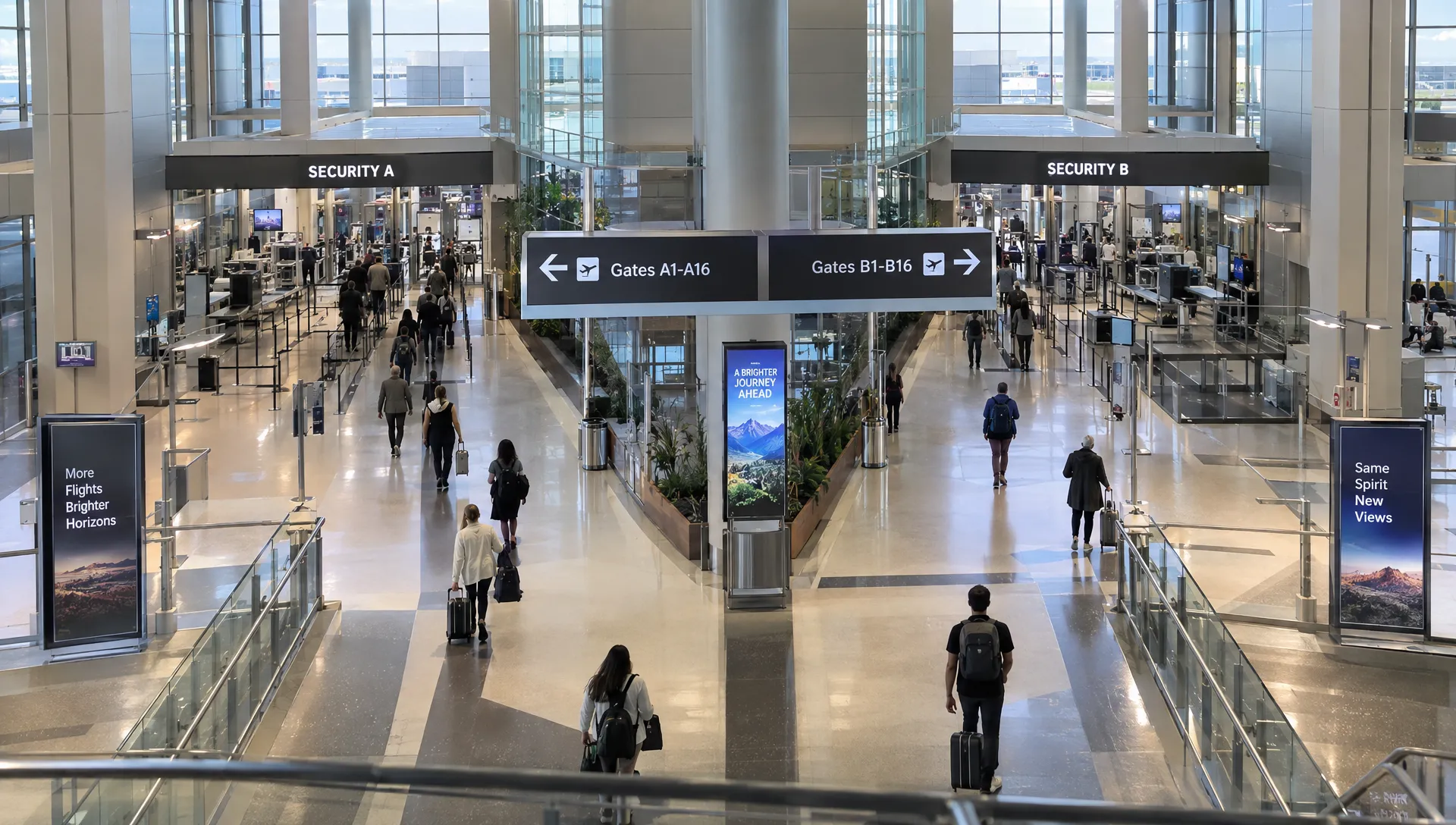
The rules for travelling with liquids can change more than once during a multi-airport trip. Your departure airport might allow a larger shampoo bottle, but a connecting airport could reject it if you pass through security again. The return journey may introduce another set of requirements, especially if you fly home from a different airport.
The useful starting point is not the number of flights you have booked. It is the number of security checkpoints your cabin bag will pass through, including any created by a self-transfer, terminal change or overnight stop.
This guide explains how to map those checkpoints, compare their requirements and handle purchases made along the way. Pack ordinary cabin liquids for the strictest checkpoint you expect to encounter, then check exceptions separately.
How the rules for travelling with liquids apply across airports
A liquid allowance applies at a particular security checkpoint. It is not a permission that travels with your boarding pass, airline booking or bottle.
For example, an airport that permits containers up to 2 liters does not make those containers acceptable at a later checkpoint operating a 100 ml limit. Likewise, permission to leave liquids inside your bag during screening does not necessarily mean larger containers are allowed.
Map your itinerary using the airport codes on your booking, then identify where screening occurs. Include your initial departure, any transfer screening and your return departure. An arrival airport generally does not add a cabin-liquid checkpoint if you simply collect your bags and leave, although customs restrictions remain separate.
Do not assume every connection involves screening, either. Some passengers remain in a secure transfer area without another check. Others must undergo transfer security despite staying airside.
The rules for travelling with liquids therefore need to be checked against your actual transfer path, not just a list of airports. Where that path is uncertain, plan for another screening rather than relying on an uninterrupted airside connection.
Self-transfers, terminal changes and overnight stops
A self-transfer often means collecting checked baggage, leaving the secure area and checking in again. That creates a fresh departure screening, even if both flights use the same airport. Separate tickets are a reason to investigate the process, not proof of exactly how it will work.
A terminal change can also involve leaving the secure area. Check the airport’s transfer instructions for your terminals and flight types. Domestic-to-international and international-to-domestic connections may follow different paths.
An overnight connection deserves particular attention. If you leave for a hotel, you will pass through security when you return. Do not assume you can remain airside overnight without checking the airport’s arrangements.
Ask a practical question: “Will I or my cabin bag pass through security again before the next flight?” The airline can help explain your connection, while the airport or relevant security authority supplies the liquid requirements. Treat an unclear answer as a packing risk, especially when carrying expensive toiletries or purchases you cannot easily replace.
Build a checkpoint plan for the whole itinerary
A short checkpoint plan makes the rules for travelling with liquids easier to compare. Record the airport, terminal if relevant, reason for screening and confirmed container allowance. Keep the source link with each entry so you can revisit it before departure.
The example below is hypothetical, not current guidance for any real airport. It shows an outbound journey from A through B to C, followed by a return from C through D to A.
| Journey stage | Screening situation | Example information | Packing decision |
|---|---|---|---|
| Outbound departure at A | Departure security | Containers up to 2 liters permitted | Do not rely on this allowance for later checkpoints |
| Outbound connection at B | Transfer screening confirmed | Maximum container capacity of 100 ml | Ordinary cabin liquids must meet this limit |
| Return departure at C | Departure security | Maximum container capacity of 100 ml | Check newly purchased toiletries before packing |
| Return connection at D | Screening arrangements unclear | Liquid rule not confirmed | Use a conservative 100 ml fallback while checking |
For this itinerary, ordinary toiletries should be in containers no larger than 100 ml from the beginning. Buying a larger bottle after departure security at A would not solve the restriction at B.
This plan also prevents a common mistake: checking the outbound connection carefully but overlooking a different return hub. Revisit the plan whenever your route changes.
Compare more than the bottle-size limit
Two checkpoints can both use a 100 ml container limit yet have different bag or screening instructions. Your comparison needs to cover the complete set of requirements, not just the largest number displayed on an airport page.
Check these details for each screening point:
- Container capacity: The maximum labeled capacity permitted for an ordinary liquid container.
- Bag requirements: Whether a transparent, resealable bag is required, its permitted size and how many bags are allowed.
- Screening procedure: Whether liquids must be removed from your cabin bag or presented separately.
- Exceptions: The process for medicines, baby supplies and other permitted essential liquids.
- Transfer purchases: Whether sealed duty-free liquids can pass through onward security and under what conditions.
Under a standard 100 ml rule, a half-empty 200 ml bottle is still too large. The restriction concerns the container’s capacity, not the amount remaining inside.
The rules for travelling with liquids also cover more than drinks. Toothpaste, creams, gels and many spreadable foods can fall within liquid restrictions. For a broader item overview, use the guide to airport requirements for liquids, then confirm any unusual item with the screening authority.
For US checkpoints, the TSA liquids rule describes containers of 3.4 ounces or 100 ml in one quart-sized bag. Do not automatically substitute that bag specification for another country’s requirements. The UK hand-luggage guidance also explains that liquid restrictions depend on the departure airport.
Plan purchases around the next security check
A bottle bought after security is permitted in that airport’s departure area, but it may face restrictions at a later checkpoint. Before buying drinks, cosmetics or a full-size toiletry, identify the next place your cabin bag will be screened.
If another standard liquid checkpoint is ahead, an ordinary large drink bottle may need to be emptied or discarded before screening. An empty reusable bottle is a more flexible option for routes with several checks. Refill it after security where facilities are available.
The rules for travelling with liquids become more complicated with duty-free purchases because a sealed security bag can create a conditional exception, not universal permission. Acceptance depends on the applicable transfer rules and whether the packaging and purchase evidence meet them.
The EU guidance on luggage restrictions describes duty-free liquids carried with the receipt inside a security bag. Follow the relevant instructions and keep the bag sealed unless security staff direct otherwise. Do not assume that a bag opened during screening will automatically be acceptable at your next checkpoint; ask staff about onward travel.
For a multi-stop journey, buying a large liquid after the final security checkpoint before your destination usually removes the onward-screening problem. It does not remove airline dangerous-goods restrictions or destination customs limits, particularly for alcohol.
Check essential-liquid exceptions at every checkpoint
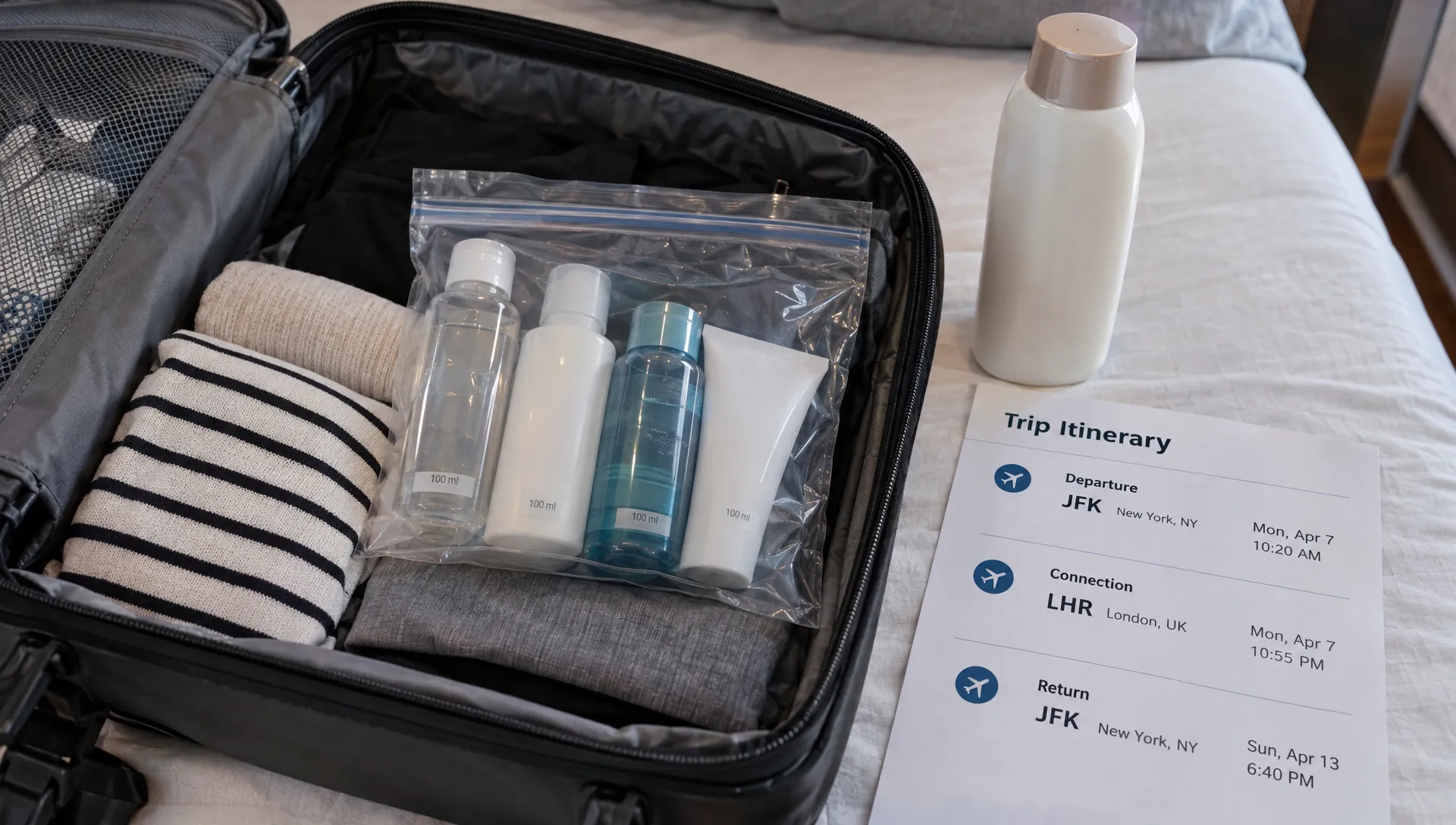
Medicines, baby milk and certain special dietary liquids may qualify for exceptions to ordinary container limits. These categories need their own preparation because permitted quantities, supporting documents and screening procedures can vary.
The rules for travelling with liquids should not lead you to reduce an essential medicine below the amount you need. Instead, check the official exception at each relevant checkpoint and find out how to present it. Keep medicines identifiable and accessible, and carry documentation where required or useful for explaining the item.
For infant supplies, verify whether the child must be traveling with you and whether particular packaging requirements apply. Do not assume an exception granted on the outbound journey covers every return or transfer checkpoint.
If a liquid must remain cool, check any cooling packs separately. Their screening treatment may depend on whether they are frozen and whether they accompany an exempt item.
Security exceptions also do not override customs rules or restrictions on importing medicines. For an unusual or medically critical item, resolve uncertainties with the relevant authorities before departure rather than at the checkpoint.
Recheck after route changes and before flying home
Your checkpoint plan can become outdated even if your toiletries stay the same. A canceled flight, replacement hub or changed terminal can introduce screening you did not originally expect.
Recheck the rules for travelling with liquids when an itinerary change alters your transfer path. Pay particular attention if a protected connection becomes a self-transfer or an overnight delay requires leaving the airport.
Before the return journey, inspect what you actually have in your bag. Hotel toiletries, local food products and cosmetics bought during the trip may introduce containers that were never part of your original plan. The guide to preparing hand-luggage liquids for a return flight covers that packing check in more detail.
Moving a larger toiletry into checked baggage may help if the item is permitted there, but do it before bag drop. Checked baggage is not an unrestricted alternative: aerosols, flammable products and alcohol can have separate limits or prohibitions.
Frequently asked questions
Do I need to follow liquid rules at a connecting airport if I stay airside? If you undergo transfer security, that checkpoint’s requirements apply even when you remain airside. If there is no additional screening, you will not encounter another liquid check during that connection. Confirm the transfer process for your terminals and flight types.
Can I carry a 2-liter bottle if my first airport allows it? Only if it also meets the requirements of every later checkpoint where it will be screened, or qualifies for an accepted exception. A larger-container allowance at departure does not override a 100 ml restriction at a connection or return airport.
What should I do when an airport’s guidance is unclear? For ordinary toiletries, use containers no larger than 100 ml and check the applicable bag requirements while seeking confirmation. This conservative approach to the rules for travelling with liquids does not replace item-specific checks or guarantee that restricted substances are permitted.
Does one airline booking mean the same liquid rule applies throughout? No. A single booking may simplify baggage handling, but security requirements depend on the checkpoints you encounter. Neither the airline’s identity nor the booking reference creates a shared liquid allowance across airports.
Check your route before you pack
Use Liquid Limits to check airport and route liquid rules across your trip, including the return. Its trip checker helps compare requirements, with source links, last-checked dates and daily updates. Where rules are unclear, it defaults to the stricter 100 ml rule.
Review every expected checkpoint before choosing your bottles, then check again if your itinerary changes.