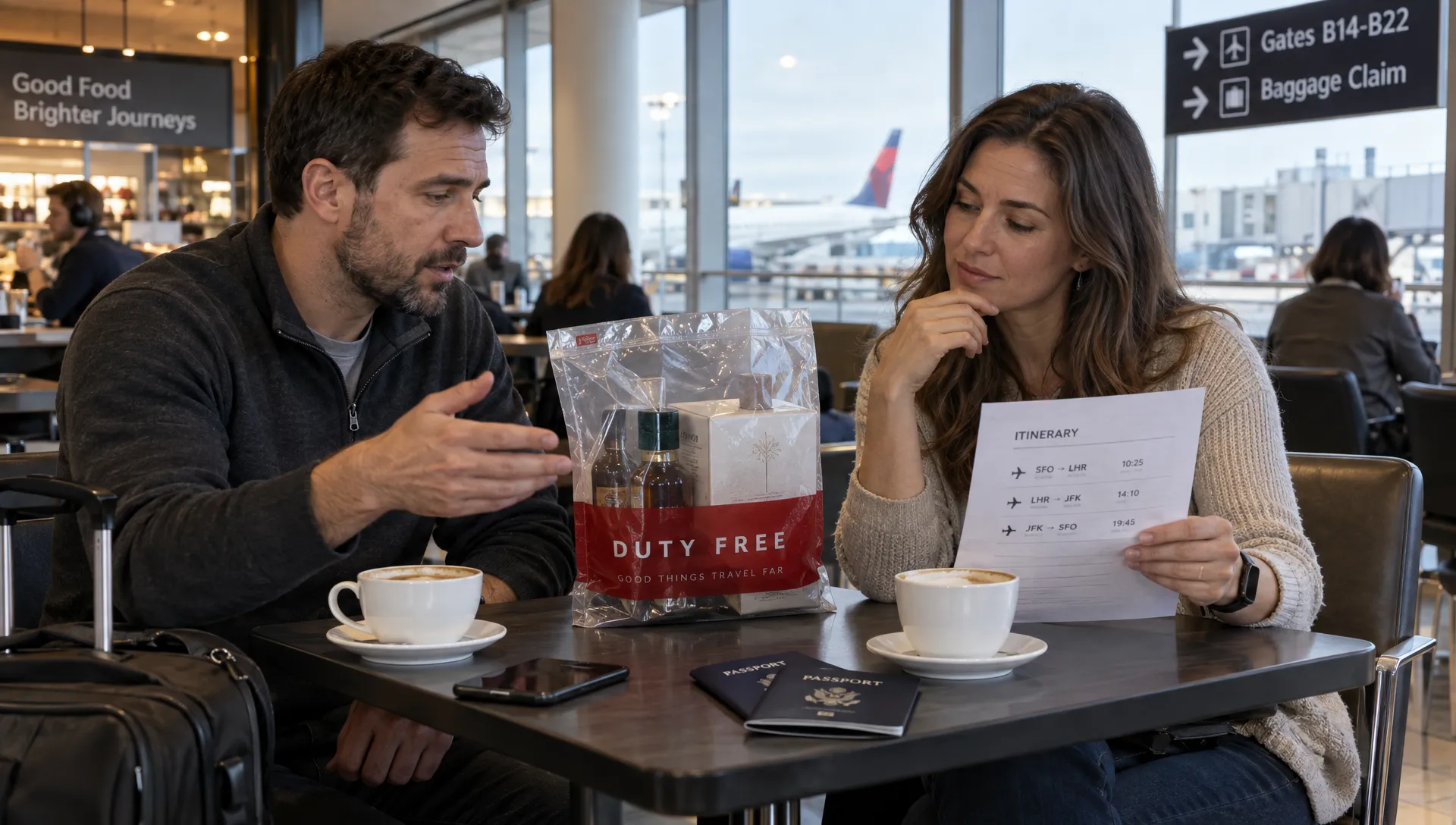
For a return flight, the safest approach to “travelling liquids hand luggage” is to pack for the strictest security checkpoint you expect to use in either direction. A bottle allowed through your departure airport may be too large for the airport you fly home from, even when you use the same airline.
Check your outbound airport, return airport and any connection where you will pass through security again. Then decide whether to keep everything within the stricter limit or make a separate plan for larger bottles. This matters just as much for toiletries you bring from home as for sunscreen, drinks and gifts you buy while away.
Start with every security checkpoint on your itinerary
Liquid restrictions apply at security screening, not simply when you board an aircraft. Your return booking therefore needs its own check, rather than an assumption that the outbound rules will apply again.
Record the airport where you start each journey and any transfer airport where another security check might be required. Connections deserve particular attention if you collect baggage, change airports, leave the secure area or travel on separate tickets. These circumstances can mean another screening, although the exact process depends on the airport and itinerary.
An airside connection is not automatically exempt from further screening either. If the transfer process is unclear, check the airport’s connection guidance and plan conservatively.
For each checkpoint, confirm three separate details: the maximum container size, any liquids-bag requirement and how exceptions are handled. An airport permitting larger containers does not necessarily use the same packing or screening procedure as another airport with similar limits.
Keep the official airport guidance accessible with your booking details. A screenshot can help you remember the instructions, but it does not override the rules in force when you travel.
Understanding “travelling liquids hand luggage” rules for both flights
A higher allowance at one airport does not carry over to your return airport. Some airports publish limits allowing containers up to 2 liters, while others apply the familiar 100ml limit. The UK government’s liquid restrictions guidance specifically advises passengers to check all airports involved, including the return journey and connecting flights.
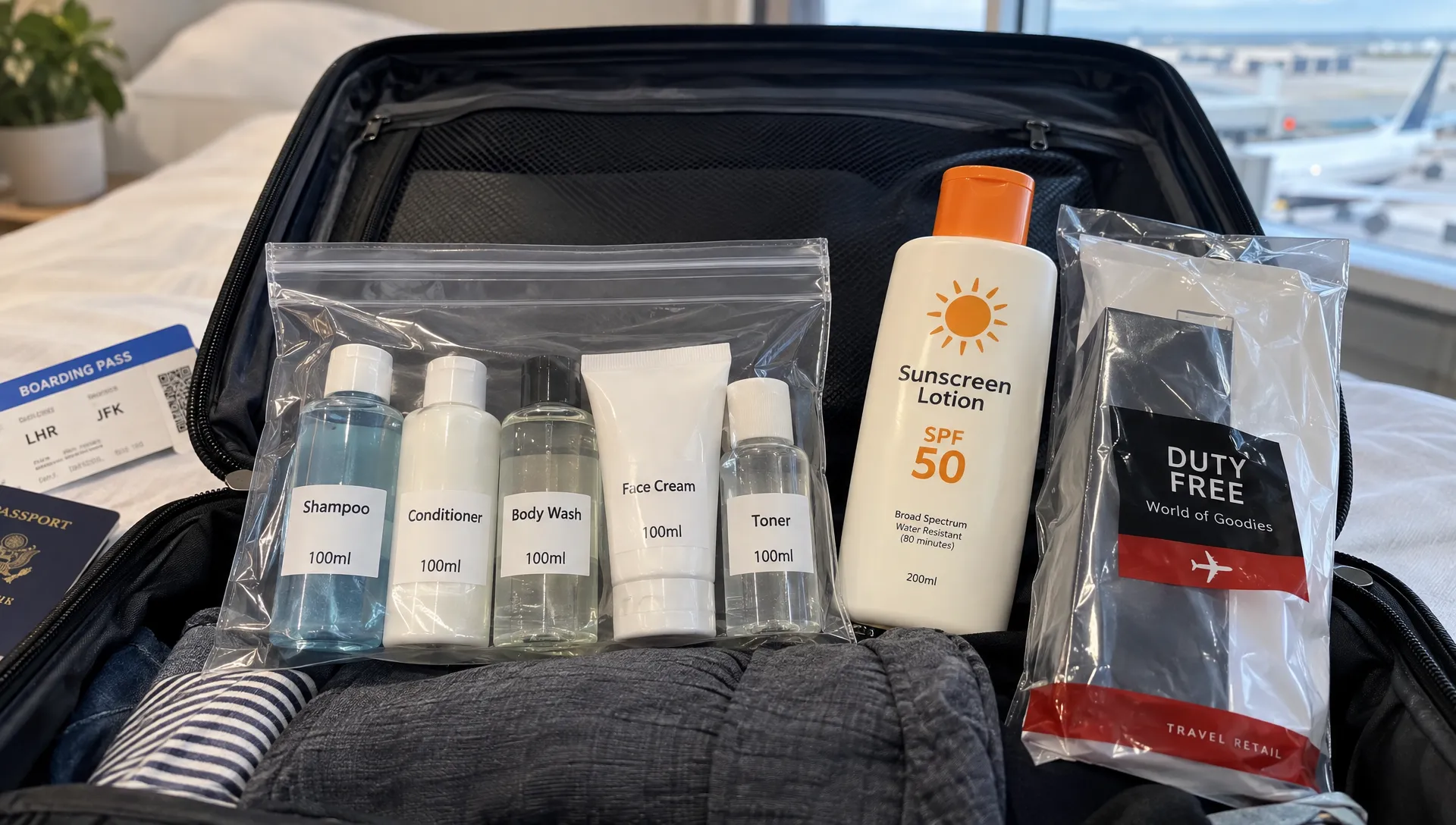
Where the standard 100ml restriction applies, the limit concerns the container’s capacity, not how much remains inside. A 200ml sunscreen bottle with only a little sunscreen left is still a 200ml container.
Bag requirements also need a separate check. Where required, ordinary liquids usually need to fit into one transparent, resealable bag per traveler. UK guidance commonly specifies a bag holding no more than 1 liter, while the TSA liquids rule specifies a quart-sized bag for US checkpoints. Follow the requirements for your actual airport rather than treating those sizes as universally interchangeable.
A larger liquid allowance also does not make prohibited substances acceptable. Restrictions on hazardous materials remain separate from ordinary toiletry limits.
A hypothetical outbound and return example
Imagine that your departure airport permits ordinary liquids in containers up to 2 liters, but your return airport applies a 100ml container limit.
| Item | Outbound checkpoint with a 2-liter allowance | Return checkpoint with a 100ml allowance |
|---|---|---|
| 250ml shampoo bottle | Within the stated container limit | Too large for the ordinary liquids allowance |
| Half-used 200ml sunscreen bottle | Within the stated container limit | Still too large because capacity counts |
| 75ml toothpaste tube | Within the stated container limit | Within the container limit, subject to bag requirements |
| Empty 500ml water bottle | Generally allowed, subject to screening | Generally allowed when empty, subject to screening |
This is an illustration, not a claim about any particular airport. When travelling with liquids in hand luggage, bottles of 100ml or less are the simpler choice for this mixed-rule itinerary, provided they also meet the return airport’s bag requirements.
Plan what will be coming home, not just what leaves home
Your return liquids bag may look very different from the one you packed before departure. You might have bought sunscreen, replaced a toiletry or added perfume and food gifts. Plan for those changes before you leave.
Toiletries you already own
If you want one packing setup for both flights, use suitably labeled containers within the strictest ordinary container limit on your route. For a route containing a standard 100ml checkpoint, that means containers no larger than 100ml and enough room in the required liquids bag.
Do not rely on using up most of a larger bottle during your stay. Its stated capacity will not change. Our guide to common 100ml packing mistakes explains this distinction and other avoidable problems.
Products and gifts bought at your destination
Before buying a full-size liquid, decide how it will travel home. It may need to go in checked baggage, be transferred into suitable smaller containers where appropriate or be left behind. Checked baggage has its own restrictions, especially for alcohol, aerosols and hazardous products, so it is not an unrestricted alternative.
Allow space for purchases that may not look like liquids at first glance. Jams, sauces, spreads, creams and gels can fall under liquid screening rules. A solid gift is often easier to accommodate, though customs and food-import rules may still apply.
Travelling with liquids in hand luggage becomes more complicated when the return bag is already full. If that is likely, decide what can stay in hand luggage when your liquids bag is full before adding another product.
Treat duty-free purchases as a separate return-flight check
A liquid bought after security can usually accompany you on that departure, subject to other applicable restrictions. The difficulty comes when you encounter another security checkpoint, including during a connection.
Qualifying duty-free liquids may be accepted under specific rules when kept in an approved security tamper-evident bag with the receipt. Acceptance depends on the checkpoint, the purchase circumstances and whether security can clear the item. An ordinary shopping bag is not a substitute.
For example, TSA guidance sets conditions for certain duty-free liquids over 100ml on international arrivals connecting in the US. These include a transparent, secure tamper-evident bag, the original receipt and purchase within 48 hours. The items must still pass screening.
Do not assume a purchase made on the outward journey will qualify when you fly home several days later. Check the relevant return and transfer rules before buying, and leave a qualifying security bag sealed until the applicable screening is complete.
For anyone travelling with liquids in hand luggage, duty-free packaging is a conditional exception, not a guarantee that a large bottle can pass every airport.
Check medicines, baby supplies and dietary liquids separately
Essential liquid medicines, baby milk, baby food and certain dietary liquids may qualify for exceptions to ordinary container limits. The permitted quantities, documentation and screening procedures depend on the jurisdiction and airport.
Check the guidance for both directions before relying on an exception. You may need to present these items separately, explain why they are required or provide supporting documentation. Cooling packs and related medical equipment can also need their own check.
Keep essential medication accessible rather than moving it into checked baggage solely to avoid a liquid-rule question. Where documentation is requested, prepare it before departure and retain it for the return journey.
These exceptions do not extend to unrelated toiletries. A medical liquid allowance does not make a larger shampoo bottle acceptable. Travelling with liquids in hand luggage requires distinguishing necessary exempt items from the ordinary products sharing your bag.
Recheck before departure and before flying home
Make the initial check before packing, then check again close to each flight. Rules can change during your trip, and a remembered allowance may no longer match the airport’s published guidance.
Before the return flight, compare what is actually in your bag with what you planned to bring home. Use this short checklist:
- Confirm the return airport’s current container limit and liquids-bag instructions.
- Check any transfer point where another security screening may occur.
- Remove oversized ordinary liquids from your carry-on or make a permitted alternative arrangement.
- Check receipts and sealed packaging for duty-free liquids you intend to take through security.
- Keep medicines and other exempt liquids ready for any separate presentation or screening.
Pay attention to the date and source behind any rule summary. A recent official instruction is more useful than an old article or another traveler’s experience at a different terminal.
If the return rule is unclear, packing ordinary liquids in containers of 100ml or less is a conservative fallback, not a substitute for checking bag requirements and item restrictions. The goal when travelling with liquids in hand luggage is to have a workable plan for the next checkpoint, rather than depend on the most generous allowance anywhere on your trip.
Frequently asked questions
Can I bring a 2-liter bottle home if it was allowed on my outbound flight? Only if it meets the rules at every security checkpoint you encounter on the way home, or qualifies for an applicable exception. Permission at your departure airport does not establish permission at your return airport.
Does the same airline mean the same liquid rules in both directions? No. Security requirements can differ between airports and countries, even on the same airline. Airline baggage allowances are a separate check.
Can I carry a larger bottle if it is almost empty? Not under the ordinary 100ml container rule. The container’s capacity counts, so a nearly empty 250ml bottle remains too large. A completely empty reusable water bottle is generally permitted, subject to screening.
Will a connecting flight involve another liquids check? It may. The answer depends on the airport, route and transfer arrangements. Check the official connection instructions, particularly if you leave the secure area or collect baggage.
Should I open my duty-free security bag during my trip? If you intend to rely on its sealed status at a later checkpoint, keep it sealed. Confirm that the purchase will qualify at that checkpoint, since packaging alone does not guarantee acceptance.
Check both directions before you pack
Use Liquid Limits to check your whole trip, including the return flight. Compare airport rules, review verified source links and last-checked dates, and check specific items before deciding what to carry.
Liquid Limits defaults to the stricter 100ml rule when an allowance is unclear. For travelling with liquids in hand luggage on a return trip, that gives you a conservative starting point while you confirm the requirements for each airport.