
If you have seen headlines saying airport liquid limits are ending, it is understandable to wonder whether the 100ml liquid rule still matters. The short answer is yes. In 2026, the rule is less universal than it used to be, but it has not disappeared.
The important detail is that liquid rules are applied at the security checkpoint you pass through, not by your airline, your destination country, or the airport you used on your last trip. One airport may allow larger containers in certain lanes, while another airport on the same itinerary may still require every cabin liquid to be in a container of 100ml or less.
That is why the safest question is not “Has the 100ml rule been scrapped?” It is “Will any security checkpoint on my trip still enforce it?”
What the 100ml liquid rule actually means
The 100ml liquid rule is the familiar carry-on restriction that limits most liquids, aerosols, gels, creams, and pastes to containers of 100ml, or 3.4oz, when taken through airport security.
In many airports, the standard version of the rule works like this:
- Each liquid container must be 100ml or smaller.
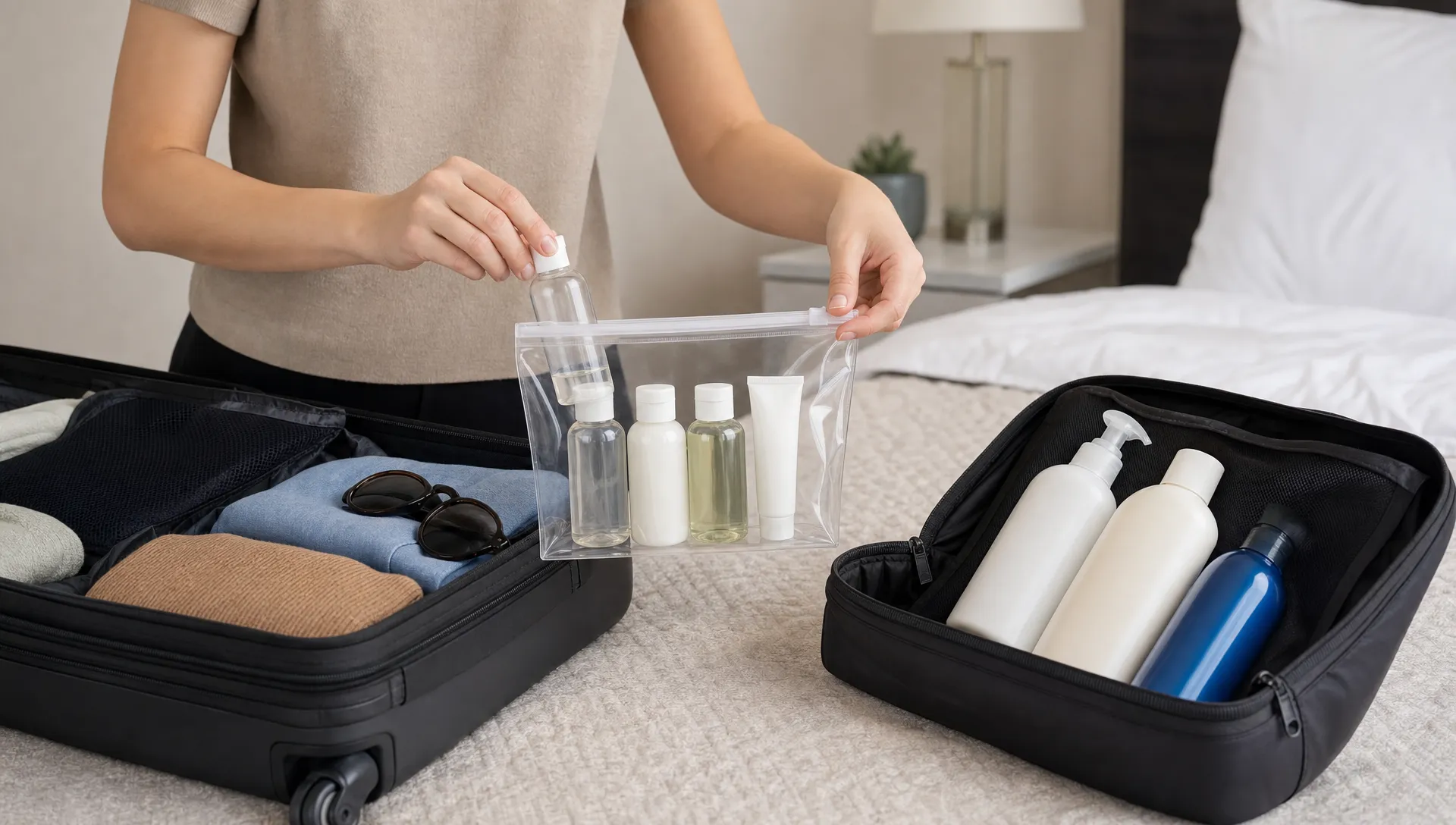
- Containers usually need to fit inside a clear resealable plastic bag.
- The limit is based on container size, not how much product is left inside.
- Larger bottles are usually not allowed through security, even if they are nearly empty.
That last point catches many travelers out. A 200ml shampoo bottle with only 50ml remaining can still be rejected because the container itself is larger than the allowed size.
The rule generally applies to cabin baggage, meaning the bags you take through security and onto the aircraft. Checked baggage is different, although some items in checked bags are still limited by airline rules, dangerous goods regulations, or customs requirements.
If you are unsure whether something counts as a liquid, treat it broadly. Airport security commonly includes gels, creams, lotions, sprays, pastes, foams, and some soft foods in the liquid category. For examples of borderline items, see this guide to what counts as 100ml of liquid at security.
When the 100ml rule still applies
The 100ml rule still applies whenever the airport security checkpoint you use enforces it. That sounds obvious, but it matters because modern liquid rules are increasingly uneven. Different countries, airports, terminals, and even security lanes can be at different stages of scanner rollout and regulatory approval.
Here are the most common situations where you should still expect the 100ml rule.
1. Your departure airport still uses the standard liquid screening rule
Many airports still use conventional screening procedures for cabin liquids. At those checkpoints, the familiar 100ml limit remains the default.
The U.S. Transportation Security Administration still publishes the 3-1-1 liquids rule, which limits carry-on liquids to containers of 3.4oz or 100ml, placed in a quart-sized bag, with exceptions for certain medically necessary items and infant or child nourishment.
The U.K. government also continues to publish official hand luggage liquid restrictions, including the 100ml container rule, while advising passengers to follow airport-specific instructions.
The practical takeaway is simple: if the official guidance for your departure airport says 100ml, pack to 100ml.
2. Your airport has new scanners, but the rule has not fully changed
New CT and advanced cabin baggage scanners can give security officers a clearer view of bag contents. In some places, this technology has supported more relaxed liquid limits. However, scanner installation alone does not automatically remove the 100ml rule.
There are several reasons for that. Equipment may need certification, staff need training, software settings can change, and regulators may require airports to keep old restrictions in place until the system is approved for live use. Some airports also operate mixed screening lanes, where one terminal or lane has newer technology and another still uses older rules.
So if an airport advertises upgraded scanners, do not assume that every passenger can bring a full-size bottle through security. Check the current rule for your exact airport and, when possible, your terminal.
3. You have a connecting flight and must clear security again
Connections are one of the biggest reasons the 100ml rule still matters. If you stay airside and do not pass through another security checkpoint, your liquids may not be checked again. But if you need to re-clear security during a transfer, the rule at that connecting airport applies.
This can affect travelers who:
- Change terminals and pass through security again.
- Enter a country before continuing on a domestic or regional flight.
- Have separate tickets that require collecting and rechecking baggage.
- Miss a connection and are rerouted through a different airport.
A bottle bought after security at your first airport may become a problem if you later face a stricter checkpoint. Duty-free liquids can sometimes travel through connections if they are sealed in an approved tamper-evident bag with the receipt, but this is not a universal guarantee.
4. Your return airport is stricter than your outbound airport
Round trips are another common source of confusion. You might depart from an airport that allows larger liquids, then return from an airport that still enforces 100ml. In that case, the return airport’s rule controls what you can take through security on the way home.
This matters for toiletries, local cosmetics, olive oil, perfume, wine, sauces, skincare, and other liquids bought during a trip. If they are over 100ml and your return airport applies the standard rule, they usually need to go in checked baggage or be left behind.
For a deeper look at this trip-planning problem, Liquid Limits has a separate guide to rules for liquids on flights and return trips.
5. The item is exempt, but still needs screening
Some items are exempt from the normal 100ml limit, but that does not mean they can be packed casually. Medicines, baby milk, baby food, special dietary liquids, and certain medical gels may be allowed in larger quantities, but they usually need to be presented separately and may require additional screening.
The exact process varies by country and airport. If you rely on a liquid for health, childcare, or dietary reasons, check the airport and government guidance before travel. Bring supporting documentation where appropriate, keep the item accessible, and allow extra time at security.
| Situation | Does the 100ml rule still matter? | What to do |
|---|---|---|
| Standard toiletries in carry-on | Yes | Use containers of 100ml or less and pack them according to local bag rules. |
| Larger bottle with only a small amount left | Yes | Do not rely on remaining volume. Security usually checks container size. |
| Medicine over 100ml | Sometimes exempt | Keep it accessible, declare it if required, and check local guidance. |
| Baby milk or baby food | Often exempt | Expect separate screening and check airport instructions before travel. |
| Duty-free liquid over 100ml | Conditional | Keep it sealed with the receipt and confirm transfer rules. |
| Liquids in checked baggage | Not the cabin 100ml rule | Check airline, customs, and dangerous goods restrictions. |
When the 100ml rule may not apply
There are airports where passengers may be allowed to take larger liquids through security because newer scanners are in operation and the local authority permits it. In some of these locations, passengers may also be told they can leave liquids and electronics inside their bags.
However, this is where many travelers get into trouble. “May not apply” is not the same as “will not apply on my trip.” Liquid rules can vary by airport, terminal, lane, equipment availability, and temporary operational decisions.
Even if your outbound airport allows larger liquids, you should still check:
- The airport you are returning from.
- Any airport where you will transfer and clear security.
- Whether your item is a normal liquid, an aerosol, a gel, a food, or a regulated product.
- Whether the airport has temporary restrictions in place.
If any checkpoint on your route still uses the 100ml rule, pack for that stricter checkpoint unless you are comfortable checking the item or disposing of it.
The “strictest checkpoint” method
The easiest way to avoid surprises is to plan around the strictest liquid rule on your whole journey. This is especially useful for round trips, multi-city itineraries, and routes through airports that are changing their screening technology.
Think of your trip as a sequence of security checkpoints, not just one flight. For each checkpoint, ask three questions.
First, will I pass through security at this airport? If you are departing, the answer is yes. For connections, it depends on the airport, your tickets, immigration requirements, and whether you remain airside.
Second, what is the current cabin liquid rule at that checkpoint? Look for official airport or government guidance, and check the date if available.
Third, does my item qualify for an exception? Medicine, baby products, and special dietary liquids may be treated differently from shampoo, perfume, or drinks.
Liquid Limits is designed around this exact problem. You can use the Liquid Limits trip liquid checker to compare airport, item, and route rules side by side, including return flights, with source links and last-checked dates where available.
Packing advice when you are not sure
If you cannot confirm that every checkpoint on your route allows larger liquids, pack as though the 100ml rule still applies. This is not always the most convenient approach, but it is the least likely to cause problems at security.
A practical carry-on setup looks like this:
- Use clearly marked travel containers of 100ml or less for toiletries.
- Keep your liquids bag easy to remove if the airport requires separate screening.
- Put full-size products in checked baggage when possible.
- Carry essential medicines and baby items separately so they can be inspected.
- Avoid buying large liquids before a connection unless you know the transfer rules.
It is also smart to leave extra space in checked luggage for return-trip purchases. Many travelers remember the outbound airport’s relaxed rule, then buy liquids abroad and forget that the airport home may still enforce 100ml at departure security.
Common mistakes that lead to confiscated liquids
Most liquid problems at security are predictable. They happen when travelers rely on assumptions instead of the rule at the checkpoint in front of them.
| Mistake | Why it causes problems | Better approach |
|---|---|---|
| Assuming the rule changed everywhere | Scanner rollouts are uneven. | Check each airport on your itinerary. |
| Packing a large half-empty bottle | Container size usually matters more than remaining liquid. | Decant into a 100ml container. |
| Ignoring the return flight | The return airport may be stricter. | Check both outbound and return rules. |
| Treating gels or creams as “not liquid” | Security often includes them in liquid rules. | Pack gels, creams, pastes, and aerosols like liquids. |
| Buying duty-free before a transfer | A later checkpoint may apply stricter rules. | Confirm sealed-bag and transfer requirements first. |
The simplest rule of thumb is this: if you would be annoyed to lose it, do not take it through security in a container over 100ml unless you have confirmed that every relevant checkpoint allows it.
Frequently Asked Questions
Is the 100ml liquid rule still in force? Yes, it is still in force at many airports and on many routes. Some airports may allow larger liquids with approved newer scanners, but the rule has not disappeared globally.
Does the 100ml rule apply to the liquid amount or the bottle size? It usually applies to the container size. A bottle larger than 100ml can be rejected even if it contains less than 100ml of liquid.
Can I bring a 150ml toothpaste tube if it is almost empty? You should not rely on that. Toothpaste is typically treated as a paste or gel, and a 150ml container may be refused where the 100ml rule applies.
Are medicines exempt from the 100ml rule? Medically necessary liquids may be exempt in many places, but they can require separate screening and may need supporting documentation. Always check the rules for your airport before travel.
Do liquid rules apply to checked baggage? The cabin 100ml rule applies at security for carry-on baggage. Checked baggage is not subject to the same cabin liquid bag rule, but dangerous goods, airline limits, and customs rules can still apply.
What if my outbound airport allows larger liquids but my return airport does not? Pack for the stricter airport. If your return airport enforces 100ml, larger liquids bought during your trip should usually go in checked baggage.
Check the rule before you pack
The 100ml liquid rule still applies often enough that travelers should not treat it as obsolete. The safe approach is to check the actual rule for your departure airport, any transfer security checkpoints, and your return airport before packing full-size liquids.
If the rules are unclear, assume the stricter 100ml limit for cabin baggage. It is better to pack a smaller bottle than lose an expensive product at security.
Before your next trip, use Liquid Limits to check airport liquid rules by route and item, including the return flight, so you know whether you are packing for 100ml, a larger allowance, or an exception that needs extra care.