
Most travelers can bring liquids on a plane, but the answer depends on where the liquid is packed, how large the container is, what the liquid is, and which airports are on your route.
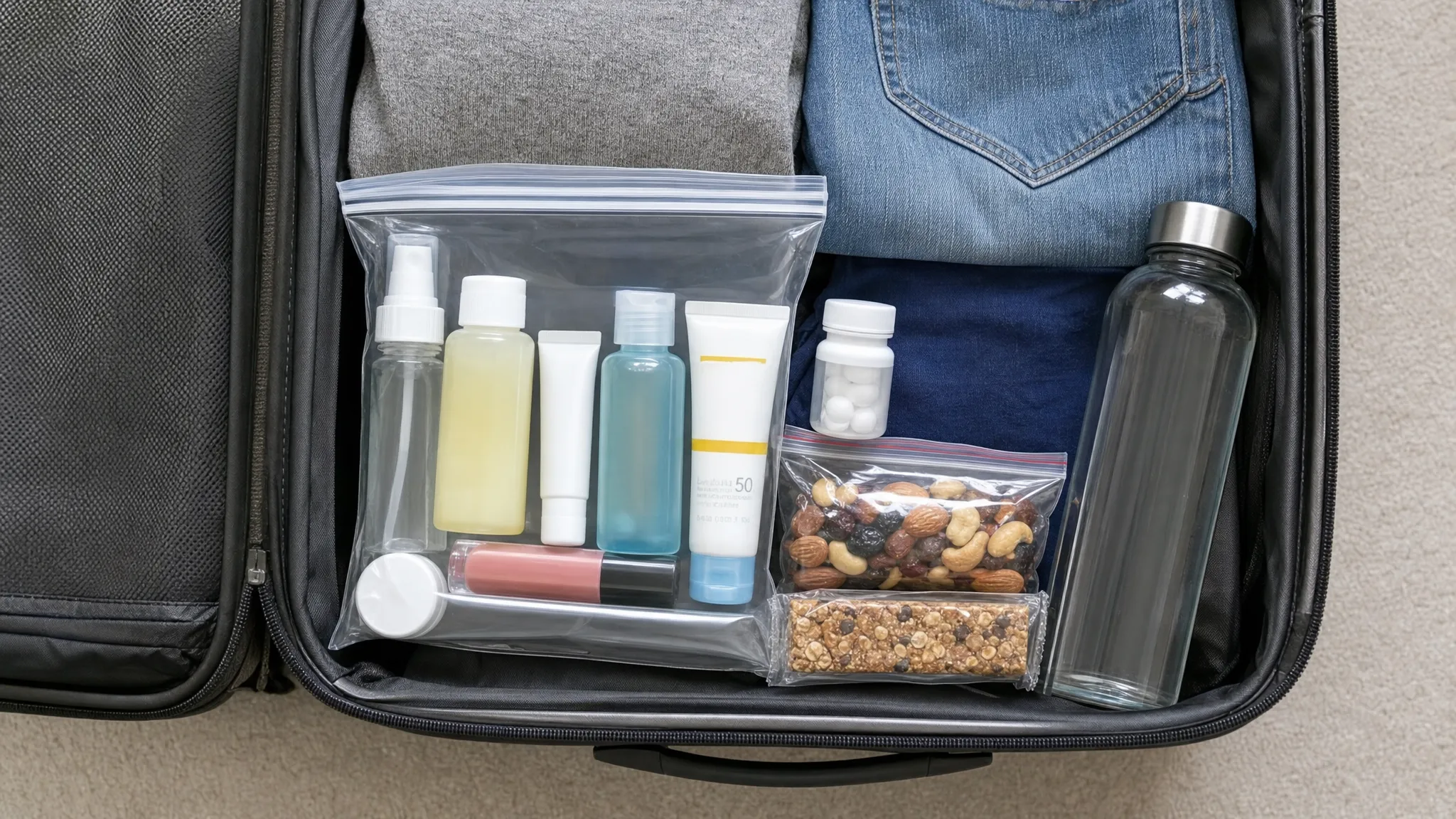
For cabin bags, the safest rule in 2026 is still simple: pack liquids, gels, creams, pastes, sprays and aerosols in containers of 100ml / 3.4oz or smaller, then place them in the required clear liquids bag if your airport asks for one. Larger non-dangerous liquids usually belong in checked baggage, unless they qualify as an exception such as medicine, baby feeding liquids or certain duty-free purchases.
The catch is that liquid rules can vary by airport, scanner type and connecting flight. If one airport on your outbound or return journey still enforces the 100ml rule, that stricter rule can affect what survives the whole trip.
Quick answer: which liquids can you bring?
Here is the practical version before we get into the details.
| Liquid type | Cabin bag | Checked bag | What to remember |
|---|---|---|---|
| Shampoo, conditioner, body wash | Yes, if 100ml / 3.4oz or smaller | Usually yes | Container size matters, not how much is left inside |
| Toothpaste, creams, lotions, gels | Yes, if 100ml / 3.4oz or smaller | Usually yes | These count as liquids, gels or pastes |
| Liquid makeup and skincare | Yes, if 100ml / 3.4oz or smaller | Usually yes | Mascara, foundation, serum and lip gloss usually count |
| Water, juice, coffee and soft drinks | Only if 100ml / 3.4oz or smaller before security | Usually yes | Bring an empty bottle and refill after security |
| Sauces, spreads, soup and dips | Yes, if 100ml / 3.4oz or smaller | Usually yes | Peanut butter, jam, salsa and soup are treated like liquids |
| Liquid medicine | Often allowed over 100ml when medically necessary | Usually yes | Separate it for screening and keep labels if possible |
| Baby formula, breast milk and baby food | Often allowed over 100ml when traveling with a child | Usually yes | Rules vary, but baby feeding liquids are commonly exempt |
| Duty-free liquids | Sometimes, if sealed correctly | Usually yes | Connections can cause problems if the bag is opened or not accepted |
| Aerosols | Yes, if small and permitted | Limited, depending on product | Toiletry aerosols are treated differently from hazardous aerosols |
| High-proof alcohol, fuel, paint, bleach | Usually no | Often restricted or banned | Dangerous goods rules apply |
In the United States, the TSA 3-1-1 liquids rule is the familiar standard for cabin bags: containers must be 3.4oz / 100ml or less and fit in one quart-size bag. Many UK, EU and international airports use a similar 100ml approach, though local procedures can differ.
What counts as a liquid at airport security?
Airport security uses a broad definition of “liquid.” It is not limited to drinks or runny products. If it can be poured, squeezed, spread, sprayed or smeared, assume it may count.
Common items treated as liquids include:
- Drinks, including water, coffee, juice and alcohol
- Toiletries, including shampoo, conditioner, body wash and liquid soap
- Creams and lotions, including sunscreen and moisturizer
- Gels, including hair gel, aloe gel and some shaving products
- Pastes, including toothpaste and some food spreads
- Sprays and aerosols, including spray deodorant and hairspray
- Liquid makeup, including foundation, mascara, lip gloss and liquid eyeliner
- Sauces and semi-liquid foods, including soup, jam, yogurt and salsa
A half-empty 200ml bottle of shampoo is still treated as a 200ml container. Security officers look at the container size printed on the packaging, not the amount remaining inside. If the bottle is too large for cabin rules, it may be confiscated even when there is less than 100ml left.
If you want a broader plain-English overview of cabin liquid rules, Liquid Limits has a separate guide to travel limits on liquids for cabin bags.
Toiletries, skincare and beauty liquids you can pack
Most personal care liquids are allowed on planes, but cabin baggage is where the size limit matters.
You can usually pack travel-size versions of shampoo, conditioner, toothpaste, moisturizer, sunscreen, perfume, cologne, shaving gel, mouthwash and contact lens solution in your carry-on if each container is 100ml / 3.4oz or smaller. Larger bottles can normally go in checked luggage, as long as they are not hazardous and are packed to prevent leaks.
Skincare and makeup cause confusion because many products feel “cosmetic” rather than “liquid.” Airport security still usually treats serums, facial oils, liquid foundation, mascara, lip gloss, gel blush and cream products as liquids or gels. If you are traveling with premium face oils, serums or clean skincare products from a specialist studio such as Lumina Skin Sanctuary, decant only what you need into clearly labeled travel containers or place full-size products in checked baggage.
Deodorant depends on the format. Solid stick deodorant is generally treated as a solid, while spray, gel and roll-on deodorants usually fall under liquid rules. If deodorant is one of your must-pack items, check the detailed stick, spray and roll-on deodorant rules before you choose what to bring.
A simple way to save space is to swap liquids for solids where possible. Solid shampoo bars, conditioner bars, stick sunscreen, bar soap and solid deodorant can reduce the number of items in your liquids bag. Just remember that “solid” means truly solid, not a balm or gel that can be spread like a cream.
Food and drink liquids: what is allowed?
Drinks are allowed on planes, but not usually through security in large containers. A full bottle of water, iced coffee or juice larger than 100ml / 3.4oz will normally be rejected at the checkpoint. An empty reusable bottle is fine, and you can refill it after security in most airports.
Liquid and semi-liquid foods are treated much like toiletries. Soup, yogurt, hummus, salsa, honey, jam, peanut butter, chocolate spread, gravy, salad dressing and hot sauce are all likely to count as liquids, gels or pastes. Small containers can go in your cabin liquids bag. Larger jars and bottles should go in checked luggage, if the destination country allows the food to be imported.
Solid food is usually easier. Sandwiches, crackers, cookies, fruit, dry snacks and chocolate bars are generally not subject to the liquids rule, though customs and agricultural rules may still apply when crossing borders.
Alcohol has extra restrictions because it can be flammable. Small bottles that meet the cabin liquid limit may be allowed through security, but you cannot drink your own alcohol on many flights unless the crew serves it. Larger bottles are usually bought after security or packed in checked bags. Strong alcohol may be restricted or banned, especially above 70% alcohol by volume. For U.S. rules on hazardous products in baggage, the FAA’s PackSafe guidance is a useful reference.
Medicines and health-related liquids
Liquid medicine is one of the most important exceptions to the usual 100ml rule. Medically necessary liquids are often allowed in larger quantities, but you should separate them from your regular liquids bag and tell security staff before screening.
This can include prescription liquid medicine, over-the-counter medicine, insulin, nutrition drinks needed for a medical condition, saline solution, eye drops, contact lens solution and medical gels or creams. Rules and screening procedures vary by airport, so keep medicines in original packaging when practical and bring a prescription or doctor’s note for anything that might raise questions.
Do not hide medical liquids inside your ordinary toiletries bag if they are over the standard limit. Put them where they are easy to remove. Security may need to inspect, test or screen them separately.
Baby formula, breast milk and baby food
Baby feeding liquids are commonly exempt from the standard cabin liquid limit when you are traveling with an infant or young child. This can include formula, breast milk, toddler drinks, baby food pouches, purees and sterilized water needed for feeding.
You usually do not need to fit these items inside your standard liquids bag, but you should present them separately at security. Ice packs, freezer packs or cooling accessories may also be allowed when needed to keep baby food or milk safe, though they can be screened separately.
Because baby-related rules are more generous but still airport-specific, check the item before you fly. Liquid Limits has a dedicated page on whether you can take baby food on a plane, including how it is handled in cabin and checked baggage.
Duty-free liquids and connecting flights
Duty-free alcohol, perfume, cosmetics and other liquids can be larger than 100ml, but they are not always simple. The key issue is whether the item remains in a sealed, tamper-evident security bag and whether your next airport accepts it during a connection.
If you buy a large duty-free liquid after security and fly nonstop, you usually have fewer problems. If you connect through another airport, especially in another country, you may need to pass through security again. At that point, a bottle over 100ml can be rejected if it is not sealed correctly, if the receipt is missing, if the purchase is too old, or if the airport does not recognize the security bag.
The safest approach is to keep duty-free liquids sealed until your final destination. Do not open the bag in the airport or on the plane if you have another security checkpoint ahead. If in doubt, ask the duty-free shop whether your connection airport accepts sealed transfer liquids, then verify the route separately.
Why your route matters in 2026
A common mistake is checking only the departure airport. Liquid rules can affect your outbound flight, connecting airports, return flight and any airport where you pass through security again.
This matters more now because some airports use newer CT scanners and may have different local procedures. You may see references to larger cabin liquid allowances, sometimes up to 2 liters, at certain airports or in older travel articles. Do not assume that applies to your whole trip. If your return airport or connection still applies the 100ml rule, packing a 500ml bottle in your cabin bag can still cause trouble.
The practical rule is to pack for the strictest airport on your itinerary unless you have confirmed otherwise. That includes the way home. A product you can take out of one airport may not be allowed back through another.
For airport-by-airport context, see Liquid Limits’ guide to airport liquid limits for carry-ons in 2026. For a specific trip, the Liquid Limits trip liquid checker can compare route rules, item guidance, source links and last-checked dates so you do not rely on outdated assumptions.
A simple packing plan for liquids
The easiest way to avoid losing items at security is to sort liquids before you pack, not at the airport.
Start by separating everything into three groups: cabin essentials, checked-bag items and items you can buy after security or at your destination. Cabin essentials should be limited to what you truly need during travel, such as lip balm, medication, contact lens solution, baby feeding supplies or a small amount of skincare.
Then check container sizes. Anything over 100ml / 3.4oz should go in checked baggage unless it is exempt. Do not rely on “it is almost empty” as an argument at security.
Finally, pack leak-prone items carefully. Squeeze excess air out of soft bottles, tighten caps, tape lids if needed and place liquids in a sealed plastic pouch. Pressure changes during a flight can make poorly closed bottles leak, even in checked luggage.
If you are traveling carry-on only, consider buying inexpensive bulky liquids such as shampoo, body wash and sunscreen after arrival. Save your limited liquids bag space for products that are expensive, medically necessary, hard to replace or needed during the flight.
Frequently Asked Questions
Can I bring full-size shampoo on a plane? Yes, but usually only in checked baggage. In a cabin bag, shampoo normally needs to be in a container of 100ml / 3.4oz or smaller, unless your exact airport allows a larger limit.
Does toothpaste count as a liquid? Yes. Toothpaste is treated as a paste, so it normally follows the same cabin liquid rules as gels and creams.
Can I bring a water bottle through airport security? You can bring an empty reusable bottle through security. A full bottle larger than 100ml / 3.4oz will usually need to be emptied or discarded before the checkpoint.
Which liquids are exempt from the 100ml rule? Common exceptions include medically necessary liquids, some medical supplies, baby formula, breast milk, baby food and certain sealed duty-free liquids. Security may screen these items separately.
Can I bring 2L liquids if the airport has new scanners? Only if the airport, terminal and security lane you use allow it, and only if the rest of your route does too. If any airport on your journey applies the 100ml rule, pack for 100ml.
Are liquids safer in checked luggage? Larger non-dangerous liquids are usually easier in checked luggage, but not all liquids are allowed. Flammable, corrosive or hazardous products may be restricted or banned in both cabin and checked bags.
Check your liquids before you pack
The liquids you can bring on a plane are usually straightforward once you know the item, container size, airport and route. The uncertainty comes from mixed itineraries, return flights, scanner changes and exceptions.
Before you zip your bag, check the strictest rule for your whole trip. Liquid Limits helps you compare cabin liquid rules for airports, routes and specific items, with verified source links and last-checked dates, so you can pack with fewer surprises at security.